Affiliate Disclosure: This post may contain affiliate links. If you purchase through these links, we may earn a small commission at no additional cost to you. We only recommend products and tools we genuinely believe may be useful for you and your Doberman.
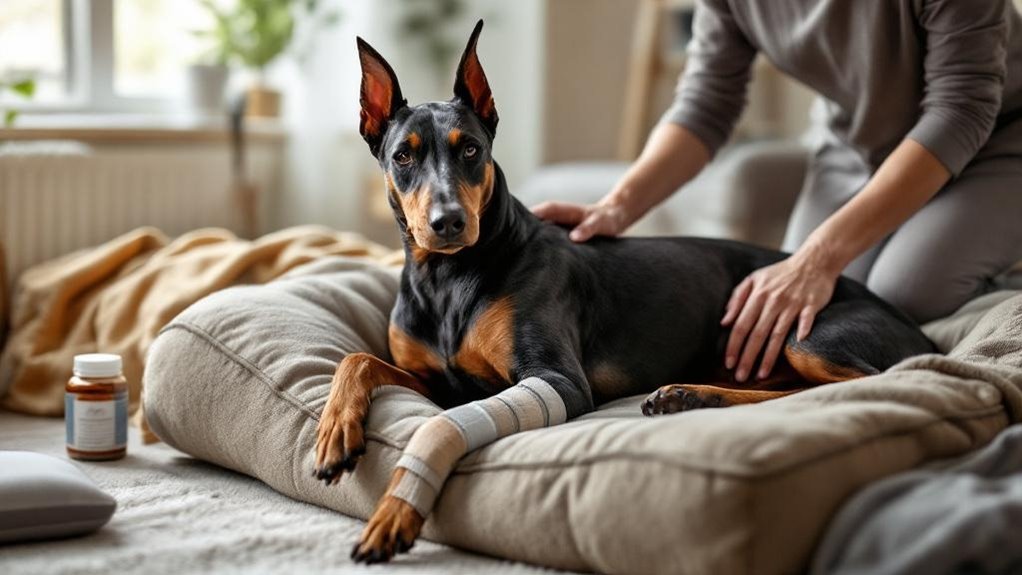
You can manage your Doberman’s arthritis at home by combining weight management, low-impact exercise, and targeted medications. Maintain ideal weight to reduce joint pressure, incorporate short daily walks and swimming, and work with your vet on pain relief through NSAIDs like carprofen or meloxicam. Add joint-supporting supplements with glucosamine and omega-3s to your dog’s diet, use heat therapy before activity and cold therapy after, and modify your home with ramps and orthopedic bedding. Monitoring progress and adjusting care based on flare-ups creates lasting relief.
- Key Takeaways
- Recognizing Arthritis Symptoms in Dobermans
- Why Weight Management Is Critical for Arthritic Dobermans?
- Collaborating With Your Vet to Build a Doberman-Specific Treatment Plan
- Prescription Pain Medications for Doberman Arthritis
- How Do NSAIDs Work, and What Should You Expect?
- Joint Injections: When and Why Your Vet Recommends Them
- Top Supplements for Doberman Joints: Glucosamine, Omega-3s, and Alternatives
- Designing a Low-Impact Exercise Routine for Your Doberman
- Why Do Shorter, Frequent Walks Beat Long Outings?
- Five At-Home Exercises to Restore Doberman Mobility
- Heat and Cold Therapy for Doberman Arthritis Pain
- Home Modifications for Arthritic Dobermans
- Choosing the Right Orthopedic Bed for Comfort
- Feeding an Arthritic Doberman for Joint Health
- Acupuncture and Laser Therapy for Doberman Arthritis
- What to Do When Pain Flare-Ups Occur Between Vet Visits
- Tracking Your Doberman’s Progress and Adjusting Care
- Advanced Options: When Does Your Doberman Need Surgery?
- Building a Sustainable Long-Term Arthritis Management Plan
- Frequently Asked Questions
- Conclusion
Key Takeaways
- Implement multiple short walks (10-15 minutes) daily and swimming to maintain joint flexibility while minimizing stress on arthritic joints.
- Create a safe home environment with non-slip rugs, orthopedic beds, ramps, and clutter-free spaces to reduce injury risk and improve mobility.
- Apply heat therapy before exercise and cold therapy after activity to manage pain and inflammation effectively during flare-ups.
- Feed high-quality diets rich in glucosamine, chondroitin, and omega-3 fatty acids while maintaining ideal weight to reduce joint pressure.
- Monitor for decreased mobility and reluctance to play, then adjust exercise routines accordingly and consult your veterinarian for medication adjustments.
Recognizing Arthritis Symptoms in Dobermans
Recognizing arthritis in your Doberman starts with understanding that the condition develops gradually, and the early signs—limping, stiffness, and difficulty rising from rest—often appear first thing in the morning or after your dog’s been inactive for a while.
Beyond these initial symptoms of arthritis, you’ll notice your dog shows reluctance during playtime, hesitates at stairs, and struggles entering vehicles.
Watch for changes in gait, including “bunny hopping” movements or favoring one leg, which indicate signs of arthritis progressing.
Your Doberman may tremble or show discomfort when you touch affected areas.
Reduced activity levels serve as another key indicator.
Since early detection enables more effective arthritis management, observing your dog’s behavior consistently helps you catch these changes before they worsen, allowing you to implement appropriate care strategies for dogs with arthritis.
Why Weight Management Is Critical for Arthritic Dobermans?
Your Doberman’s weight directly affects the pressure on arthritic joints, so maintaining an ideal weight through controlled portions and consistent exercise will reduce strain on their limbs and improve their mobility.
You’ll want to work with your veterinarian to develop a long-term weight management plan that balances proper nutrition with calorie control, since even a 10% reduction in body weight can noticeably decrease pain and inflammation.
Joint Pressure and Mobility
Managing your Doberman’s weight is one of the most direct ways you can reduce arthritis pain, because excess pounds place additional stress on joints that are already compromised by the condition. Each pound your dog carries translates to increased pressure on affected areas, which restricts mobility and compounds discomfort during movement.
Consider these practical steps for effective weight management:
- Establish ideal weight goals through veterinary consultation, using body condition scoring systems for accurate tracking.
- Balance caloric intake with appropriate portion sizes, reducing strain on compromised joints.
- Implement consistent low-impact exercise, such as short walks, to maintain mobility without overexertion.
- Monitor progress regularly, adjusting dietary approaches as your dog’s condition evolves.
This structured approach helps your Doberman maintain better joint function, prolonging active years ahead.
Inflammation Reduction Strategies
When you’ve successfully brought your Doberman’s weight to a healthier level, you’ve already taken the most direct step toward reducing inflammation, yet the work doesn’t stop there—maintaining that progress requires understanding how inflammation itself perpetuates joint damage and how to address it from multiple angles.
| Strategy | Impact on Inflammation |
|---|---|
| Weight management | Decreases pressure on joints |
| Low-impact exercise | Promotes circulation without strain |
| Therapeutic diet | Reduces inflammatory markers |
| Veterinary monitoring | Adjusts care as needed |
Your consistent weight management directly addresses pain relief by lowering the inflammatory response in arthritic joints. Combined with short walks and swimming, you’re supporting joint health while preventing inflammation from worsening. Regular veterinary consultations help you refine your approach, ensuring your Doberman maintains ideal weight and experiences genuine improvement in comfort and mobility.
Long-Term Weight Management Plans
The foundation of long-term arthritis management in Dobermans rests on a simple but demanding principle: keeping your dog at a healthy weight isn’t a one-time achievement, but rather an ongoing commitment that requires consistent monitoring, honest assessment, and willingness to adjust your approach as your dog’s needs change.
Your veterinarian becomes an essential partner in this process, helping you establish realistic targets and tracking progress over months and years.
- Monitor your dog’s body condition score regularly using the Nestle PURINA system to catch weight fluctuations early.
- Reduce calorie intake gradually while maintaining balanced nutrition to prevent obesity-related complications.
- Adjust portion sizes as your dog’s activity level changes with age and arthritis progression.
- Schedule quarterly veterinarian consultations to refine your weight management strategy and measure results.
This disciplined approach prevents the destructive cycle where obesity worsens arthritis symptoms, further reducing mobility and accelerating decline.
Collaborating With Your Vet to Build a Doberman-Specific Treatment Plan
Because every Doberman’s arthritis presents differently—varying in severity, affected joints, and how it responds to treatment—you’ll want to work closely with your veterinarian to develop a plan tailored specifically to your dog’s needs rather than relying on general recommendations. Your veterinarian may prescribe medications, recommend supplements, and suggest lifestyle changes that work together to help manage your dog’s pain effectively.
| Treatment Component | Purpose | Frequency |
|---|---|---|
| Pain medication | Reduce inflammation and discomfort | As prescribed |
| Joint supplements | Support cartilage health | Daily |
| Moderate exercise | Maintain muscle strength | Regular sessions |
| Weight monitoring | Decrease joint stress | Monthly check-ins |
| Veterinary visits | Assess progress and adjust plan | Every 6-8 weeks |
A multimodal approach combines these elements, while your veterinarian establishes a safe exercise routine tailored to your Doberman’s abilities, ensuring sustained improvement without overstraining vulnerable joints.
Prescription Pain Medications for Doberman Arthritis
Once you’ve worked with your veterinarian to establish a treatment plan, prescription pain medications often become a cornerstone of managing your Doberman’s arthritis, offering targeted relief that over-the-counter options simply can’t provide.
Your veterinarian will likely recommend one of these approaches:
- NSAIDs such as carprofen and meloxicam reduce inflammation and provide pain relief.
- Gabapentin targets nerve pain associated with arthritis for more severe cases.
- Tramadol serves as an adjunctive medication when additional pain management’s needed.
- Consistent administration as prescribed allows NSAIDs up to three months to show full effects.
You’ll need to monitor side effects carefully, watching for gastrointestinal issues or liver and kidney concerns.
Regular veterinary check-ups help assess medication effectiveness and allow your vet to adjust dosages based on your Doberman’s specific response and health needs.
How Do NSAIDs Work, and What Should You Expect?
NSAIDs work by blocking the enzymes (COX-1 and COX-2) that your Doberman’s body uses to produce prostaglandins, which are the chemicals responsible for inflammation, pain, and fever.
So you’re fundamentally interrupting the pain cycle at its source. You shouldn’t expect immediate results; while some dogs experience noticeable relief within the first few days, it typically takes several weeks for NSAIDs to reach their full effectiveness.
Understanding NSAID Mechanisms
To understand how pain relief works for your arthritic Doberman, it helps to know that NSAIDs function by blocking specific enzymes—COX-1 and COX-2—that produce prostaglandins, the compounds responsible for triggering inflammation and pain signals throughout your dog’s body.
Here’s what you should expect from this mechanism:
- Initial relief arrives within days to weeks, though your dog may not experience complete benefits immediately.
- Full therapeutic effects require up to three months, demanding patience as the medication reaches peak effectiveness.
- Inflammation reduction occurs alongside pain management, improving your Doberman’s mobility and comfort level.
- Ongoing monitoring becomes necessary, since NSAIDs can affect organs like the kidneys and liver over time.
Understanding this process helps you recognize that arthritis management isn’t instantaneous, yet remains genuinely effective when combined with veterinary oversight and supportive care strategies.
Expected Timeline For Relief
When you start your Doberman on NSAIDs, you’ll likely notice some improvement within the first few days to weeks. Yet this initial relief isn’t the complete picture—full therapeutic effects typically require up to three months as the medication works to reduce inflammation throughout your dog’s joints.
During these early weeks, you may observe noticeable gains in mobility and reduced arthritis pain in dogs, which can feel encouraging. However, patience matters here, because pain medications like Galliprant, carprofen, and meloxicam need sustained time to fully address inflammation.
Your veterinarian will monitor your dog’s response closely, potentially adjusting dosage as needed. This gradual approach, combined with weight management and appropriate exercise, ultimately supports your dog’s quality of life and long-term comfort.
Joint Injections: When and Why Your Vet Recommends Them
Although oral medications and supplements form the foundation of arthritis management, your veterinarian may recommend joint injections when these initial treatments aren’t providing your Doberman with adequate relief or improved mobility.
Joint injections work by targeting inflammation and cartilage damage directly at affected joints. Your veterinarian might suggest these treatments for several reasons:
- Corticosteroid injections considerably reduce inflammation, offering faster pain relief than oral medications alone.
- Hyaluronic acid injections enhance joint lubrication, improving your dog’s movement and comfort.
- PSGAG injections promote cartilage repair, particularly helpful for progressive osteoarthritis.
- Injections provide localized treatment, minimizing systemic side effects while maximizing effectiveness.
Your veterinarian will determine the appropriate injection type, frequency, and timing based on your Doberman’s specific condition severity and response to previous treatments.
Regular monitoring guarantees ideal results and adjustments as needed.
Top Supplements for Doberman Joints: Glucosamine, Omega-3s, and Alternatives
Several supplements can meaningfully support your Doberman’s joint health when arthritis develops, though their effectiveness depends on choosing the right formulation and maintaining consistent use over time.
Glucosamine works by supporting cartilage repair and reducing stiffness, while omega-3 fatty acids, particularly EPA and DHA from fish oil, combat inflammation and improve mobility.
Research supports specific joint supplements like Cosequin and Dasuquin, which combine glucosamine with chondroitin and avocado-soya unsaponifiables for enhanced protection.
If oral arthritis management proves insufficient, PSGAGs offer an alternative through injectable cartilage repair, particularly for acute injuries.
Your veterinarian remains essential for tailoring supplement choices and dosages to your Doberman’s specific needs, ensuring you’re providing genuine support rather than relying on guesswork.
Designing a Low-Impact Exercise Routine for Your Doberman
Because arthritis changes how your Doberman moves and what they’re capable of, you’ll need to rethink exercise from the ground up—not by eliminating activity, but by shifting toward gentler, more frequent movements that keep joints mobile without triggering pain.
Your dog still needs movement; the key is choosing low-impact activities that support joint flexibility while avoiding strain.
Consider these approaches:
- Schedule multiple short walks, 10-15 minutes each, three to four times daily.
- Incorporate swimming sessions, which provide full-body workouts without stressing joints.
- Add gentle stretching and range-of-motion exercises before and after activity.
- Skip high-impact movements like running or jumping that worsen arthritis.
Working with your veterinarian to develop a personalized exercise plan guarantees you’re addressing your Doberman’s specific limitations while maintaining consistency and safety throughout their recovery.
Why Do Shorter, Frequent Walks Beat Long Outings?
You’ll find that shorter, frequent walks maintain your Doberman’s joint flexibility and endurance far better than single long outings, since multiple brief sessions allow his joints to move through their full range without the fatigue that triggers stiffness and pain.
When you break exercise into 10-15 minute intervals three to four times daily, you’re building muscle strength that supports his joints while avoiding the strain that comes from extended activity, which can actually worsen arthritis symptoms.
This approach keeps your dog moving consistently throughout the day—the key to preserving mobility—rather than pushing him to exhaustion in one session that leaves him sore and reluctant to exercise later.
Joint Flexibility and Endurance
When your Doberman has arthritis, the instinct to give him one satisfying long walk might actually work against his joint health, whereas multiple short outings throughout the day protect his flexibility and endurance in ways a single extended outing can’t match.
Shorter, frequent walks maintain joint flexibility and muscle strength without overwhelming his system, while moderate exercise promotes synovial fluid circulation essential for proper joint lubrication.
- Three to four daily walks of 10-15 minutes each reduce joint impact compared to one lengthy outing
- Low-impact activities keep your dog engaged without the strain that exhaustion brings
- Consistent movement throughout the day improves overall endurance gradually and safely
- Monitoring his response during these sessions lets you adjust intensity, ensuring exercise remains beneficial
This approach protects his joints while maintaining the activity level his body needs.
Muscle Strength Without Strain
Your Doberman’s muscles need consistent activation to support his arthritic joints, yet the very activity that builds strength can damage those joints if it’s concentrated into one exhausting session.
Instead, you’ll want to divide his exercise into multiple short walks of 10-15 minutes, three to four times daily. This approach maintains muscle strength while avoiding overexertion that aggravates arthritis pain.
Shorter, frequent sessions let you monitor his response carefully, adjusting intensity based on his comfort level. Between walks, rest periods allow recovery and reduce inflammation.
These regular low-impact exercises improve circulation and flexibility, directly enhancing joint health.
Five At-Home Exercises to Restore Doberman Mobility
Restoring mobility in an arthritic Doberman requires a thoughtful approach that balances activity with protection. The goal isn’t to push your dog beyond what their joints can handle but rather to maintain and gradually improve their range of motion through consistent, manageable exercise.
You’ll find that combining several techniques addresses different aspects of joint pain and mobility:
- Gentle walking sessions of 10-15 minutes, three to four times daily, promote steady movement without overexertion.
- Swimming provides low-impact strengthening, using water’s buoyancy to reduce stress on affected joints.
- Passive range of motion exercises gently stretch your dog’s legs through their natural movement patterns.
- Professional physical therapy tailored specifically for arthritic dogs enhances mobility under expert guidance.
These approaches work together, helping your Doberman maintain function while managing discomfort effectively.
Heat and Cold Therapy for Doberman Arthritis Pain
While consistent exercise helps restore your Doberman’s mobility, managing the pain that often accompanies movement is equally important, and heat and cold therapy offers practical tools to support your dog’s comfort before, during, and after activity.
| Therapy Type | Best Timing | Application Method |
|---|---|---|
| Heat therapy | Before exercise | Warm towel or heating pad for 15-20 minutes |
| Cold therapy | After activity or swelling | Ice pack wrapped in towel for 10-15 minutes |
| Alternating therapy | During flare-ups | Combine both modalities to maximize relief |
Heat therapy relaxes muscles and increases blood flow, while cold therapy reduces inflammation and numbs pain. You’ll find that alternating between these modalities enhances mobility and decreases discomfort during difficult periods. Always wrap heat or cold sources in towels to prevent injury, monitor your dog’s response carefully, and consult your veterinarian before beginning any therapy regimen tailored to your Doberman’s specific needs.
Home Modifications for Arthritic Dobermans
Several practical adjustments to your home environment can greatly reduce strain on your Doberman’s arthritic joints, making daily movement safer and more comfortable.
- Install non-slip rugs and mats throughout your home to enhance traction, preventing the slips and falls that can aggravate joint pain.
- Invest in an orthopedic bed designed to support your dog’s body, alleviating pressure on arthritic joints during rest and recovery.
- Place ramps or pet stairs near elevated surfaces, allowing your Doberman to access couches and beds without straining their joints through jumping.
- Keep your living spaces well-organized and obstacle-free, enabling safer navigation through clear pathways that reduce unnecessary movement strain.
Additionally, maintaining a moderate home temperature between 68-72°F helps reduce joint stiffness, creating a genuinely comfortable environment for your arthritic companion.
Choosing the Right Orthopedic Bed for Comfort
You’ll want to prioritize memory foam support, which cushions your Doberman’s joints and reduces pressure points that aggravate arthritis. Though you should also consider the bed’s size and placement to guarantee your dog has adequate space to stretch and access to areas away from drafts or temperature extremes.
Selecting a durable bed with a removable, waterproof cover protects your investment while accommodating accidents. Pairing it with an elevated design promotes airflow and minimizes contact with cold surfaces that can increase stiffness.
A non-slip bottom anchors the bed firmly in place, preventing the shifting and sliding that could cause your dog to slip and strain already-compromised joints.
Memory Foam Support Benefits
The right orthopedic bed can meaningfully improve your Doberman’s comfort and quality of life, particularly as arthritis progresses and joint pain becomes a daily challenge.
Memory foam orthopedic beds conform to your dog’s body shape, distributing weight evenly and reducing stress on sensitive joints. This support directly addresses the mobility issues arthritis creates.
Consider these essential features when selecting a bed:
- High-density foam that provides consistent support without flattening
- A removable, washable cover to maintain hygiene and prevent skin irritation
- A non-slip bottom that guarantees stability during movement
- Adequate thickness to prevent your dog from feeling the floor beneath
Better sleep quality translates to increased daytime energy and improved mobility, helping your Doberman navigate daily activities with greater ease and less discomfort.
Size And Placement Considerations
Sizing and placement matter far more than most people realize when choosing an orthopedic bed for your Doberman, since an ill-fitting bed won’t provide the support your dog needs, and poor placement can actually undermine the bed’s benefits.
Measure your dog’s length and width to ascertain the bed accommodates comfortable stretching and position changes, reducing strain on joints affected by arthritis. A standard large size typically works well, though your individual measurements guide the best choice.
Position the bed in a quiet, accessible location away from drafts and high-traffic areas, which protects your dog’s mobility and promotes rest.
Elevating the bed slightly off the ground enhances airflow, prevents moisture buildup, and eases access for dogs experiencing joint pain, making daily movement less difficult.
Durability For Long-Term Use
Once you’ve positioned your Doberman’s bed in the right location, you’ll want to focus on selecting materials and construction that’ll serve your dog well over months and years of daily use.
Durability directly impacts how long your orthopedic bed maintains its joint support capabilities, ensuring your dog receives consistent comfort throughout their arthritis journey.
- High-density foam resists compression, preserving the bed’s supportive structure longer than lower-quality alternatives
- Removable covers protect the core materials from wear, stains, and degradation caused by frequent washing
- Reinforced stitching along seams prevents splitting and maintains structural integrity during your dog’s movements
- Quality construction with non-slip bottoms prevents shifting, reducing unnecessary stress on aging joints
Investing in a durable orthopedic bed means fewer replacements and more reliable support for your Doberman’s changing needs.
Feeding an Arthritic Doberman for Joint Health
Because nutrition plays an essential role in managing your Doberman’s arthritis, what you feed them can either help reduce joint inflammation or inadvertently worsen their discomfort.
Nutrition is essential for managing Doberman arthritis—your dog’s diet can either reduce joint inflammation or worsen their discomfort.
A high-quality dog’s diet formulated specifically for joint health should include glucosamine and chondroitin to support cartilage maintenance. Adding omega-3 fatty acids through fish oil supplements helps alleviate inflammation and improves overall joint function.
Maintaining your dog’s ideal weight proves equally important, since excess pounds increase stress on arthritic joints and intensify pain. Consider smaller, more frequent meals rather than one large feeding to support digestion and energy levels.
To manage your dog’s pain effectively, consult your veterinarian about personalized dietary recommendations and whether novel proteins might minimize inflammation from suspected food allergies.
Acupuncture and Laser Therapy for Doberman Arthritis
When you’re exploring complementary treatments for your Doberman’s arthritis, acupuncture and laser therapy offer you two distinct pathways to pain relief. Acupuncture works by stimulating specific points to enhance blood flow and release endorphins, while laser therapy targets inflamed tissues directly to promote healing and reduce discomfort.
You’ll find that combining both therapies creates a more thorough approach, since they work through different mechanisms and can be integrated safely alongside your dog’s current medications and exercise modifications.
Understanding how each treatment functions, what a typical session involves, and how they complement each other will help you make informed decisions that fit your Doberman’s specific needs and your management plan.
How Acupuncture Relieves Pain
Acupuncture works by stimulating specific points on your Doberman’s body to trigger the release of endorphins, which are natural pain relievers that help alleviate the discomfort associated with arthritis.
This alternative therapy addresses pain through a biological mechanism rather than masking symptoms temporarily.
Here’s how acupuncture provides meaningful pain relief for osteoarthritis:
- Stimulates endorphin release, your dog’s natural pain management system
- Reduces inflammation at affected joints through targeted needle placement
- Improves circulation to arthritic areas, promoting healing and mobility
- Delivers cumulative benefits, with pain relief extending weeks after treatment
Your veterinarian can determine whether acupuncture complements your Doberman’s current treatment plan.
Many owners find this non-invasive approach valuable alongside traditional therapies, offering their dogs comfort without significant side effects.
Laser Therapy Benefits Explained
Laser therapy offers another powerful non-invasive option for managing your Doberman’s arthritis, working through a fundamentally different mechanism than acupuncture—instead of triggering endorphin release, targeted light stimulates cellular activity within damaged tissues to reduce inflammation and promote healing at the source.
This therapy enhances blood circulation, delivering essential nutrients and oxygen to affected joints, which improves mobility and function. You’ll typically schedule sessions lasting five to fifteen minutes, two to three times weekly initially, then adjust frequency based on your dog’s progress.
Studies demonstrate significant pain relief and improved quality of life, often reducing medication dependence. Consult your veterinarian or certified rehabilitation practitioner to develop a personalized plan that complements your existing arthritis management strategy for optimal outcomes.
Combining Both Therapies Effectively
Rather than viewing acupuncture and laser therapy as separate treatment options, you’ll find that combining them creates a synergistic effect that amplifies the benefits each delivers independently. When used together, these therapies address arthritis from multiple angles, enhancing pain relief and mobility improvement more effectively than either approach alone.
Consider these advantages of combined treatment:
- Acupuncture stimulates specific points while laser therapy reduces inflammation simultaneously.
- Blood flow increases through both mechanisms, accelerating healing processes.
- Endorphin release from acupuncture pairs with laser’s tissue repair activation.
- Cumulative sessions build sustained symptom management with minimal medication reliance.
You’ll notice your Doberman responds better when both therapies work in concert, since they target different aspects of arthritis.
Your veterinarian can tailor the frequency and intensity to your dog’s specific condition, creating a personalized protocol that maximizes comfort and function throughout daily life.
What to Do When Pain Flare-Ups Occur Between Vet Visits
Since arthritis pain isn’t always consistent, you’ll need to recognize when your Doberman’s experiencing a flare-up so you can respond quickly and effectively.
Watch for decreased mobility, reluctance to play, or changes in posture that signal increased discomfort. When a flare-up occurs, apply ice packs to inflamed joints to reduce swelling, or use heat therapy to ease muscle tension, depending on your veterinarian’s recommendations.
Temporarily reduce low-impact exercises to allow recovery, though gentle movement remains important for maintaining joint flexibility. Consider adjusting pain relief options your vet previously discussed, and avoid pushing your dog into activities that clearly cause distress.
Document these episodes in detail, noting triggers and responses, so you can share accurate information during your next visit and refine your management strategy together.
Tracking Your Doberman’s Progress and Adjusting Care
Monitoring your Doberman’s condition over time is essential for managing arthritis effectively, because what works well today may need adjustment as your dog’s needs evolve. By tracking progress consistently, you’ll identify subtle changes that inform better decisions about your dog’s care.
Consistent monitoring of your Doberman’s arthritis evolves your care approach as your dog’s needs change over time.
- Keep a detailed journal documenting daily activities, medications, and any side effects you notice, which helps your veterinarian fine-tune the management plan.
- Schedule veterinary check-ups every 6 to 12 months to assess treatment effectiveness and adjust strategies accordingly.
- Maintain a mobility checklist to observe pain levels and physical changes that guide exercise modifications.
- Collaborate with your veterinarian to reassess weight management, dietary plans, and joint health supplements regularly.
Consistent monitoring guarantees your Doberman receives personalized care that evolves with their needs.
Advanced Options: When Does Your Doberman Need Surgery?
When conservative treatments—physical therapy, weight management, medications, and supplements—haven’t adequately relieved your Doberman’s pain or improved their mobility after several months of consistent effort, surgery becomes worth discussing with your veterinarian as a potential next step.
Your vet will evaluate X-rays and pain levels to determine whether surgical intervention suits your dog’s condition. Procedures like tibial plateau leveling osteotomy address cruciate ligament tears, while total joint replacement tackles severe osteoarthritis that greatly compromises quality of life.
Each option offers substantial pain relief and restored joint function when nonsurgical approaches fall short. Before proceeding, carefully weigh recovery time, expected improvements, and your Doberman’s age and overall health status against costs and potential complications.
Building a Sustainable Long-Term Arthritis Management Plan
After you’ve explored surgical options with your veterinarian and determined the best path forward for your Doberman’s arthritis, the real work begins with establishing a management plan you can sustain over months and years. Dog arthritis treatment requires consistent effort across multiple areas to maintain your dog’s quality of life.
- Combine moderate, low-impact exercises like short daily walks and swimming, 10-15 minutes per session, 3-4 times daily, to preserve mobility without overexertion.
- Work with your veterinarian on weight loss strategies, since obesity considerably increases joint pressure and worsens arthritis symptoms.
- Administer daily supplements containing omega-3 fatty acids, glucosamine, and chondroitin to support joint health.
- Use anti-inflammatory drugs (NSAIDs) as prescribed, alongside home modifications like orthopedic beds and ramps.
Regular veterinary check-ups guarantee your plan remains effective.
Frequently Asked Questions
How Can I Help My Dog With Joint Pain Naturally?
You can help your dog’s joint pain naturally by incorporating daily walks, adding fish oil supplements, providing orthopedic beds, using nonslip rugs, and maintaining a healthy weight through veterinary guidance.
What Can I Give My Doberman for Arthritis?
You can give your Doberman NSAIDs like carprofen, joint supplements with glucosamine and omega-3s, or Adequan injections. You’ll also benefit from combining these with weight management, moderate exercise, and alternative therapies like acupuncture.
Can a Dog Live a Happy Life With Arthritis?
Yes, your Doberman can absolutely live happily with arthritis—who knew joint pain could be so trendy? You’ll manage it through medications, supplements, exercise, weight control, and comfortable bedding that transforms suffering into joy.
Is There a Heating Pad for Dogs With Arthritis?
Yes, you can use pet-specific heating pads to soothe your dog’s arthritis pain. You’ll want to apply heat for 15-20 minutes on a low setting, always monitoring your Doberman to prevent burns while relieving muscle stiffness.
Conclusion
Managing your Doberman’s arthritis isn’t a sprint but a steady journey you’ll navigate together. You’re building a foundation—through weight management, medication, and consistent communication with your vet—that keeps your dog moving comfortably. As you track changes and adjust your approach, you’re fundamentally writing a personalized playbook that lets your Doberman live well despite arthritis, transforming daily challenges into manageable routines.