Affiliate Disclosure: This post may contain affiliate links. If you purchase through these links, we may earn a small commission at no additional cost to you. We only recommend products and tools we genuinely believe may be useful for you and your Doberman.
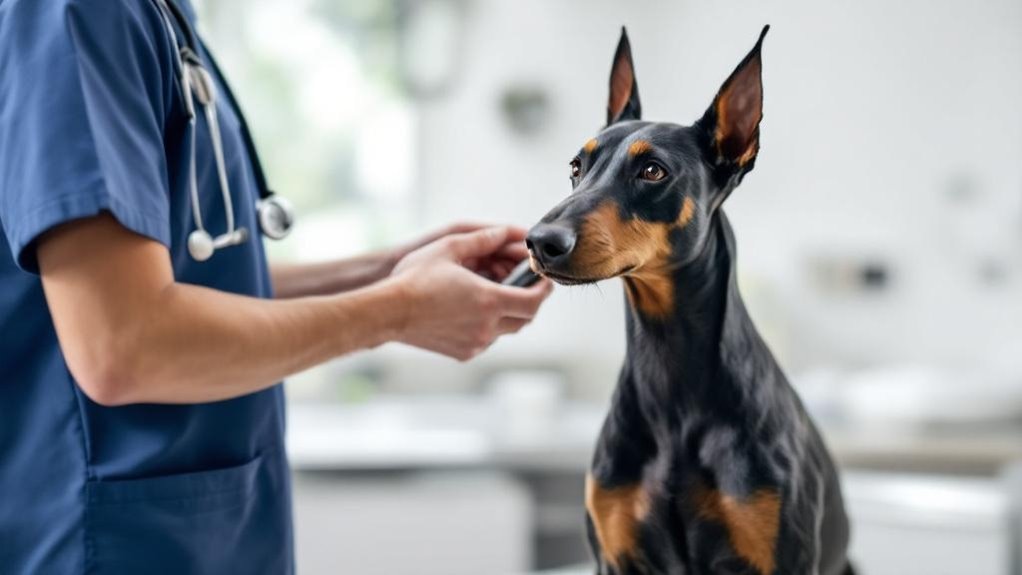
Your Doberman’s annual check-up should include a thorough physical exam, cardiac screening with an echocardiogram starting at age two, thyroid function testing, and routine bloodwork to establish health baselines. Since Dobermans are predisposed to silent conditions like dilated cardiomyopathy, senior dogs benefit from biannual exams instead. You’ll want to discuss parasite prevention, vaccination needs, and any behavioral or physical changes you’ve noticed. Working with a breed-savvy veterinarian helps identify subtle health trends before they become serious problems.
- Key Takeaways
- Why Annual Health Checks Are Non-Negotiable for Dobermans
- The Silent Killer in Dobermans: Understanding Cardiac Risk
- Life Stage Matters: Your Doberman’s Changing Health Needs
- Puppies Require Monthly Vet Visits: Here’s Why
- Shifting to Yearly Check-ups: What Changes in Adulthood
- Senior Dobermans Need Twice-Yearly Exams
- Five Critical Assessments During Your Vet’s Physical Exam
- Body Condition and Muscle Scoring: Reading Your Dog’s Health
- Start Cardiac Monitoring Early: When and How Often
- Echocardiograms and Holter Tests: Early Detection Saves Lives
- Thyroid Screening: Prevent Hypothyroidism Before Decline Starts
- Hip and Elbow Evaluation for Active Dobermans
- Decode Your Doberman’s Blood Work: What Each Panel Means
- Annual Parasite Screening: Heartworm, Intestinal, and Tick Prevention
- Parasite Control Beyond Chemicals: Exploring Your Options
- Vaccination Strategy: Building Immunity Without Over-Protecting
- Titer Testing: Skip Boosters With Proof of Immunity
- Red Flags: Anxiety, Confusion, and Behavioral Shifts That Matter
- Choose a Doberman-Savvy Veterinarian: Your First Critical Decision
- Build a Partnership With Your Vet: From Results to Action
- Frequently Asked Questions
- Conclusion
Key Takeaways
- Establish baseline health metrics through annual bloodwork including chemistry panels and thyroid function tests to detect early issues.
- Schedule cardiac screenings with echocardiograms and Holter monitoring starting at age two, then biannually after age five.
- Monitor for breed-specific conditions like DCM and hypothyroidism through comprehensive physical exams and individual risk assessments.
- Review parasite screenings for heartworm and intestinal parasites annually, adjusting prevention strategies based on regional and environmental risks.
- Document health trends with your veterinarian and adjust preventive care plans based on test results and behavioral changes.
Why Annual Health Checks Are Non-Negotiable for Dobermans
Because Dobermans are predisposed to several serious health conditions—particularly Dilated Cardiomyopathy (DCM) and hypothyroidism—annual veterinary check-ups aren’t simply a matter of routine maintenance but rather a critical component of responsible ownership that can mean the difference between catching a treatable problem early and facing a medical crisis down the road.
Your annual wellness exam establishes a health baseline, giving your veterinarian concrete reference points for monitoring subtle changes in your dog’s energy, behavior, and physical condition.
Routine bloodwork and diagnostic tests performed during these appointments can reveal hidden issues like kidney or liver problems before symptoms emerge. This proactive approach allows your vet to recommend timely interventions tailored to your Doberman’s unique needs, ultimately enhancing both longevity and quality of life.
The Silent Killer in Dobermans: Understanding Cardiac Risk
Dilated Cardiomyopathy develops silently in Dobermans, which means you won’t see symptoms until the condition’s already advanced, making early detection through screening your most effective defense.
Your veterinarian can catch cardiac issues before they become critical by performing annual echocardiograms or Holter monitoring, particularly if your dog carries genetic risk factors, and by evaluating for heart murmurs and performance changes like coughing or unusual lethargy during routine check-ups.
Early Detection Through Screening
While your Doberman may appear perfectly healthy and full of energy, heart disease can develop quietly in the background, which is why early detection through screening matters so much for this breed.
During your annual exam, your veterinarian will listen carefully for arrhythmias and murmurs, which can signal cardiac problems before you notice symptoms. Starting at age two, you’ll want echocardiograms performed yearly through age five, then biannually afterward to monitor your dog’s heart health effectively.
Watch for subtle early signs like coughing, breathing changes, or unusual fatigue during exercise, and discuss these observations with your vet promptly.
These screening practices greatly improve outcomes when heart issues are caught early, giving your Doberman the best chance at a longer, healthier life.
Cardiac Monitoring Across Lifestages
As your Doberman ages, the need for cardiac monitoring doesn’t decrease—it intensifies, which is why tracking your dog’s heart health across different lifestages requires a strategic, ongoing approach rather than a one-time screening.
Starting at age two, establish a baseline echocardiogram to document normal heart function. Between ages two and five, annual cardiac health check-ups suffice for most Dobermans.
However, once your dog reaches five years old, shift to every-six-month evaluations, since this period marks when DCM typically emerges. These assessments involve listening for arrhythmias and murmurs during routine veterinary visits.
Throughout your Doberman’s life, remain alert to performance changes—coughing, lethargy, or exercise intolerance warrant immediate discussion with your veterinarian. This proactive, lifelong commitment catches silent disease progression early.
Life Stage Matters: Your Doberman’s Changing Health Needs
Your Doberman’s health needs shift greatly throughout their life, which means the veterinary care that works perfectly for a puppy won’t serve your dog well in their senior years.
As your dog ages, their requirements evolve markedly across three distinct stages. Puppies need monthly vet visits for vaccinations and growth monitoring, establishing vital preventive foundations.
Adult Dobermans, aged one to six years, require annual wellness exams focusing on weight, dental health, and routine vaccinations to catch subtle changes early.
Senior Dobermans, aged seven and above, benefit from biannual visits that include bloodwork and joint evaluations, since age-related conditions like arthritis and cancer respond better to early detection.
Recognizing these shifting needs guarantees your Doberman receives precisely targeted care at every life stage.
Puppies Require Monthly Vet Visits: Here’s Why
Monthly veterinary visits during your puppy’s first year aren’t just about shots and checkups—they’re the foundation that catches problems before they become serious, monitors growth patterns that reveal whether development is on track, and establishes the preventive habits that’ll serve your dog well into adulthood.
- Early vaccinations between 8 to 12 weeks, followed by boosters every 3 to 4 weeks until 16 to 20 weeks, protect your puppy from serious diseases during vulnerable stages.
- Thorough physical exams evaluate your puppy’s heart, lungs, eyes, and ears, identifying potential abnormalities before they progress.
- These visits provide guidance on nutrition, dental care, and parasite prevention tailored to your puppy’s specific needs.
Building positive associations with vet experiences now reduces anxiety and creates lasting confidence for future visits.
Shifting to Yearly Check-ups: What Changes in Adulthood
Once your Doberman reaches adulthood between one and six years old, the frequency of veterinary visits shifts from monthly to annual. Yet, the purpose of these check-ups deepens considerably—moving from monitoring basic development to detecting subtle changes that might signal health concerns before they become serious.
Your annual health exams now emphasize thorough assessments, including heart evaluations for conditions like Dilated Cardiomyopathy, which affects this breed particularly. During these visits, your veterinarian evaluates your dog’s Body Condition Score and Muscle Condition Score, providing objective measures of fitness and overall well-being.
Routine bloodwork, including complete blood counts and chemistry screens, reveals potential underlying issues early. Additionally, your vet tailors vaccinations and preventative care to your dog’s lifestyle, ensuring protection without unnecessary over-vaccination.
Senior Dobermans Need Twice-Yearly Exams
As your Doberman enters their senior years at age seven and beyond, the veterinary care they’ve received during their adult years becomes the foundation for a new, more intensive monitoring phase.
Senior Dobermans entering their seventh year require a new, more intensive veterinary monitoring phase built on their adult care foundation.
You’ll want to shift from annual visits to biannual wellness exams, which allow your veterinarian to catch emerging health issues before they progress.
During these twice-yearly appointments, your veterinarian will conduct:
- Extensive blood work to assess organ function and detect metabolic changes
- X-rays to evaluate joint health and identify early arthritis or other skeletal concerns
- Thorough physical examinations to monitor for cancer, heart disease, and other age-related conditions
These frequent evaluations enable your vet to adjust your senior dog’s diet, exercise routine, and pain management as needed, ensuring they maintain quality of life while aging gracefully.
Five Critical Assessments During Your Vet’s Physical Exam
Your vet will listen carefully to your Doberman’s heart sounds during the physical exam, checking for murmurs or irregular rhythms that might indicate cardiac issues, since heart disease can develop quietly and benefit greatly from early detection.
Because Dobermans carry specific genetic predispositions to certain health conditions, your vet will also assess your dog’s individual risk factors based on breed characteristics, family history, and age, allowing you to plan preventive care that’s tailored to your dog’s particular needs.
Together, these two assessments form a foundation for catching potential problems before they progress, giving you the best opportunity to maintain your Doberman’s long-term health.
Cardiac Function and Heart Sounds
Because Dobermans are predisposed to heart disease—particularly Dilated Cardiomyopathy (DCM)—your veterinarian will conduct a thorough cardiac assessment during the annual physical exam, listening carefully to your dog’s heart and evaluating how well it’s functioning.
During this evaluation, your vet will:
- Listen for abnormal heart sounds and murmurs using auscultation, which can reveal structural or functional health issues
- Assess heart rate, rhythm, and pulse quality to guarantee adequate cardiac output and circulation throughout your dog’s body
- Monitor for symptoms like coughing or exercise intolerance, which may signal underlying cardiac concerns
Your veterinarian will also recommend echocardiograms or Holter monitoring annually or semi-annually for high-risk Dobermans, detecting structural changes or arrhythmias that routine exams might miss, assuring early intervention when necessary.
Breed-Specific Health Risk Assessment
Five critical health assessments form the foundation of your Doberman’s breed-specific physical exam, each one targeting conditions that show up more frequently in this breed than in dogs generally.
Doberman owners should prioritize cardiac evaluations, since dilated cardiomyopathy affects this breed disproportionately, requiring echocardiograms or Holter monitoring for high-risk individuals.
Thyroid screening begins at age two, with yearly checks recommended after age six or seven to detect hypothyroidism early.
Hip and joint X-rays identify dysplasia before it causes significant mobility problems.
Extensive bloodwork, including CBC and chemistry panels, reveals hidden issues, particularly in senior dogs.
Finally, disease-specific testing for tick-borne illnesses like Ehrlichia complements routine heartworm checks, accounting for your dog’s lifestyle and exposure risk.
Body Condition and Muscle Scoring: Reading Your Dog’s Health
Two practical tools—the Body Condition Score (BCS) and the Muscle Condition Score (MCS)—give you a clear way to read your Doberman’s overall health beyond what the scale alone can tell you.
Your vet uses these assessments during annual check-ups to evaluate whether your dog carries excess weight, maintains healthy muscle tone, or needs dietary adjustments.
Understanding these scores matters because they reveal what numbers on a scale cannot:
- BCS ranges from 1 to 9, with 4 to 5 representing ideal weight, helping you identify obesity risks before serious health problems develop
- MCS specifically monitors muscle mass and tone, which becomes increasingly important as your Doberman ages
- Changes in either score signal potential underlying health concerns requiring further investigation
Regular monitoring allows you to intervene early through diet and exercise modifications, preventing complications that compromise your dog’s wellness and longevity.
Start Cardiac Monitoring Early: When and How Often
Your Doberman’s heart deserves the same proactive attention you’d give any critical organ system, which is why cardiac monitoring should begin at age two and continue throughout your dog’s life.
From age two through five, you’ll want annual echocardiograms to establish a baseline and catch early signs of dilated cardiomyopathy, a condition that affects many Dobermans.
After age five, shift to echocardiograms every six months, as senior dogs face increased cardiac risk.
Additionally, annual Holter monitoring helps detect arrhythmias that standard exams might miss.
During your regular veterinary check-ups, your vet will listen carefully for heart murmurs and irregularities.
Report any performance changes—coughing, lethargy, or exercise intolerance—immediately, as early intervention considerably improves outcomes.
Echocardiograms and Holter Tests: Early Detection Saves Lives
Because detecting heart disease early can dramatically change the course of your Doberman’s life, two diagnostic tests—the echocardiogram and Holter monitor—form the backbone of effective cardiac screening in this breed. These tools work together to reveal what standard checkups might miss.
- Echocardiograms assess heart structure and function, allowing your veterinarian to identify Dilated Cardiomyopathy before symptoms appear.
- Holter monitors track heart rhythms over 24 hours, catching arrhythmias that occur outside the clinic setting.
- Combined results guide personalized treatment, enabling proactive symptom management and potentially extending your dog’s lifespan.
Starting echocardiograms annually at age two gives you a baseline, while Holter tests monitor high-risk dogs continuously.
Early intervention through these diagnostics doesn’t just extend life—it meaningfully improves quality of life, letting your Doberman remain active and comfortable for years longer.
Thyroid Screening: Prevent Hypothyroidism Before Decline Starts
While heart disease gets much of the attention in Doberman health care, thyroid dysfunction quietly affects quality of life in ways that’re just as significant—and just as preventable through early screening.
You should begin thyroid screening at age two to establish baseline values and catch potential issues early, then continue with yearly screenings after age six or seven, when your Doberman faces higher hypothyroidism risk.
The Free T4 test offers the most reliable insights into thyroid function, providing accurate diagnosis when concerns arise.
Regular thyroid panels guide your veterinarian’s treatment decisions and help you manage any dysfunction before it causes serious complications, ultimately supporting a healthier, longer life for your Doberman.
Hip and Elbow Evaluation for Active Dobermans
Beyond screening for internal health conditions like thyroid dysfunction, safeguarding your Doberman’s musculoskeletal system becomes equally important—particularly if your dog participates in agility, dock diving, running, or other high-impact activities that place repeated stress on joints.
Hip and elbow evaluations provide critical insights into your dog’s orthopedic health, allowing you to catch issues early before they compromise performance or quality of life.
Consider these key evaluation approaches:
Implement OFA assessments, preliminary X-rays, and joint mobility evaluations to establish baseline orthopedic health and catch issues early.
- Request OFA assessments to establish baseline joint conditions and identify hip dysplasia or elbow problems before they advance.
- Schedule preliminary X-rays for younger Dobermans to monitor joint development and catch early degenerative changes.
- Include joint mobility assessments during annual check-ups to track functional changes over time.
These evaluations grant you the clarity needed to adjust activity levels appropriately and plan interventions when necessary, ensuring your active Doberman remains healthy throughout their athletic years.
Decode Your Doberman’s Blood Work: What Each Panel Means
Your veterinarian’s recommendation for annual blood work might seem like routine protocol, yet these tests offer you a window into your Doberman’s internal health that physical examination alone can’t provide.
A complete blood count evaluates red and white blood cells, revealing anemia or immune concerns, while a chemistry panel assesses liver enzymes, kidney function, and electrolytes. These measurements establish baselines for comparison across years, allowing your veterinarian to identify gradual changes before symptoms appear.
Thyroid function testing, particularly free T4 levels, becomes especially important from age two onward, since Dobermans frequently develop hypothyroidism.
Paired with annual fecal exams for parasites, your blood work monitoring creates a thorough picture of your dog’s health trajectory, enabling early intervention when needed.
Annual Parasite Screening: Heartworm, Intestinal, and Tick Prevention
Parasites remain among the most preventable threats to your Doberman’s health, yet they require consistent vigilance rather than one-time solutions. Protection depends on maintaining regular screening and year-round prevention rather than assuming medication alone guarantees safety.
Parasites demand consistent vigilance and year-round prevention—medication alone cannot guarantee your Doberman’s safety without regular screening.
Your annual heartworm testing catches infections that preventive doses might miss, while fecal exams identify intestinal parasites like hookworms and roundworms before they compromise your dog’s health. Understanding your local environment matters considerably, as increased exposure to deer and raccoons elevates parasite risk.
- Schedule annual heartworm tests even while using preventive medication, since missed doses or resistance can allow infection.
- Conduct yearly fecal exams to screen for intestinal parasites requiring early treatment.
- Maintain consistent monthly heartworm preventives and routine tick prevention tailored to your region’s disease prevalence.
Parasite Control Beyond Chemicals: Exploring Your Options
While chemical preventives remain the gold standard for protecting your Doberman from parasites, you don’t have to rely solely on medications to keep your dog healthy. A layered approach combining conventional treatments with environmental management and natural strategies often provides more thorough protection.
Regular grooming, maintaining a clean living space, and monitoring for infestation signs create barriers against parasites before they establish themselves. Natural remedies like diatomaceous earth and essential oils can complement your parasite control efforts, though you’ll want to discuss their effectiveness with your veterinarian first.
Tailoring your prevention strategy to your dog’s specific exposure risks—whether your Doberman spends time outdoors or in certain environments—allows you to address vulnerabilities directly, making your overall approach more efficient and targeted.
Vaccination Strategy: Building Immunity Without Over-Protecting
Vaccination protection doesn’t require annual boosters for every shot your Doberman receives, since core vaccines often provide immunity lasting three to seven years. Understanding this distinction helps you avoid the risks that come with unnecessary over-vaccination.
Your vaccination strategy should prioritize:
- Core vaccines addressing distemper, adenovirus type 2, parvovirus, and parainfluenza as foundational protection.
- Vaccine titer testing to measure your dog’s existing immunity levels before scheduling boosters.
- Lifestyle-based non-core vaccines selected through discussion with your veterinarian rather than routine administration.
Over-vaccination can trigger immune dysfunction, making thoughtful spacing essential. During your annual check-up, discuss your Doberman’s specific health risks, local legal requirements, and vaccination history with your vet.
This personalized approach guarantees your dog receives necessary protection while respecting their immune system’s actual capacity.
Titer Testing: Skip Boosters With Proof of Immunity
You can determine your Doberman’s actual antibody levels through titer testing, which measures immunity against core vaccines like distemper and parvo rather than assuming protection based on vaccination dates alone.
This blood work reveals how long your dog’s immunity genuinely lasts, allowing your veterinarian to create a personalized booster schedule that skips unnecessary vaccinations when sufficient antibodies are already present.
Understanding Antibody Level Testing
Instead of automatically administering booster shots every year, titer testing offers your veterinarian a concrete way to measure whether your Doberman’s immune system still has adequate protection against core diseases like distemper and parvovirus.
Antibody level testing works by identifying specific proteins your dog’s body has already produced in response to vaccination. Your veterinarian draws blood and analyzes it to determine immunity strength, which guides vaccination decisions:
- Protects against unnecessary boosters that may increase adverse reaction risks
- Confirms existing immunity lasts 3 to 7 years post-vaccination
- Identifies dogs needing protection, particularly older Dobermans with health concerns
This approach respects your dog’s individual immunological status rather than following a rigid schedule, making it especially valuable for preventing over-vaccination complications.
Core Vaccine Protection Duration
Because core vaccines like distemper, adenovirus, and parvovirus produce long-lasting immunity in your Doberman’s system, you don’t necessarily need to give boosters every single year, and titer testing gives you a way to prove it.
Research shows these core vaccines can provide protection lasting three to seven years after the initial administration, yet many veterinarians recommend annual boosters out of habit rather than necessity.
Titer testing measures the antibodies present in your dog’s blood, demonstrating whether your Doberman maintains sufficient immunity without additional shots.
This approach reduces the risk of over-vaccination, which can trigger immune dysfunction in some dogs.
Tailored Booster Deferment Strategies
Titer testing offers a practical alternative to automatic booster vaccinations, allowing you to skip unnecessary shots when your Doberman’s blood work demonstrates sufficient antibodies against core diseases.
During your annual veterinary visit, discussing titer testing empowers you to make decisions based on your dog’s individual immunity levels rather than a standard vaccination schedule.
Consider these key advantages:
- Identifies which boosters your Doberman actually needs, preventing over-vaccination
- Reduces potential immune dysfunction risks from excessive shots
- Provides documented proof of immunity for boarding or travel requirements
This tailored approach works particularly well for healthy Dobermans with low-risk lifestyles, where environmental exposure to disease remains minimal.
Red Flags: Anxiety, Confusion, and Behavioral Shifts That Matter
Several subtle changes in your Doberman’s behavior can signal that something’s worth discussing with your veterinarian, even if you’re not entirely sure what you’re seeing. Increased anxiety or heightened reactivity may indicate underlying health issues rather than simple nervousness, warranting closer observation between annual vet visits.
You might notice your dog withdrawing from activities he once enjoyed, or displaying confusion and disorientation, particularly as he ages. These shifts often reflect cognitive decline or chronic pain that isn’t immediately obvious. Regular monitoring helps you catch these early indicators, which your veterinarian can then evaluate during wellness visits.
Choose a Doberman-Savvy Veterinarian: Your First Critical Decision
Your choice of veterinarian represents one of the most important health decisions you’ll make for your Doberman, since the breed carries specific vulnerabilities—Dilated Cardiomyopathy, hypothyroidism, and other conditions—that require a vet who understands these risks rather than one who follows a generic wellness template.
Look for these qualities during vet visits:
- Breed-specific expertise demonstrated through tailored screening protocols and familiarity with Doberman health patterns
- Preventive care emphasis that moves beyond routine checklists to address individual risk factors
- Open communication style that encourages your questions about vaccinations, diagnostics, and lifestyle choices
A veterinarian who engages thoughtfully with your concerns, listens actively, and collaborates on your dog’s long-term wellness strategy builds the trust foundation you need.
This partnership becomes especially valuable given today’s veterinary shortage, ensuring your Doberman receives attentive, knowledgeable care.
Build a Partnership With Your Vet: From Results to Action
Once you’ve received your Doberman’s annual test results—whether bloodwork, cardiac imaging, or physical examination findings—you and your veterinarian should review them together to identify any patterns or concerns rather than simply filing them away.
This collaborative discussion allows you to understand what the numbers and observations mean for your dog’s specific situation, so you can work with your vet to prioritize which issues need immediate attention and which warrant monitoring over time.
Understanding Your Doberman’s Results
When your veterinarian reviews test results with you—whether bloodwork, an echocardiogram, or other diagnostic findings—the conversation doesn’t have to end with a simple explanation of what the numbers mean.
Understanding what those results actually signify for your Doberman’s health empowers you to participate actively in wellness visits and annual check-ups. During health checks, ask your vet to clarify specific findings, such as low thyroid levels or irregularities that might indicate heart disease.
Consider these key aspects when reviewing results:
- Track health trends across multiple blood tests to identify patterns over time
- Discuss how findings relate to behavior changes you’ve observed between appointments
- Explore preventive measures tailored to your dog’s specific health profile
This thorough approach transforms routine results into actionable insights for your Doberman’s long-term wellness.
Creating An Action Plan
The most valuable conversation you’ll have with your veterinarian isn’t the one that ends when you leave the clinic, but rather the one that begins there—transforming test results and observations into a concrete plan tailored specifically to your Doberman’s needs.
Work together to establish individual health goals based on your dog’s screening results, then document preventative measures you’ll implement at home. The importance of annual check-ups lies not just in identifying problems, but in creating actionable steps you both understand.
Schedule follow-up appointments for recommended diagnostics, discuss specific diet adjustments or exercise routines addressing Doberman-specific risks, and maintain organized health records.
This partnership approach guarantees you’re not simply responding to results, but actively shaping your Doberman’s long-term wellness trajectory.
Frequently Asked Questions
What Health Tests Should a Doberman Have?
You should conduct annual echocardiograms or Holter tests, thorough bloodwork, fecal exams, thyroid panels after age six, and hip and elbow X-rays to monitor your Doberman’s health effectively.
What Do Vets Check During a Yearly Visit With Your Dog?
Your vet’s stethoscope becomes a key to revealing your dog’s hidden health secrets. They’ll assess body condition, examine eyes and ears, listen for heart irregularities, review vaccinations, and observe behavioral changes indicating wellness concerns.
What Is the Silent Killer of Dogs?
You’re facing dilated cardiomyopathy as the silent killer of dogs, particularly Dobermans. It progresses without symptoms until heart failure develops. You’ll need annual echocardiograms and Holter monitoring for early detection and proactive management.
What Tests Do Dogs Need Annually?
You’ll want your pup’s blood work done—because apparently dogs can’t just tell you when they’re feeling sketchy. Your vet’ll recommend CBC screening, heartworm testing, thyroid panels, and cardiac monitoring to catch trouble early.
Conclusion
You’re now equipped with knowledge that transforms routine visits into genuine protection, yet vigilance requires consistent effort beyond the exam room. Your Doberman’s health depends not on perfect prevention, which doesn’t exist, but on your willingness to observe closely, partner authentically with your veterinarian, and act decisively when concerns emerge. This balance between acceptance and action defines responsible ownership.