Affiliate Disclosure: This post may contain affiliate links. If you purchase through these links, we may earn a small commission at no additional cost to you. We only recommend products and tools we genuinely believe may be useful for you and your Doberman.
Regular grooming catches health problems weeks before symptoms appear. Weekly brushing redistributes natural oils, strengthens hair roots, and removes dead coat that traps bacteria—reducing hotspots and infections. Palpation during grooming detects lumps and weight changes early, while coat parting reveals ticks, flea dirt, and skin lesions. Monthly nail trims prevent joint strain and abnormal gait, protecting your Doberman’s musculoskeletal health long-term. Combined with professional grooming every four to six weeks, your routine becomes a powerful preventive system that keeps systemic issues at bay.
- Key Takeaways
- Why Doberman Grooming Supports Long-Term Health
- Brushing: Distributing Natural Oils and Reducing Shedding
- Early Detection of Skin Irritations During Weekly Checks
- Spotting Parasites and Infections in Your Doberman’s Coat
- Nail Trimming Prevents Joint Strain and Altered Gait
- Ear Cleaning Prevents Yeast and Bacterial Infections
- Dental Care Reduces Periodontal Disease and Systemic Risk
- How Grooming Strengthens the Doberman-Owner Bond
- Stress Reduction Through Predictable Grooming Routines
- Building Confidence With Regular Handling and Touch
- Doberman Grooming Frequency: The Short-Coat Advantage
- Weekly Blow-Drying: Maintaining Texture and Preventing Moth-Eaten Coats
- Managing Dehydration and Color Fading in Your Doberman’s Coat
- DIY vs. Professional Grooming: Which Is Right for Your Doberman?
- Selecting a Groomer: What Breed Knowledge Looks Like
- Toning Products and Seabreeze Oil: Hydration Without Softening
- Clean Grooming Techniques That Enhance Your Doberman’s Outline
- Emergency Quick-Clean Solutions for Between-Bath Freshness
- Show Prep Grooming: Beyond Basic Maintenance
- Creating a Weekly Home Grooming Schedule for Optimal Wellness
- Frequently Asked Questions
- Conclusion
Key Takeaways
- Regular grooming detects health issues early—lumps, skin lesions, parasites—when treatment is most effective and less costly.
- Weekly brushing stimulates blood flow to skin and hair roots, strengthening individual hairs and reducing breakage-related shedding.
- Monthly nail trims prevent abnormal gait and joint strain by maintaining proper paw alignment and weight distribution.
- Paw inspections catch interdigital dermatitis, embedded thorns, and grass seeds before they escalate into painful infections.
- Consistent grooming enables early detection of ear infections, ticks, fleas, and mange before behavioral changes manifest.
Why Doberman Grooming Supports Long-Term Health
While it’s easy to think of grooming as simply keeping your Doberman looking neat, regular grooming sessions actually serve as one of your most powerful tools for detecting health problems early, when they’re easiest to treat.
Regular grooming sessions are your most powerful tool for detecting Doberman health problems early, when they’re easiest to treat.
During weekly brushing, you’ll notice lumps, skin changes, or lethargy indicators that might signal serious conditions like dilated cardiomyopathy.
Regular nail trims every few weeks prevent abnormal gait and joint strain, protecting your athletic dog from long-term orthopedic damage.
Monthly ear checks catch early signs of health issues before ear infections develop in those folded ears, where moisture and debris accumulate quickly.
Brushing: Distributing Natural Oils and Reducing Shedding
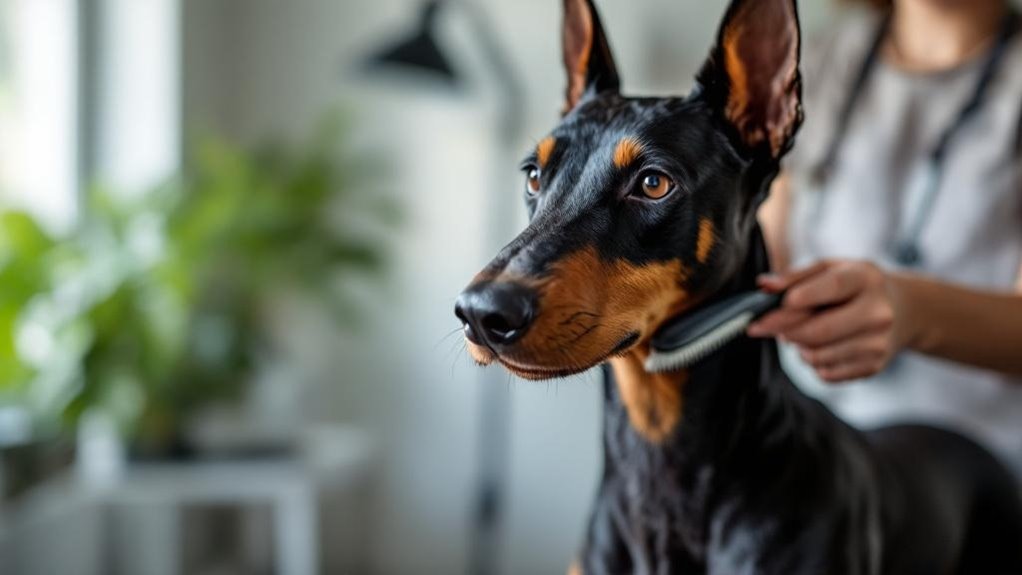
When you brush your Doberman weekly, you’re actively moving natural oils from the skin across the coat, which creates that tight, glossy finish the breed needs while strengthening individual hairs against breakage.
This same routine removes loose hair before it sheds around your home, cutting seasonal hair accumulation by 50–70% during peak periods and keeping your living space noticeably cleaner.
Beyond appearance, regular brushing stimulates blood flow to the skin and lets you catch early signs of problems like hot spots or irritation, so you can address issues quickly rather than waiting for them to develop into something more serious.
Natural Oil Distribution Benefits
Regular brushing redistributes your Doberman’s natural sebum—the protective oil produced by their skin—along their short, close-lying coat, which enhances that characteristic glossy appearance while helping their skin retain moisture and prevent dryness-related flaking.
When you brush consistently, you’re actively supporting your dog’s skin health and coat health through three key mechanisms:
- Oil redistribution evens protective sebum across the entire coat surface, creating a moisture barrier that reduces flaking and irritation.
- Dander removal clears dead skin cells that trap moisture and bacteria, lowering hotspot risk in heat-prone areas like the flank and groin.
- Follicle stimulation from gentle grooming increases blood flow to hair roots, strengthening regrowth and reducing brittle breakage during seasonal shedding cycles.
Shedding Control and Prevention
Twice-weekly brushing sessions of just five to ten minutes can reduce loose-hair accumulation in your home by as much as 50% during non-shedding months, with even greater results during your Doberman’s seasonal blowouts, because you’re removing dead hair and dander before they shed naturally around your floors and furniture.
Regular brushing also redistributes your dog’s natural skin oils along their short coat, which improves hair flexibility and reduces breakage that contributes to excessive shedding.
When you combine these brushing sessions with a weekly cool, strong-force blow-dry, you remove already-loosened hairs from both the coat and undercoat, further accelerating shedding control and maintaining your Doberman’s smooth silhouette.
This consistent grooming routine also allows you to detect skin issues early, preventing localized hair loss.
Early Detection of Skin Irritations During Weekly Checks
Your weekly grooming sessions offer you a crucial window to catch skin problems before they become serious, spotting early signs of redness, scabs, or localized hair loss often days or even weeks before your Doberman shows behavioral changes that’d prompt a vet visit. Regular brushing and close inspection reveal what you might otherwise miss.
- Parasites and irritants: Flea dirt appears as tiny black specks, while live fleas look like moving dots; ticks hide in folds and cause secondary irritation or disease transmission when left unchecked.
- Ear and skin fold inflammation: Moist, inflamed ear folds indicate yeast overgrowth, responding best to topical treatments caught early.
- Paw abnormalities: Interdigital dermatitis or embedded thorns and grass seeds cause hotspots that escalate rapidly without prompt removal.
Noting subtle texture changes—dry patches or sudden oiliness—flags dermatitis, hypothyroidism-related shifts, or allergic reactions, enabling faster veterinary diagnostics.
Spotting Parasites and Infections in Your Doberman’s Coat
Your Doberman’s short coat can mask parasites and infections that you’ll catch early through consistent weekly grooming, since fleas, ticks, and fungal problems often hide beneath the surface before they cause visible discomfort.
By parting the coat to inspect for flea dirt, checking ears and paws for debris or redness, and feeling for hotspots and localized warmth, you’re building a baseline of what’s normal for your dog’s skin and coat condition.
Early detection during these routine sessions means you can address minor issues—like interdigital yeast overgrowth or the scabs that signal mange—before they develop into painful infections requiring intensive veterinary treatment.
Early Detection During Grooming
Because a Doberman’s short, close-lying coat makes parasites and skin conditions highly visible to a trained eye, regular grooming sessions offer an ideal opportunity to catch problems before they escalate into serious infestations or infections.
During grooming, you’ll examine your dog systematically:
- Check for parasites and debris — part the coat to spot adult ticks, flea dirt (tiny black specks), or hotspots that signal early infestation before outbreak spreads through your home.
- Inspect ears regularly — look for reddish-brown discharge, foul odor, or excessive scratching behind the ear base, which often indicates otitis or yeast developing.
- Palpate the skin thoroughly — feel for subcutaneous lumps, firm masses, or enlarging nodules that warrant veterinary assessment when discovered early.
Early detection of scaling, greasy buildup, or hair thinning helps identify parasites, allergies, or endocrine issues before they progress.
Common Parasitic Infestations Signs
Spotting parasites early during your grooming routine gives you the best chance to treat them before they cause serious problems for your Doberman, and knowing what to look for makes all the difference.
Watch for persistent scratching paired with “flea dirt”—tiny black specks that turn reddish-brown on wet paper—since fleas multiply rapidly.
Check ears, neck, and between toes for ticks, which appear as engorged brown or black bumps requiring prompt removal to prevent disease transmission.
Mange presents as hair loss, red inflamed skin, and intense itching, while lice cause matted fur with visible white nits.
Secondary skin infections from parasites show moist hot spots, foul odor, or greasy discharge beneath matted areas.
These signs warrant immediate veterinary assessment and targeted antiparasitic treatment to protect your dog’s health and comfort.
Nail Trimming Prevents Joint Strain and Altered Gait
While many owners focus on their Doberman’s coat and general appearance, nail care plays an equally vital role in protecting your dog’s musculoskeletal health—one that’s often overlooked until problems develop.
Overgrown nails alter how your dog’s paws contact the ground, forcing compensatory weight distribution that stresses joints throughout the limbs. Regular nail trimming every 3–4 weeks maintains proper paw placement and prevents these harmful adjustments.
Consider these key benefits:
- Reduces abnormal pronation and splaying that strain hips and shoulders
- Prevents digital flexor tendon shortening, which increases carpal and tarsal joint load
- Minimizes gait changes during growth spurts or reduced activity periods
Professional groomers or veterinarians trim safely and assess paw conformation, ensuring your Doberman’s joints experience even, balanced wear throughout their life.
Ear Cleaning Prevents Yeast and Bacterial Infections
Your Doberman’s medium-length, folded ears create an environment where moisture and debris naturally accumulate, providing the warm, dark conditions that yeast and bacteria need to thrive. Weekly ear cleaning using a veterinarian-recommended, gentle solution removes trapped debris and prevents wax buildup before infections establish themselves.
| Early Warning Sign | What It Indicates | Action to Take |
|---|---|---|
| Redness or swelling | Inflammation developing | Schedule vet visit soon |
| Brown or green discharge | Active bacterial infection | Seek veterinary care promptly |
| Foul odor | Yeast or bacterial growth | Get professional evaluation |
| Head shaking or tilting | Ear discomfort or pain | Contact your veterinarian |
| Excess wax accumulation | Infection risk increasing | Begin regular cleaning routine |
You’ll want to balance cleaning frequency carefully—over-cleaning irritates the canal and disrupts protective bacteria, so clean thoroughly only when debris is present. Trim hairs near the ear entry carefully and keep ears dry after bathing to lower infection incidence markedly.
Dental Care Reduces Periodontal Disease and Systemic Risk
Just as consistent ear cleaning protects against infection in one vulnerable area, regular dental care guards against problems that can spread throughout your Doberman’s entire body.
Regular dental care guards against problems that can spread throughout your Doberman’s entire body, protecting long-term health.
Periodontal disease affects roughly 80% of dogs over three years old, yet you can markedly reduce this risk through proactive measures.
- Brush your Doberman’s teeth 2–3 times weekly and schedule annual veterinary dental checks with scaling and polishing to prevent gingivitis progression and tooth loss that impairs nutrition.
- Regular dental care reduces systemic inflammation markers, lowering your dog’s risk for endocarditis and complications related to Dilated Cardiomyopathy.
- Incorporate dental checks into grooming visits to catch tartar buildup, loose teeth, and oral masses early, preventing oral bacteria from entering the bloodstream.
Consistent brushing protects your dog’s long-term health.
How Grooming Strengthens the Doberman-Owner Bond
Brushing your Doberman’s coat weekly and bathing them every four to six weeks might seem like routine maintenance, but these grooming sessions actually serve a deeper purpose—they’re quiet moments where trust develops between you and your dog. Regular grooming sessions create predictable structure that Dobermans crave, establishing you as a calm, attentive leader. When you use reward-based techniques with gentle products and treats, you’re building positive associations with touch and care. Shared grooming rituals—massage-like brushing, nail trims, and ear checks—release calming neurochemicals in both of you, deepening your emotional connection while lowering stress. These hands-on moments also let you monitor early health signs like ear redness or skin issues, demonstrating the attentive care that builds trust and strengthens your mutual bond.
| Grooming Task | Frequency | Bond-Building Benefit |
|---|---|---|
| Weekly brushing | Every 7 days | Consistent, predictable handling |
| Bathing | Every 4–6 weeks | Calm routine and trust |
| Nail trimming | Monthly | Attentive care demonstrated |
| Ear checks | Weekly | Early health monitoring |
| Massage brushing | During sessions | Shared calming ritual |
Stress Reduction Through Predictable Grooming Routines
The bond you’re building through grooming extends far beyond emotional connection—it also creates a powerful stress-reduction tool for your Doberman. When you establish consistent routines with the same day, time, and gentle techniques, your dog’s nervous system learns to relax, reducing cortisol spikes that accompany unfamiliar handling.
Consistent grooming routines condition your Doberman’s nervous system to relax, reducing cortisol spikes and transforming handling into a stress-management tool.
- Weekly brushing and monthly full grooms introduce predictable touch that conditions your Doberman to accept handling, gradually lowering anxiety around grooming itself.
- Cool high-force blow-drying combined with brushing stimulates circulation and releases endorphins/oxytocin, visibly calming your active dog through massage-like sensations.
- Incorporating mental engagement during grooming—calm praise and food rewards during face and ear cleaning—satisfies your Doberman’s need for routine while achieving desensitisation to potentially stressful procedures.
This structured approach transforms grooming into a reliable anxiety management tool.
Building Confidence With Regular Handling and Touch
While your Doberman’s short coat might suggest minimal handling is needed, regular touch and deliberate handling exercises are actually foundational to building genuine confidence—the kind that keeps your dog calm during nail trims, ear cleanings, and veterinary exams.
Short daily handling exercises lasting five to ten minutes, focusing on gentle stroking of the head, neck, chest, and paws, lower cortisol responses over weeks and establish trust-based contact.
When you regularly groom your dog while offering positive reinforcement through treats and praise, you accelerate confidence and reduce avoidance behaviors.
Grooming provides repeated, controlled opportunities to desensitize your Doberman to touch in predictable contexts, strengthening your bond while making professional care visits less stressful for everyone involved.
Doberman Grooming Frequency: The Short-Coat Advantage
Your Doberman’s short, close-lying coat requires far less maintenance than many owners initially assume, yet weekly grooming sessions remain essential for both health and appearance.
Short-coat grooming allows you to accomplish multiple objectives during each session, making your routine efficient and purposeful.
- Distribute natural oils: Weekly brushing and blow-drying spreads protective skin oils across the coat, preserving the hard, glossy texture judges reward while preventing flaky, scurfy skin.
- Remove dead hair: A cool, strong-force blow-dry combined with light brushing eliminates loose hair, reducing accumulation that can lead to skin irritation.
- Detect early health issues: Regular handling lets you spot weight loss, poor coat quality, hotspots, lumps, ticks, or ear redness requiring veterinary attention.
This weekly full grooming commitment transforms routine care into preventive health monitoring, ensuring your dog stays comfortable and healthy.
Weekly Blow-Drying: Maintaining Texture and Preventing Moth-Eaten Coats
Weekly blow-drying stands as one of the most effective tools you have for preserving your Doberman’s distinctive coat texture and preventing the patchy, moth-eaten appearance that judges penalize in the show ring.
Using cool, high-force airflow removes dead hairs and loose undercoat trapped beneath your Doberman’s short, close-lying coat, which accumulates faster than you might expect. This consistent weekly routine encourages smooth shedding while distributing natural skin oils across the coat, restoring the hard, tight finish required by breed standards.
The cool setting keeps the coat flat along the neck and topline, maintaining your dog’s clean silhouette. By shortening the cycle of loose hair buildup, you markedly lower the risk of localized thinning and visible bare spots that mimic coat damage, ensuring your Doberman’s appearance remains polished and healthy.
Managing Dehydration and Color Fading in Your Doberman’s Coat
Beyond the immediate benefits of removing loose hair and maintaining texture, you’ll find that keeping your Doberman’s coat healthy requires attention to moisture and color retention, since the short, close-lying coat that defines the breed is surprisingly vulnerable to dehydration and pigment loss.
UV exposure and hard water directly compromise both hydration and vibrancy, making preventive care essential.
- Limit unprotected sun exposure and rinse with soft or filtered water after swimming to reduce fading and dehydration
- Apply a water-soluble leave-in moisturiser like Plush Puppy Seabreeze Oil after bathing to restore hydration without softening the coat’s texture
- Use quick-clean products between baths to maintain vibrancy while protecting against environmental dehydration
These straightforward steps help you preserve your dog’s natural color and coat health throughout their life.
DIY vs. Professional Grooming: Which Is Right for Your Doberman?
Because a Doberman’s short coat doesn’t demand the elaborate maintenance that longer breeds require, many owners assume they can handle all grooming at home—and while you absolutely can manage the basics yourself, the question isn’t really whether DIY grooming works, but rather what you might be missing by going it alone.
Your weekly brushing and monthly baths maintain coat health and distribute natural oils effectively, yet professional grooming every four to six weeks catches what casual inspection misses: anal gland issues, early skin lesions, and parasitic problems that signal larger health concerns.
Combining regular DIY care with quarterly professional visits strikes the ideal balance, letting you build bonds through daily attention while groomers perform deep cleaning and precision work that preserves your Doberman’s clean outline and prevents complications.
Selecting a Groomer: What Breed Knowledge Looks Like
Finding a groomer who truly understands your Doberman’s breed standards isn’t about luck—it’s about knowing what to look for, and that knowledge will protect both your dog’s appearance and health.
Finding a groomer who understands breed standards protects both your Dobermann’s appearance and health.
A knowledgeable groomer recognizes your Dobermann’s breed-specific coat requirements and avoids softening conditioners, instead using water-soluble leave-ins that preserve the short, hard texture. Look for these essential competencies:
- Weekly strong-force blow-drying and minimal trimming that maintains your dog’s classic outline without altering breed presentation
- Health screening during grooming for skin issues, hotspots, ear problems, and early signs of serious conditions
- Show preparation expertise, including precise dilution ratios for toning shampoos and finishing techniques that enhance uniform sheen
Your groomer should also guide you toward proper at-home care frequency, ensuring your Dobermann receives full grooms every four to six weeks alongside weekly brushing.
Toning Products and Seabreeze Oil: Hydration Without Softening
When you use toning shampoos like Herbal Whitening or Black Opal on your Doberman’s coat, you’re addressing color but risking the dryness and brittleness that strong toning agents can leave behind.
You’ll want to follow these treatments immediately with Seabreeze Oil mixed at one teaspoon per two liters of water, which restores hydration through its water-soluble formula while keeping your dog’s coat firm and close-lying rather than soft or fluffy.
This combination gives you the color correction you need without the textural compromise that would undermine your Doberman’s show-ready appearance.
Toning Without Over-Cooling
Toning shampoos can correct the warm or faded hues that sometimes appear in a Doberman’s coat, yet they require thoughtful application because their cooling effect—while beneficial for restoring true black or brown pigment—can easily over-process delicate rust and red markings if you’re not careful.
You’ll want to follow these guidelines:
- Use Herbal Whitening at 1:5 dilution for cool toning, reserving Black Opal at 1:1 only for severely faded black coats
- Avoid conventional conditioners after toning treatments, which soften and fluff the coat; instead choose water-soluble leave-ins like Reviva Coat
- Follow toning shampoo with Plush Puppy Seabreeze Oil to restore hydration while maintaining the close-lying texture your Doberman requires
This balanced approach preserves your dog’s distinctive appearance.
Seabreeze Oil Benefits
After you’ve applied toning shampoo and rinsed thoroughly, Plush Puppy Seabreeze Oil serves a crucial but often misunderstood purpose: it restores surface hydration and shine while preserving the hard, close-lying texture that defines the Doberman breed standard, rather than softening or fluffing the coat the way conventional conditioners do.
You dilute one teaspoon per two liters of water, then sponge or sluice the mixture through the coat. Because it’s water-soluble and non-greasy, Seabreeze Oil keeps the coat shiny without leaving residue that dulls markings or disrupts texture.
This approach prevents matting and environmental dehydration while maintaining that essential tautness judges expect. Applied regularly after show baths, it helps preserve coat hardness and restore surface hydration, supporting consistent breed presentation throughout your grooming routine.
Clean Grooming Techniques That Enhance Your Doberman’s Outline
Your Doberman’s sleek, muscular silhouette depends on grooming techniques that enhance rather than obscure the breed’s natural lines, and the key is understanding that less is often more when it comes to coat manipulation.
Regular grooming helps maintain coat integrity while preserving the sharp definition judges and breed enthusiasts expect.
- Blow-dry with strong force after light shampooing to remove dead hair and prevent fluffing, keeping the coat close-lying and crisp.
- Use thinning shears strategically around the rear, underside, and tail to tidy tufty bits without softening the outline’s classic appearance.
- Apply spot moisturizing treatments along the topline and head to enhance muscular visibility while retaining necessary texture.
These techniques help keep your pet’s contours clearly visible while preventing the moth-eaten appearance that neglected grooming can cause.
Emergency Quick-Clean Solutions for Between-Bath Freshness
Between scheduled baths, quick-clean solutions can keep your Doberman looking fresh and show-ready without the time commitment or potential coat-softening effects of full washing.
A no-rinse instant shampoo works efficiently, requiring you to spray, lightly foam, and towel off within five minutes, removing dirt and odors without water exposure.
For rapid deodorising between events, use a light mist deodoriser that adds subtle scent without heavy perfumes that distract judges or irritate skin.
A leave-in oil spray restores shine and hydration while preserving your Doberman’s close-lying texture, ensuring maintained appearance without compromising coat integrity.
Additionally, spot-clean facial areas with hypoallergenic, no-tear cleansers to safely remove tear stains and debris from sensitive tissues, keeping your dog looking polished and well-maintained between professional grooming sessions.
Show Prep Grooming: Beyond Basic Maintenance
Stepping beyond routine maintenance takes your Dobermann’s appearance from clean to competition-ready, requiring specific techniques that enhance natural structure rather than artificially alter it. You’ll discover that show prep demands precision and timing, transforming your dog’s natural assets into a polished presentation.
Show prep transforms your Dobermann’s natural assets into a polished presentation through precision grooming techniques.
Focus on these essential steps:
- Weekly cool, high-force blow-drying after shampooing removes dead hairs and preserves that close-lying texture, preventing the moth-eaten stage that damages your show topline.
- Apply targeted coat rescue treatments along the topline and head for 10–15 minutes, restoring hydration and protein structure before final finishing.
- Trim strategically with thinning shears around rear and tail areas, then finish with light Shine & Comb spray from distance, hand-running through to set hairs uniformly.
Creating a Weekly Home Grooming Schedule for Optimal Wellness
You’ll find that establishing a consistent weekly brushing routine—one that dedicates 10–15 minutes to removing dead hair, distributing natural oils, and inspecting your Doberman’s skin and coat—creates the foundation for both immediate shedding control and long-term wellness.
Rather than treating grooming as a single event, you can structure your maintenance days around specific tasks: brushing and inspection on one day, a short cool-force blow-dry to enhance coat texture on another, and spot-cleaning or massage work as needed, so the work feels manageable and your dog stays accustomed to regular handling.
This rhythm not only keeps your Doberman’s close-lying coat in peak condition, but also gives you ongoing opportunities to catch early signs of skin issues, parasites, or physical discomfort before they become serious concerns.
Weekly Brushing & Shedding
Weekly brushing forms the foundation of your Doberman’s coat health and overall wellness, and dedicating just 10–15 minutes each session removes dead hair while distributing natural oils throughout the short, close-lying coat—a simple practice that can reduce loose-shed by up to 30% between baths.
- Use a rubber curry or soft bristle brush to gently work through the coat, focusing on areas where dead hair accumulates most.
- Follow brushing with a cool, strong-force blow-dry for 2–4 minutes to lift remaining loose hairs and maintain your dog’s smooth texture.
- Combine brushing and bathing routines every 4–6 weeks with Seabreeze Oil leave-in treatment to preserve coat vigor during heavy-shedding seasons.
Consistent grooming prevents matting and reveals skin issues early, keeping your Dobermann comfortable and healthy.
Maintenance Days & Routine
Because a Doberman’s short coat and active lifestyle create specific grooming demands, establishing a consistent weekly schedule—rather than waiting until problems arise—lets you catch skin issues early, manage shedding effectively, and maintain the breed’s characteristic sleek appearance.
You’ll want to dedicate fifteen to twenty minutes for a full-body brush and inspection, checking for hotspots, ticks, or lumps that require veterinary attention.
Every two to three weeks, check paw pads and trim nails to prevent joint strain and abnormal gait.
Weekly face and ear wipes with a hypoallergenic cleanser protect against wax buildup and infection.
A strong-force blow-dry after bathing removes loose hairs and preserves your Doberman’s tight topline.
Regular maintenance at home reduces the need for professional groomers while keeping your dog’s skin and coat in prime condition.
Frequently Asked Questions
Does a Shiny Coat Mean a Dog Is Healthy?
No, a shiny coat doesn’t guarantee your dog’s healthy. You’ll find that glossy fur can mask internal issues like hypothyroidism, infections, or malabsorption. You should consult your veterinarian about persistent coat changes regardless of appearance.
What Is the 7 Second Rule for Dogs?
You’ll wait about seven seconds after calling your dog before repeating the cue, giving them time to process and respond. You reward prompt compliance within that window while withholding reinforcement for delays, building reliable obedience.
How to Keep a Doberman Coat Shiny?
You’re about to discover the secret that transforms your Doberman’s coat into a mirror-like finish. You’ll use diluted shampoo, follow with Seabreeze Oil, blow-dry weekly, and apply leave-in moisturizer for that coveted shine.
What Is the Hardest Dog Breed to Groom?
You’ll find Afghan Hounds and Komondors among the hardest breeds to groom. They demand daily brushing, professional stripping, and meticulous cord separation to prevent matting and preserve their functional coats.
Conclusion
You’ll find that consistent grooming reduces veterinary visits by up to 30%, making it one of your most effective health investments. When you establish a weekly routine, you’re not just maintaining appearance—you’re actively preventing skin infections, joint problems, and parasitic issues. By committing to these practices, you’re giving your Doberman the preventative care that extends both quality and length of life, transforming grooming from a cosmetic task into essential wellness maintenance.