Affiliate Disclosure: This post may contain affiliate links. If you purchase through these links, we may earn a small commission at no additional cost to you. We only recommend products and tools we genuinely believe may be useful for you and your Doberman.
Daily Doberman eye care starts with quick inspections for clarity, redness, or discharge—catching problems early prevents serious damage. Clean around the eyes weekly with sterile saline and a soft cloth, trim facial hair every six to eight weeks with blunt scissors, and flush debris after outdoor time. Watch for squinting, pawing, or behavioral changes like hesitation on stairs, which signal vision trouble or pain. Schedule annual eye exams with your vet, and understand that what seems minor today could progress into permanent vision loss without proper attention.
- Key Takeaways
- Doberman Eye Anatomy and Breed Vulnerabilities
- What Healthy Doberman Eyes Look Like
- Daily Eye Inspection Checklist
- Safe Cleaning and Debris Removal
- Trimming Facial Hair to Prevent Irritation
- Protecting Eyes From Outdoor Hazards
- Nutrition That Supports Doberman Vision
- Red Flags: When to Call the Vet
- Recognizing Serious Symptoms: Bulging, Pawing, and Squinting
- Vision Loss and Behavioral Changes to Watch
- Annual Eye Exams: What to Expect
- Emergency First Aid for Eye Injuries
- Frequently Asked Questions
- Conclusion
Key Takeaways
- Perform daily eye inspections for clarity, cloudiness, redness, discharge, or swelling to catch problems early.
- Trim hair around eyes every 6–8 weeks and flush with sterile saline after outdoor activities.
- Watch for behavioral changes like hesitation on stairs, bumping into objects, or excessive squinting.
- Document symptoms with onset dates and affected side to share during veterinary eye exams.
- Rinse gently with sterile saline for scratches or debris; seek immediate vet care if worsening.
Doberman Eye Anatomy and Breed Vulnerabilities
While Dobermans share the fundamental eye structures common to all dogs—including the cornea, iris, pupil, lens, retina, and sclera—their distinctive almond-shaped eyes and long muzzle create a unique set of considerations for owners committed to their eye health. Their facial structure influences tear flow and eye exposure, making them susceptible to specific breed vulnerabilities.
You’ll want to know that Dobermans face higher risk for progressive retinal atrophy and inherited retinal disorders, which is why annual ophthalmic screening matters. Additionally, some lines develop entropion or ectropion—conditions where eyelids turn inward or outward—potentially causing corneal ulcers.
As your Doberman ages, lenticular sclerosis and cataracts commonly emerge, requiring closer monitoring every six to twelve months. Watch for redness, eye discharge, cloudiness, or squinting, and schedule veterinary exams promptly when you notice these signs.
What Healthy Doberman Eyes Look Like
Your Doberman’s healthy eyes should appear clear and bright with no cloudiness, redness, or discoloration, while the surrounding area remains free of colored discharge or excessive tearing.
Beyond appearance, you’ll notice that a comfortable dog doesn’t frequently squint, paw at its eyes, or blink excessively—these behaviors signal irritation or pain that warrants attention.
Check both eyes regularly for symmetry in how they open, watching for any bulging, prominent third eyelids, or tear-staining around the muzzle, since these changes can indicate underlying concerns.
Clear Bright Appearance Standards
Because a Doberman’s striking appearance often draws attention to the face, you’ll want to know what truly healthy eyes look like so you can spot changes early.
Healthy eyes appear clear and bright across the front, with no cloudiness obscuring the surface. The whites should remain free of persistent redness, and you shouldn’t see visible blood vessels there. Look for minimal clear tear film only, never green or yellow discharge.
When you check the pupils, they should be equal in size and responsive to light; unequal pupils warrant immediate attention. Lift the eyelids gently to confirm the third eyelid isn’t protruding, and watch for corneal scratches, excessive tear staining, squinting, or pawing at their eyes, as these signal discomfort despite normal appearance.
Normal Behavior and Comfort
A Doberman that’s comfortable and seeing well typically displays consistent, confident behavior throughout the day, moving freely around your home without hesitation, jumping into vehicles without pause, and locating toys or treats with ease.
You’ll notice your dog doesn’t squint, blink excessively, or avoid light, which would signal irritation or pain. Watch for vision-related behavior like comfortably negotiating furniture and stairs; hesitation or bumping into objects warrants veterinary evaluation.
Check that normal discharge remains minimal and clear, since thick, yellow, or green discharge lasting more than a day indicates potential problems.
Additionally, monitor the third eyelid—it shouldn’t be continuously prominent—and watch for cherry eye, a persistent pink mass at the inner corner requiring prompt assessment.
Daily Eye Inspection Checklist
You’ll want to establish a routine where you inspect your Doberman’s eyes daily for clarity and brightness, noting whether the eyes appear cloudy, hazy, or unusually discolored—these changes can signal conditions like cataracts or lens problems that need veterinary attention.
During your inspection, you’re also looking for behavioral shifts such as squinting, frequent pawing, or hesitation finding their way through familiar spaces, since these signs often indicate pain or declining vision rather than just cosmetic concerns.
Clear Eyes, Healthy Signs
Daily eye inspections form the foundation of Doberman eye health because they’re your earliest warning system for problems that, when caught early, often respond well to treatment.
You’ll develop confidence spotting normal versus concerning changes by observing your dog’s eyes consistently.
Focus on three key areas during your inspections:
- Appearance: Check for clear eyes without cloudiness, and note any visual changes in color or opacity, which can signal cataracts or other conditions requiring veterinary attention.
- Signs of irritation: Look for redness, swelling, discharge (particularly green or yellow), or visible third eyelid prolapse, as these indicate infection or inflammation needing prompt care.
- Behavioral cues: Observe squinting, frequent pawing, or reluctance finding familiar spaces, suggesting pain or declining vision.
Gently wipe away tear stains daily using fresh cloths per eye, preventing cross-contamination while maintaining regular veterinary check-ups for professional evaluation.
Spotting Changes Early
While understanding what healthy eyes look like gives you confidence, knowing what changes to watch for transforms you into an active partner in your Doberman’s eye health—and establishing a simple daily inspection routine helps you catch problems before they progress.
Watch for cloudiness, excessive blinking, or a raised third eyelid, which signal potential issues requiring veterinary attention.
Monitor discharge carefully; green or yellow discharge indicates infection, while clear tear staining simply needs gentle wiping.
Note behavioral indicators like squinting, pawing at the face, or reluctance to navigate stairs, as these suggest discomfort or vision changes.
Document any changes you observe, including onset date and affected side, then share this information during annual veterinary eye exams.
This systematic approach transforms routine observation into meaningful preventive care.
Safe Cleaning and Debris Removal
Keeping your Doberman’s eyes clean requires a gentle, consistent approach that removes irritants without causing damage to sensitive eye tissues.
Daily eye cleaning protects against debris buildup and tear staining, which your Doberman is prone to experiencing.
Follow these safe cleaning practices:
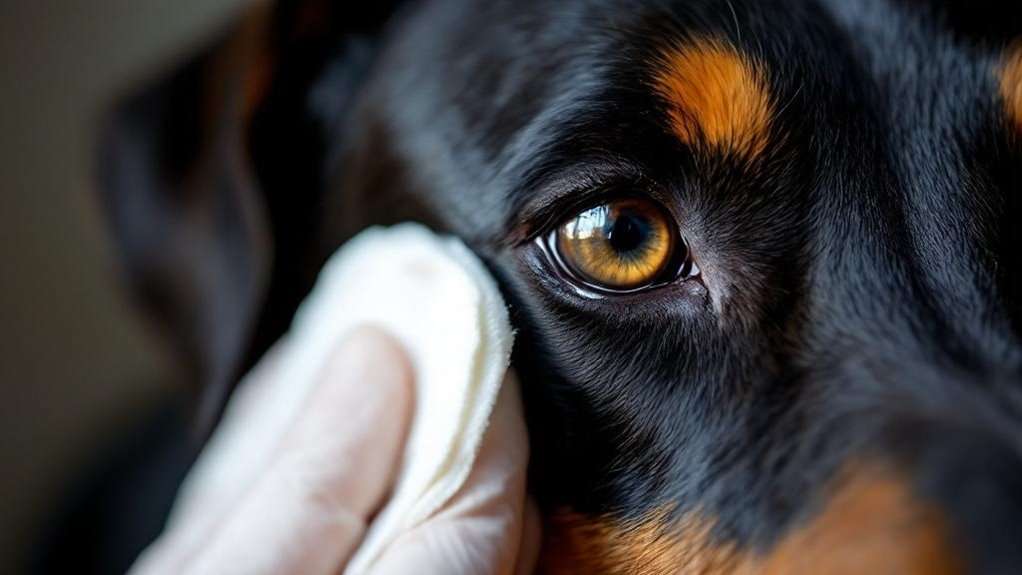
- Use a soft, damp cloth or vet-recommended sterile saline, wiping gently from the corner of each eye toward the ear, employing a fresh cloth per eye to prevent cross-contamination.
- For dry crusts, hold a warm compress against the closed eyelid for 30–60 seconds to soften material before gentle removal, preventing corneal scratches.
- Avoid human eye drops containing additives, alcohol, hydrogen peroxide, or essential oils; stick to plain sterile saline or veterinary rinses.
Trim facial hair around the eyes and minimize smoke, dust, and pollen exposure.
Thick yellow or green discharge, persistent tearing, or cloudiness after cleaning signals infection or corneal damage, requiring veterinary care.
Trimming Facial Hair to Prevent Irritation
Beyond keeping the eye area clean, you’ll also need to manage the hair around your Doberman’s eyes, since facial hair that grows too long can rub directly against the cornea and trap dust or other irritants that cause tear staining and discharge. Every 4–6 weeks, trim the hair around a Doberman’s eyes with blunt-nosed scissors, maintaining a 1–2 mm distance from the eyelid margin to prevent accidental injury while ensuring hair doesn’t contact the eye surface.
| Trimming Tool | Technique | Safety Benefit |
|---|---|---|
| Blunt-nosed scissors | Use short snips with stabilized head | Reduces skin/eyelid cutting risk |
| Pet-safe trimmer with guard | Controlled, even cuts | Prevents clipper blade contact |
| Professional groomer | Every 6–8 weeks | Maintains proper clearance safely |
Stabilize your Doberman’s head throughout, reward calm behavior, and inspect trimmed areas for redness or crusting afterward, seeking veterinary evaluation if irritation persists.
Protecting Eyes From Outdoor Hazards
Although Dobermans have deep-set eyes that offer some natural protection, they’re still vulnerable to corneal abrasions from environmental hazards you’ll encounter during outdoor activities.
You can markedly reduce risk through deliberate precautions:
- Keep your Doberman on cleared trails and avoid dense brush where branches and sticks pose eye-poke dangers.
- Use a snug, well-fitted harness and maintain leash control to prevent sudden lunges that drive debris into the eyes.
- Consider dog goggles during high-risk activities like biking or riding with head out the window.
Additionally, avoid high-wind outings and heavy-smoke days to protect against windborne irritants.
After outdoor time, flush your Doberman’s eyes with sterile saline if you notice squinting or visible debris.
Seek immediate vet care for persistent redness, green or yellow discharge, or signs of pain.
Nutrition That Supports Doberman Vision
Your Doberman’s vision depends markedly on what you feed him, since omega-3 fatty acids (particularly EPA and DHA from fish oil) support the retinal cells that enable clear sight, and you’ll want to aim for veterinarian-recommended doses of 20–55 mg/kg daily to see real benefits.
Equally important are antioxidants like vitamin E, lutein, and beta-carotene, which protect your dog’s eye tissues from the oxidative stress that accelerates age-related vision problems and progressive retinal disorders.
Rather than viewing nutrition as a simple supplement-and-forget matter, you’re establishing a foundation of metabolic health through balanced, high-quality food and carefully chosen supplements that work together to preserve your dog’s eyesight over time.
Omega-3 Fatty Acids Benefits
Most pet owners don’t realize that the fats in your Doberman’s diet do far more than provide energy—they’re fundamental to maintaining healthy vision and protecting delicate eye tissues from inflammation and deterioration.
Omega-3 fatty acids, particularly EPA and DHA, strengthen retinal cell membranes and help preserve your dog’s visual function over time.
Consider these key benefits:
- Reduce inflammation in ocular tissues, lowering risk of dry eye and conjunctivitis in susceptible Dobermans
- Support retinal health by maintaining cellular structure and function throughout your dog’s life
- Slow progression of existing inflammatory eye conditions through consistent dietary supplementation
Fish oil supplements formulated for pets provide reliable omega-3 sources, though you’ll want veterinary-grade products tested for purity.
Your veterinarian can recommend appropriate dosing—typically 100–300 mg combined EPA+DHA per 10 pounds of body weight daily—especially if your Doberman takes blood-thinning medications.
Antioxidants For Retinal Health
Retinal cells face constant assault from free radicals—unstable molecules that damage cellular structures and accelerate aging—which is why antioxidants like vitamins A and E, lutein, zeaxanthin, and beta-carotene matter so much for your Doberman’s long-term vision. These compounds neutralize oxidative stress in retinal cells and may slow age-related degeneration, particularly important for Dobermans genetically predisposed to retinal disease.
| Antioxidant | Primary Source | Retinal Benefit |
|---|---|---|
| Vitamin A | Orange vegetables | Supports light detection |
| Vitamin E | Leafy greens | Protects cell membranes |
| Lutein & Zeaxanthin | Dark greens | Filters harmful light |
| Beta-carotene | Carrots, squash | Neutralizes free radicals |
High-quality commercial senior formulas often include antioxidant blends with vitamin C, zinc, and selenium. Whole foods—oily fish for DHA, orange vegetables for beta-carotene—complement balanced nutrition. Consult your veterinarian before adding supplements to assure appropriate dosing and prevent hypervitaminosis, while scheduling regular ophthalmic screening to detect changes early.
Red Flags: When to Call the Vet
Though it’s easy to dismiss minor eye irritation as something that’ll resolve on its own, certain signs warrant immediate veterinary attention because they can progress rapidly and threaten your Doberman’s vision. Watch for these critical indicators:
Minor eye irritation can progress rapidly in Dobermans—don’t wait to contact your vet if you notice warning signs.
- Sudden cloudiness or a blue/gray cornea, severe redness, or a visibly bulging eye can signal acute glaucoma, which risks rapid, permanent vision loss and demands urgent care.
- Persistent squinting, pawing at the eye, or keeping it closed suggests corneal ulcers or scratches that deteriorate quickly without treatment.
- Purulent discharge, thick crusting, or a foul odor indicates bacterial infection requiring prescription antibiotics.
Additionally, contact your vet if you notice a red, fleshy mass at the inner corner (cherry eye) or prolonged third eyelid prominence, as surgical correction often prevents chronic dry eye complications.
Recognizing Serious Symptoms: Bulging, Pawing, and Squinting
While your Doberman’s eyes can tolerate minor irritation, sudden physical changes like bulging, persistent pawing, or frequent squinting represent your dog’s way of signaling genuine distress, and recognizing these symptoms early makes the difference between a quick recovery and permanent vision damage. You should watch for combinations of signs, as patterns help you prioritize urgent care and identify what treatment your dog needs.
| Symptom | What It May Indicate |
|---|---|
| Bulging eye with dilated pupil | Acute glaucoma (emergency) |
| Pawing at eye with discharge | Corneal ulcers or infection |
| Squinting with redness | Conjunctivitis or abrasion |
| Cloudy cornea plus pawing | Blepharospasm from pain |
| Bulging, pawing, and behavior changes | Immediate veterinary attention required |
Seek immediate veterinary or ophthalmology evaluation whenever you notice these symptoms alongside behavioral changes like reluctance negotiating stairs or avoiding light.
Vision Loss and Behavioral Changes to Watch
Vision loss in Dobermans often develops gradually, which means you’ll need to watch for subtle shifts in how your dog moves through familiar spaces rather than waiting for obvious signs of blindness.
Progressive retinal atrophy typically begins with night vision problems, so notice if your Doberman hesitates on stairs at dusk or struggles finding toys in dim light.
Monitor these behavioral changes closely:
- Navigation difficulties—misjudging jumps, hesitating at curbs, or circling before lying down
- Compensatory behaviors—relying more on hearing and scent, following you closely, or freezing in unfamiliar places
- Acute vision loss indicators—sudden bumping into furniture, reluctance to play, or anxiety
Rapid cloudiness, squinting, or pain warrant immediate veterinary evaluation, since retinal detachment and glaucoma require urgent care.
Request an ophthalmic exam and genetic screening to establish baseline vision health.
Annual Eye Exams: What to Expect
Regular eye exams—ideally once yearly—form the foundation of preventive care for your Doberman, since many serious conditions develop silently before you’d notice behavioral changes.
During a thorough ophthalmic evaluation, your veterinarian inspects the cornea, conjunctiva, lens, and retina while measuring intraocular pressure through tonometry to screen for glaucoma, cataracts, and PRA (progressive retinal atrophy).
Your vet typically performs a Schirmer tear test to detect early dry eye, which can damage the cornea if left untreated.
For middle-aged and senior Dobermans, a dilated retinal exam or electroretinography referral may be recommended when retinal degeneration is suspected.
Bring documentation of any eye symptoms, medications, or supplements, because this information guides treatment decisions and determines whether you’ll need a referral to a veterinary ophthalmologist.
Emergency First Aid for Eye Injuries
Despite your best efforts to keep your Doberman safe, eye injuries can happen quickly—during play, outdoor adventures, or accidents around the home—and knowing how to respond in those first critical moments can make the difference between a minor problem and permanent vision loss.
Eye injuries strike fast—swift action in those first critical moments can mean the difference between saving and losing your Doberman’s sight.
When you suspect an eye injury, take these immediate steps:
- For a corneal scratch or foreign body, rinse gently with sterile saline and avoid rubbing; if debris doesn’t wash out, don’t probe further.
- For eye bleeding, bulging, or cloudiness, treat it as an emergency requiring immediate veterinary care to rule out globe rupture or corneal ulcer.
- During transport, use an Elizabethan collar and minimize light exposure while avoiding human eye drops, which can worsen damage.
Swift action protects your dog’s sight.
Frequently Asked Questions
Can Artificial Tears Harm My Doberman’s Eyes if Used Too Frequently?
You shouldn’t harm your Doberman’s eyes with frequent artificial tears if you’re using veterinary-approved products. However, you’ll want to consult your vet about the right frequency and type for your dog’s specific needs.
Which Dog Foods Best Support Eye Health and Prevent Vision Problems?
You’ve got to keep your eyes peeled for foods rich in omega-3s, lutein, and antioxidants. You’ll want to feed your Doberman salmon, carrots, blueberries, and sweet potatoes to support vision health effectively.
How Do Tear Stains Develop and What Causes Them in Dobermans?
You’ll notice tear stains develop when your Doberman’s tears overflow onto their face. You’re likely dealing with blocked tear ducts, allergies, or ear infections. You can prevent them by keeping their eyes clean and addressing underlying health issues promptly.
Are Certain Eye Conditions Hereditary in Dobermans I Should Screen For?
You’ll want to screen for progressive retinal atrophy and von Willebrand’s disease—conditions you’ll find running through Doberman bloodlines. You’re also checking for cataracts and glaucoma, which you shouldn’t ignore during routine veterinary visits.
What’s the Cost Difference Between Routine Eye Exams and Emergency Veterinary Care?
You’ll typically pay $50–$150 for routine eye exams, while emergency veterinary care costs $500–$2,000 or more. Regular checkups help you catch problems early, saving you thousands in emergency treatments later.
Conclusion
You’ve now got the knowledge to protect your Doberman’s vision through consistent, attentive care. When you catch a small issue early—like noticing your dog squinting after a walk and finding a grass blade lodged under the eyelid—you’re preventing what could become a serious infection or corneal scratch. Regular inspections combined with annual vet visits give you the best chance of keeping your dog’s eyes healthy throughout their life.