Affiliate Disclosure: This post may contain affiliate links. If you purchase through these links, we may earn a small commission at no additional cost to you. We only recommend products and tools we genuinely believe may be useful for you and your Doberman.
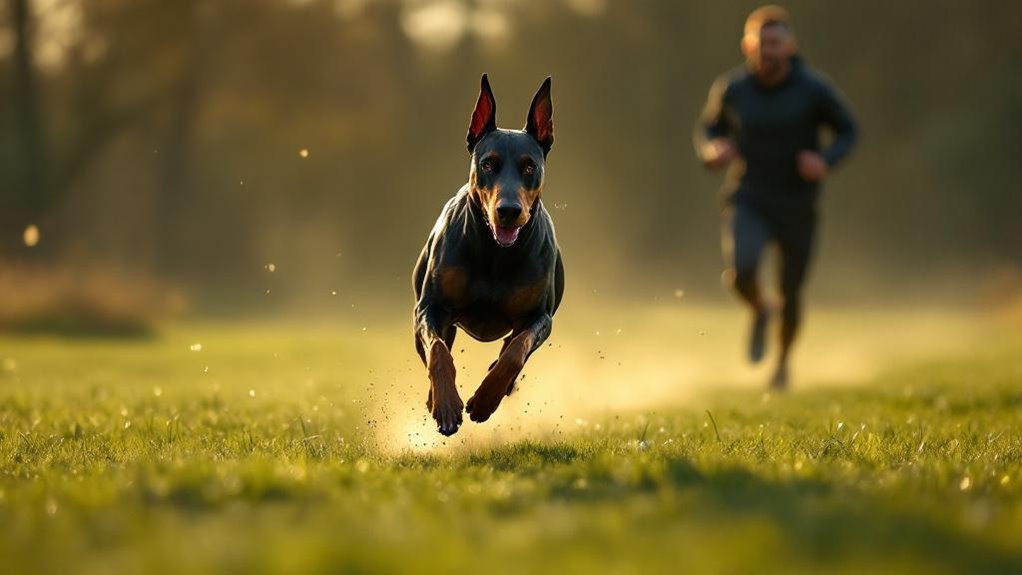
Your Doberman requires a minimum of 70 minutes of daily exercise, which should combine brisk walks, jogging, and safe off-lead running rather than relying on a single long outing. This substantial activity level prevents destructive behaviors, anxiety, and aggression that develop from insufficient stimulation. Puppies need gentler, shorter sessions to protect developing joints, while adolescents demand 20-36 minutes of structured exercise daily. Mental enrichment through training and puzzle toys complements physical activity, creating a balanced routine that keeps your dog settled and confident. Understanding how to adjust these needs across different life stages guarantees your Doberman thrives.
- Key Takeaways
- How Much Exercise Does Your Doberman Need?
- Why Dobermans Need So Much Activity
- Puppy Exercise: Protecting Growing Joints
- The Adolescent Phase: Managing Peak Energy
- Adult Dobermans: Daily Exercise Targets
- Senior Dobermans: Lower-Impact Routines
- When Exercise Falls Short: Behavioral Red Flags
- Mental Enrichment: The Missing Half of Exercise
- High-Intensity Activities for Adult Dogs
- Swimming for Dobermans: Low-Impact Alternative
- Agility Training for Dobermans
- Fetch and Retrieval Games
- Hiking and Trail Walking With Your Doberman
- Dog Park Socialization and Play
- Flirt Pole Play for Energy Release
- Tug-of-War and Interactive Games
- Weighted Vests: Boosting Workout Intensity
- Tracking Your Doberman’s Daily Activity
- Building a Weekly Exercise Schedule
- Exercise Modifications for Health Conditions
- Choosing an Exercise Routine for Your Lifestyle
- Frequently Asked Questions
- Conclusion
Key Takeaways
- Healthy adult Dobermans require a minimum of 70 minutes of daily exercise combining brisk walks, jogging, and safe off-lead running.
- Puppies need only 5 minutes of exercise per month of age, twice daily, focusing on gentle activities to protect developing joints.
- Adolescent Dobermans between six and nine months require 10-18 minutes of structured exercise twice daily plus 15-20 minutes of interactive play.
- Mental enrichment through obedience training, puzzle toys, and scent work complements physical exercise to prevent boredom-related anxiety and destructive behaviors.
- Adjust exercise routines based on age and health conditions, utilizing low-impact activities like swimming for dogs with joint issues.
How Much Exercise Does Your Doberman Need?
Most healthy adult Dobermans require a minimum of 70 minutes of exercise daily, which means you’ll want to structure their activity around brisk walks, jogging, and safe off-lead running rather than assuming a single long outing will meet their needs.
Adult Dobermans need 70 minutes daily exercise through varied activities—brisk walks, jogging, and off-lead running—not single long outings.
Your Doberman’s daily exercise should combine physical and mental stimulation, as these elements work together to keep your dog healthy and engaged.
Puppies, however, require different consideration—you’ll limit their exercise to 5 minutes per month of age, conducted up to twice daily, protecting their developing joints from excessive strain.
Senior Dobermans need adjusted routines favoring shorter, more frequent outings that accommodate their reduced stamina.
This structured approach prevents the destructive behaviors that boredom creates, ensuring your Doberman remains balanced and content.
Why Dobermans Need So Much Activity
Because Dobermans were originally bred as working dogs with strong protective instincts and athletic builds, they’ve inherited a naturally high energy level and robust endurance that sets them apart from many other breeds.
Your Doberman’s exercise needs extend beyond simple physical activity, as their bodies and minds require consistent engagement to function efficiently. Without adequate outlets, you’ll likely encounter destructive behaviors stemming from boredom and pent-up energy.
Mental stimulation proves equally important as physical exertion, meaning puzzle toys and obedience training directly support your dog’s overall well-being.
Puppy Exercise: Protecting Growing Joints
While your Doberman puppy’s natural athleticism and curiosity make exercise essential, the way you structure that activity during their first year directly impacts their long-term joint health.
Puppy exercise requires careful calibration, following the five-minute-per-month-of-age guideline twice daily, which protects their developing skeletal system from premature stress.
Protecting growing joints means prioritizing gentle activities over high-impact exercise:
- Indoor play sessions that don’t involve jumping or running on hard surfaces
- Basic obedience training that engages their mind alongside controlled movement
- Supervised socialization with other puppies for natural, regulated energy release
- Rest periods equal to or exceeding active playtime
- GPS tracking to monitor actual activity levels against recommended guidelines
Excessive exercise before twelve to eighteen months risks lasting damage, so balancing activity with adequate rest guarantees your puppy develops strong, healthy joints capable of supporting their athletic potential throughout adulthood.
The Adolescent Phase: Managing Peak Energy
As your Doberman moves into the six-to-nine-month adolescent phase, you’ll notice their energy levels shift dramatically from manageable puppy spurts into something far more sustained and intense, requiring a significant step up in both physical and mental activity. Without adequate engagement, you’ll likely encounter destructive behavior and hyperactivity bursts that can strain your household.
| Activity Type | Duration | Frequency |
|---|---|---|
| Structured exercise | 10-18 minutes | Twice daily |
| Interactive play | 15-20 minutes | Once daily |
| Mental stimulation | 10-15 minutes | Daily |
You’ll want to combine running, jogging, and interactive play with training sessions that channel their drive productively. Mental engagement through puzzle toys and obedience work proves equally important, preventing boredom and anxiety-related issues that emerge during this critical developmental window.
Adult Dobermans: Daily Exercise Targets
Once your Doberman reaches adulthood, around eighteen months old, their exercise requirements stabilize into a consistent routine that’ll keep them healthy and content.
You’ll need to commit to a minimum of 70 minutes daily, which combines physical activity with mental stimulation for well-rounded development.
Your exercise strategy should include:
- Brisk walks covering varied terrain to build endurance
- Jogging sessions that elevate their cardiovascular fitness
- Safe off-lead running in secure environments for freedom
- Interactive games like fetch that engage their mind
- Obedience training paired with puzzle toys for problem-solving
Regular exercise prevents destructive behaviors stemming from boredom, while mental stimulation through training keeps their intelligence sharp.
Consider using a GPS tracker to monitor duration and guarantee safe outdoor activities, giving you confidence that your adult Doberman receives appropriate, consistent exercise that supports both physical and psychological well-being.
Senior Dobermans: Lower-Impact Routines
Your senior Doberman’s exercise needs shift considerably as they age, requiring a thoughtful adjustment rather than a complete halt to activity.
Low-impact exercises like swimming and gentle walks become essential, protecting aging joints while maintaining fitness and muscle tone.
You’ll want to schedule shorter, more frequent outings instead of lengthy sessions, preventing overexertion while keeping your senior Doberman engaged.
During activities, watch carefully for signs of fatigue or discomfort, adjusting intensity based on what you observe.
Balance staying active with avoiding strain—this equilibrium keeps your dog healthy without risking injury.
Consulting your veterinarian helps you develop a personalized routine suited to your senior Doberman’s specific needs and health conditions, ensuring exercise supports their wellbeing during their golden years.
When Exercise Falls Short: Behavioral Red Flags
When you don’t meet your Doberman’s exercise requirements, you’ll likely notice destructive behavior patterns—excessive chewing, digging, and indoor accidents—that stem from pent-up physical energy rather than disobedience.
Alongside these destructive tendencies, you may observe anxiety and restlessness signs such as hyperactivity, pacing, or even aggression, which indicate your dog’s frustration with insufficient mental and physical stimulation.
Recognizing these behavioral red flags early allows you to adjust your exercise routine before these patterns become deeply established habits.
Destructive Behavior Patterns
Because Dobermans possess such considerable energy and intelligence, they’ll often express frustration through destructive behaviors when they’re not getting enough physical activity and mental engagement—and these warning signs shouldn’t be ignored, as they’re your dog’s way of communicating unmet needs.
When exercise and stimulation fall short, your Doberman may develop several destructive behavior patterns:
- Excessive chewing on furniture, shoes, and household items
- Digging holes in yards or scratching at flooring
- Indoor accidents despite previous housetraining success
- Anxiety-driven pacing and restlessness throughout your home
- Aggressive or obsessive behaviors directed toward toys or people
These patterns intensify particularly in puppies under eighteen months, whose developing minds require consistent outlets.
Anxiety and Restlessness Signs
Beyond the visible destruction, anxiety and restlessness often signal that your Doberman’s internal state is suffering from insufficient exercise and mental engagement. When your dog isn’t receiving adequate physical activity, they may exhibit anxious behaviors that manifest in multiple ways throughout their day.
| Anxiety Sign | What You’ll Notice | Why It Happens |
|---|---|---|
| Excessive barking | Constant vocalization, especially when alone | Pent-up nervous energy seeking release |
| Pacing | Repetitive walking patterns indoors | Restlessness from unmet physical needs |
| Restlessness | Inability to settle or relax | Insufficient mental stimulation |
| Whining | Persistent, distressed sounds | Frustration from low activity levels |
| Destructive focus | Targeting specific objects anxiously | Channeling anxiety into problematic behavior |
Recognizing these signs early allows you to adjust your Doberman’s exercise routine before anxiety escalates into serious behavioral problems.
Mental Enrichment: The Missing Half of Exercise
While physical exercise forms the foundation of a Doberman’s daily routine, mental enrichment represents an equally essential component that many owners overlook. This cognitive stimulation addresses your dog’s high intelligence and natural problem-solving abilities in ways that running alone cannot.
Your Doberman thrives when you combine physical activity with structured mental challenges:
- Obedience training sessions that reinforce commands while engaging their focus
- Puzzle toys requiring problem-solving to access treats or rewards
- Scent work activities tapping into their natural tracking instincts
- Scheduled enrichment routines preventing boredom-related anxiety
- Interactive games combining physical movement with cognitive engagement
Without adequate mental stimulation, your Doberman may develop restlessness and destructive behaviors despite physical exercise.
Integrating these activities into your daily schedule creates a balanced approach, keeping your dog focused, calm, and genuinely satisfied at home.
High-Intensity Activities for Adult Dogs
You’ll find that running and jogging together, agility training, and flirt pole play offer the sustained intensity your adult Doberman requires, each addressing different aspects of their athletic needs while preventing the boredom that comes from repetitive exercise alone.
Running at a brisk pace builds cardiovascular endurance and allows your dog to work through excess energy in a straightforward way, whereas agility training layers in mental problem-solving alongside physical exertion, creating a more complete workout that strengthens your partnership.
Flirt pole play, meanwhile, channels their natural prey drive into controlled activity, giving you a tool that’s especially useful on days when outdoor conditions limit your usual running options.
Running And Jogging Together
Running or jogging with your adult Doberman represents one of the most effective ways to meet their substantial exercise needs, since these high-intensity activities deliver the cardiovascular conditioning their athletic build demands while simultaneously burning through the mental and physical energy that can otherwise lead to destructive behavior.
Aim for 30 to 60 minutes of running sessions to fulfill part of their daily 1.5 to 2-hour exercise requirement. Your Doberman needs this consistent high exercise output for ideal health and temperament management.
Essential considerations for running together include:
- Using a well-fitted harness and leash for secure control during high-speed movement
- Monitoring for fatigue signs and overheating, particularly in warm weather
- Varying routes to maintain mental engagement
- Preventing heatstroke through observation and pacing
- Building endurance gradually over time
Agility Training For Adults
Agility training offers your adult Doberman a powerful alternative to standard running, combining the high-intensity physical exertion they crave with mental stimulation that keeps their intelligent minds occupied and satisfied.
You can join an agility club or set up your own course using hurdles, tunnels, and weaving poles, adapting the complexity to your dog’s skill level. Sessions typically last thirty minutes to an hour, providing structured exercise that improves coordination and balance while building your bond through consistent practice.
As your Doberman masters each obstacle, reward them with treats and praise, reinforcing their progress. This demanding workout reduces destructive behaviors stemming from excess energy, channeling their drive productively while maintaining their physical fitness and psychological well-being.
Flirt Pole Play
Because Dobermans possess a natural prey drive that demands purposeful outlets, flirt pole play offers a particularly effective way to satisfy this instinct while delivering the intense physical exercise they require.
You can construct a simple DIY flirt pole using a long stick with a rope attached to a toy or lure, then adjust sessions based on your dog’s energy level and fitness needs.
This activity engages both body and mind:
- Fast-paced chasing that elevates heart rate quickly
- Jumping movements that build strength and coordination
- Mental stimulation from tracking unpredictable lure patterns
- Channeling prey drive into targeted, controlled activity
- Prevention of destructive behaviors linked to boredom
Regular flirt pole play transforms excess energy into purposeful exercise, helping your adult Doberman maintain physical fitness while satisfying natural instincts in a structured environment.
Swimming for Dobermans: Low-Impact Alternative
While many dog owners focus on land-based activities, swimming offers Dobermans a uniquely beneficial form of exercise that protects their joints while building strength and endurance. This low-impact physical activity becomes particularly valuable for aging dogs or those recovering from injuries, as water supports their weight while they engage in vigorous movement.
| Benefit | Impact | Best For |
|---|---|---|
| Joint Protection | Reduces stress on bones | Aging dogs |
| Cardiovascular Health | Strengthens heart function | Overall fitness |
| Cool Relief | Natural temperature regulation | Hot weather |
| Mental Stimulation | Explores new environment | Behavioral improvement |
| Endurance Building | Increases stamina gradually | Active Dobermans |
You’ll find that regular swimming sessions reduce destructive behaviors linked to insufficient exercise. Always use a dog life jacket for safety, especially with novice swimmers, ensuring your Doberman can explore water environments confidently while remaining protected from drowning risks in deeper areas.
Agility Training for Dobermans
When you introduce your Doberman to agility training, you’re building physical coordination through obstacle navigation while simultaneously sharpening their mental focus. Since the activity requires them to process commands, anticipate movements, and adjust their body position in real time, this combination of physical challenge and cognitive engagement works particularly well for Dobermans.
Their natural athleticism and intelligence mean they thrive when both dimensions of their capability are being developed together. You’ll find that as your dog progresses through increasingly complex courses, they’re not just becoming more nimble and balanced, but also becoming more attentive to you and more satisfied with the mental work involved.
This translates directly into better behavior at home.
Building Physical Coordination
Through maneuvering obstacle courses and varied terrain, your Doberman develops the physical coordination and balance that’ll serve as the foundation for all other athletic activities.
Agility training engages multiple muscle groups simultaneously, refining your dog’s body awareness and movement precision.
Your Doberman benefits from:
- Jumping exercises that strengthen hindquarters and improve takeoff control
- Weaving patterns that enhance lateral flexibility and directional responsiveness
- Balance beam work that builds core stability and confidence
- Speed adjustments through varied distances that teach body control
- Turn execution that develops coordination between front and rear limbs
This structured physical coordination training prevents injuries during everyday activities, since your dog learns how to move their body efficiently.
Regular practice establishes neural pathways that support all athletic endeavors, making subsequent exercise routines safer and more effective for your Doberman’s long-term health.
Strengthening Mental Stimulation
Because agility training engages your Doberman’s mind as much as their body, you’ll find it’s one of the most effective ways to combat boredom and the behavioral problems that often follow from an under-stimulated intelligent dog. Your Doberman’s cognitive engagement through agility training strengthens focus and problem-solving abilities, which translates into improved obedience during daily interactions.
| Mental Challenge | Physical Benefit | Behavioral Outcome |
|---|---|---|
| Obstacle navigation | Coordination development | Reduced destructive tendencies |
| Command reinforcement | Endurance building | Enhanced focus and attention |
| Sequential task completion | Muscle strengthening | Greater impulse control |
When you incorporate agility training into your routine, you’re addressing your dog’s intellectual needs alongside physical demands. This balanced approach prevents restlessness while deepening your partnership through shared accomplishment and trust-building activities.
Fetch and Retrieval Games
Fetch and retrieval games offer Dobermans a productive outlet for their natural prey drive while delivering the vigorous physical activity these dogs require to stay healthy and content.
You’ll find that these high-energy activities strengthen both body and mind through purposeful movement.
Consider these engaging approaches:
- Using dog-friendly frisbees or tossable toys designed for safe retrieval
- Playing in varied environments, both indoors and outdoors, to prevent monotony
- Incorporating obstacles or changing throwing distances to maintain mental engagement
- Practicing fetch sessions regularly to reinforce obedience and strengthen your bond
- Tracking the dog’s enthusiasm levels, adjusting intensity based on age and fitness
Regular fetch sessions satisfy your Doberman’s exercise needs while promoting agility and coordination.
The repetitive nature of bringing objects back naturally reinforces obedience, creating a mutually beneficial interaction that addresses their physical demands and emotional well-being simultaneously.
Hiking and Trail Walking With Your Doberman
While fetch games build your Doberman’s stamina in controlled settings, hiking and trail walking expand that foundation by combining physical exertion with environmental exploration, offering benefits that go beyond simple exercise. Your Doberman gains mental stimulation from new scents and terrain, which addresses their high energy levels more thoroughly than repetitive activities alone.
Before you venture out, prepare your dog with proper hydration, a fitted harness, and protective booties for rough surfaces.
Plan routes matching your Doberman’s current fitness level, incorporating regular breaks to prevent exhaustion. If you’re considering off-leash hiking, guarantee solid recall training first, as their independent nature requires reliable obedience in unfamiliar environments.
Consistent trail walking fulfills their substantial exercise requirements while strengthening your bond through shared exploration.
Dog Park Socialization and Play
Dog parks offer your Doberman valuable opportunities to develop social confidence and burn substantial energy through interactive play, which addresses both their psychological and physical exercise needs in ways that solitary activities can’t fully provide.
You’ll want to establish clear safety guidelines before each visit—ensuring your dog responds reliably to commands, recognizing signs of appropriate versus aggressive play, and monitoring interactions with unfamiliar dogs to prevent conflicts.
Benefits Of Park Socialization
Park visits offer your Doberman opportunities to develop confidence and social skills through interaction with other dogs and people in a controlled setting, which proves invaluable for their long-term well-being.
Regular socialization at dog parks creates meaningful benefits that extend beyond simple exercise:
- Reduced destructive behaviors through vigorous physical activity that channels excess energy
- Enhanced adaptability as your Doberman encounters different play styles and social cues
- Decreased anxiety from consistent exposure to diverse environments and situations
- Improved mental stimulation through new scents, environments, and interactive experiences
- Stronger behavioral confidence developed through positive peer interactions
These benefits compound over time, creating a more balanced, socially comfortable dog.
When you prioritize park visits, you’re investing in your Doberman’s emotional resilience and overall behavioral development, not merely providing exercise.
Safety Guidelines For Play
Maximizing the social and physical benefits you’ve been building through park visits requires you to establish clear safety practices before your Doberman enters off-leash areas, since their natural athleticism and prey drive can create unpredictable situations if left unmanaged. You’ll want to arrive with your dog on collar and leash, observing the environment before releasing them into play. Monitor interactions closely, watching for signs of aggressive behavior or concerning protective instincts that may emerge during competition or resource disputes.
| Safety Element | Your Action | Purpose |
|---|---|---|
| Leash Control | Keep secured until assessment | Prevents impulse reactions |
| Active Monitoring | Stay engaged throughout visit | Identifies conflict early |
| Hydration Breaks | Provide water regularly | Maintains cool temperament |
| Playtime Limits | Adjust by age/energy | Prevents fatigue-related aggression |
| Fence Security | Verify enclosure integrity | Prevents escape attempts |
Flirt Pole Play for Energy Release
When you’re looking for an exercise method that channels your Doberman’s natural prey drive while fitting into a busy schedule, flirt pole play offers a remarkably efficient solution. This activity engages your dog through quick, intense bursts that deliver substantial physical and mental stimulation in minimal time.
Flirt pole play provides your Doberman with:
- Running and chasing movements that satisfy predatory instincts
- Jumping and agility work that builds coordination and strength
- Mental engagement that reduces destructive boredom-related behaviors
- Customizable intensity levels adapted to your dog’s current fitness
- Quick sessions that fit demanding schedules effectively
You can construct a simple setup at home or purchase equipment readily available online.
Regular flirt pole sessions contribute meaningfully to your Doberman’s balanced exercise routine, enhancing obedience while managing their characteristic high-energy temperament reliably.
Tug-of-War and Interactive Games
When you engage your Doberman in tug-of-war, you’re building a genuine bond while simultaneously channeling their strong prey drive into a structured activity that teaches impulse control through the release command.
You’ll want to use a sturdy, durable tug toy designed to withstand their powerful jaws, and you should establish clear rules—including letting your dog win occasionally—to keep the game fun rather than allowing it to escalate into aggressive behavior.
This interactive game becomes an especially valuable tool when outdoor exercise isn’t feasible, as regular sessions help meet their substantial energy requirements while reinforcing obedience in a way that feels natural and rewarding to your dog.
Building Bonding Through Play
Because Dobermans are intelligent and highly social dogs, they thrive when playtime becomes a meaningful interaction rather than simply a way to burn energy. When you engage in interactive games like playing fetch or utilizing puzzle toys, you’re simultaneously strengthening your bond while providing crucial mental stimulation.
Through consistent play sessions, you’ll notice your Doberman developing better impulse control and obedience, particularly when learning to release toys on command.
Consider these play methods:
- Tug-of-war with sturdy toys that withstand vigorous pulling
- Fetch games in secure spaces that encourage retrieval
- Puzzle toys requiring problem-solving skills
- Interactive sessions combining multiple activities
- Varied play schedules preventing monotony
This balanced approach releases excess energy essential for your dog’s well-being, while fostering trust and communication between you both.
Proper Technique and Safety
To keep tug-of-war enjoyable and constructive, you’ll want to start with the right equipment and mindset: a sturdy toy specifically designed for pulling, clear boundaries about when the game begins and ends, and a commitment to maintaining control throughout the session.
During training sessions, watch your Doberman for signs of fatigue or excessive excitement, which can lead to injury or behavioral problems. Incorporate takedown techniques where you ask your dog to release the toy on command, reinforcing obedience while keeping the exercise playful rather than aggressive.
Allow your Doberman to win occasionally, boosting confidence and engagement. This balanced approach to interactive games provides essential physical exercise while strengthening your bond and establishing healthy play patterns that prioritize safety and respect.
Managing Prey Drive Engagement
Your Doberman’s prey drive—that instinctive desire to chase, catch, and engage with moving objects—isn’t something you’ll eliminate, nor should you try to; instead, you’ll manage it through structured interactive games that satisfy these natural urges while teaching control and respect.
Tug-of-war with sturdy toys channels this high prey drive effectively, promoting both mental stimulation and physical exercise while strengthening your bond. Establish clear rules during play to prevent aggressive behavior and reinforce impulse control.
Consider these engaging activities:
- Tug-of-war with proper release commands
- Chasing and retrieving games
- Flirt pole exercises for high-energy engagement
- Interactive fetch sessions
- Scheduled play routines reducing destructive behaviors
Regular sessions redirect your Doberman’s natural instincts productively, preventing boredom-related destruction while maintaining a safe, controlled environment that respects both your dog’s needs and household boundaries.
Weighted Vests: Boosting Workout Intensity
When you’re looking to increase your Doberman’s workout intensity without necessarily extending walk duration, a weighted vest offers a practical solution that demands more physical exertion from your dog with each step.
The added weight should remain appropriate to your Dobermans’ size, generally not exceeding 10% of their body weight, which prevents strain while enhancing conditioning. A weighted vest during a 2-mile walk considerably increases calorie burn, contributing to better overall fitness and muscle development.
However, you’ll need to monitor your dog’s comfort and energy levels carefully, watching for signs of fatigue or discomfort. Regular use promotes improved muscle tone and strength, supporting your Doberman’s long-term health.
This measured approach delivers meaningful results without pushing your dog beyond safe limits.
Tracking Your Doberman’s Daily Activity
Monitoring your Doberman’s exercise isn’t about obsessive tracking, but rather gathering useful information that helps you understand whether your dog’s activity level matches their individual needs.
You’ll track their daily movements to guarantee they’re meeting the recommended 70 minutes for adults, adjusting expectations for puppies and seniors accordingly.
Consider these practical tracking methods:
- GPS trackers that record distance and intensity throughout the day
- Written logs documenting exercise sessions and your dog’s behavior responses
- Behavioral observations indicating boredom or restlessness
- Video monitoring during your absence to identify destructive patterns
- Regular fitness assessments comparing weekly activity trends
Reviewing this data reveals patterns, helping you plan varied activities that maintain motivation.
You’re not creating unnecessary complexity; you’re building a clear picture of what your Doberman needs to thrive physically and mentally.
Building a Weekly Exercise Schedule
Since your Doberman’s needs extend beyond a single daily walk, structuring exercise across the week guarantees they’ll receive the consistent stimulation required to stay healthy and content.
Aim for at least five days of varied activities, mixing brisk walks, jogging, and interactive play to address their high energy levels effectively. On weekends, dedicate 2-3 hours to longer outings like hiking or running, which provide deeper physical satisfaction than shorter weekday sessions.
Incorporate lower-impact activities such as swimming or agility training on alternate days, allowing your dog’s body to recover while remaining engaged.
Complement this physical routine with mental stimulation through puzzle toys and obedience training, which prevent destructive behaviors rooted in boredom and help channel their natural drive constructively.
Exercise Modifications for Health Conditions
As your Doberman ages or faces health challenges, you’ll need to adjust their exercise routine to protect their physical wellbeing while still keeping them active and engaged.
Exercise modifications aren’t about eliminating activity; they’re about matching intensity to your dog’s condition, ensuring they remain healthy without risking injury.
Consider these tailored approaches for common concerns:
- Joint issues: Swimming provides low-impact exercise that protects joints while maintaining fitness.
- Heart conditions: Shorter, frequent walks replace vigorous activities, reducing cardiovascular strain.
- Hip dysplasia: Gentle movements and controlled play prevent pain exacerbation.
- Injury recovery: Gradually increase activity levels under veterinary guidance, starting with brief sessions.
- Obesity: Combine restricted diet with 30 minutes daily moderate activity for sustainable weight loss.
Your veterinarian helps you develop specific plans addressing your dog’s unique needs.
Choosing an Exercise Routine for Your Lifestyle
Once you’ve adjusted your Doberman’s exercise routine to match their current health needs, the next step involves building a sustainable schedule that actually fits into your life.
Your physical energy matters as much as your dog’s, so consider routines you’ll genuinely maintain rather than ambitious plans you’ll abandon. A realistic exercise routine might combine brisk morning walks with evening interactive play sessions, distributing the required 70 minutes across your day.
If you work full-time, hiring a dog walker or utilizing doggy daycare fills gaps in your schedule, ensuring your Doberman receives consistent activity.
Agility training or obedience sessions work well on weekends, providing mental stimulation alongside physical exertion.
Using a GPS tracker helps you verify your dog’s activity levels, allowing adjustments when life gets hectic without compromising their well-being.
Frequently Asked Questions
How Much Exercise Should My Doberman Get a Day?
Your adult Doberman needs at least 70 minutes of daily exercise. You should incorporate brisk walks, jogging, or agility training. You’ll also want to add mental stimulation through obedience training and puzzle toys to prevent boredom-related behavioral issues.
Is a 20 Minute Walk a Day Enough for My Dog?
No, a 20-minute walk won’t suffice. You’ll need to provide at least 70 minutes of daily exercise for your adult Doberman. You should incorporate jogging, training, and varied activities to prevent destructive behaviors and meet their mental stimulation needs.
Can Dobermans Be Left Alone for 8 Hours?
Yes, you can leave your Doberman alone for 8 hours once they’re properly trained and at least 9 months old. You’ll need crate training, mental stimulation beforehand, and they shouldn’t experience anxiety.
Are Dobermans Good for Long Walks?
You’ll absolutely love taking your Doberman on marathon walks—they’re practically born for it! Your dog thrives on 70+ minutes daily exercise. You can confidently tackle extended hikes, jogging, and varied terrain while your Doberman expends energy effectively and stays mentally stimulated.
Conclusion
You’ve now gathered the knowledge to craft a sustainable exercise routine that flows with your Doberman’s life stage and your own capacity. Like a river that adjusts its course to the landscape, you can modify activities as your dog matures, seasons change, and circumstances shift. What matters most isn’t perfection, but consistency—providing your Doberman with regular, purposeful movement that keeps both body and mind engaged.