Affiliate Disclosure: This post may contain affiliate links. If you purchase through these links, we may earn a small commission at no additional cost to you. We only recommend products and tools we genuinely believe may be useful for you and your Doberman.
You’re likely overfeeding your Doberman if you’re relying on the bag’s guidelines rather than your dog’s individual weight, age, and activity level. Instead, establish a baseline with your veterinarian, use standardized measuring cups or scales for consistency, and monitor your dog’s body condition monthly. Signs of excess include difficulty feeling ribs, visible fat deposits, and soft stools. Adjust portions gradually based on your dog’s specific needs, not generic recommendations, while combining dietary changes with appropriate exercise for sustainable results. Understanding the factors that determine your dog’s ideal portion size requires examining several key considerations.
- Key Takeaways
- How Much Should Your 6-Month Doberman Eat?
- Calorie Requirements by Age: From Puppies to Seniors
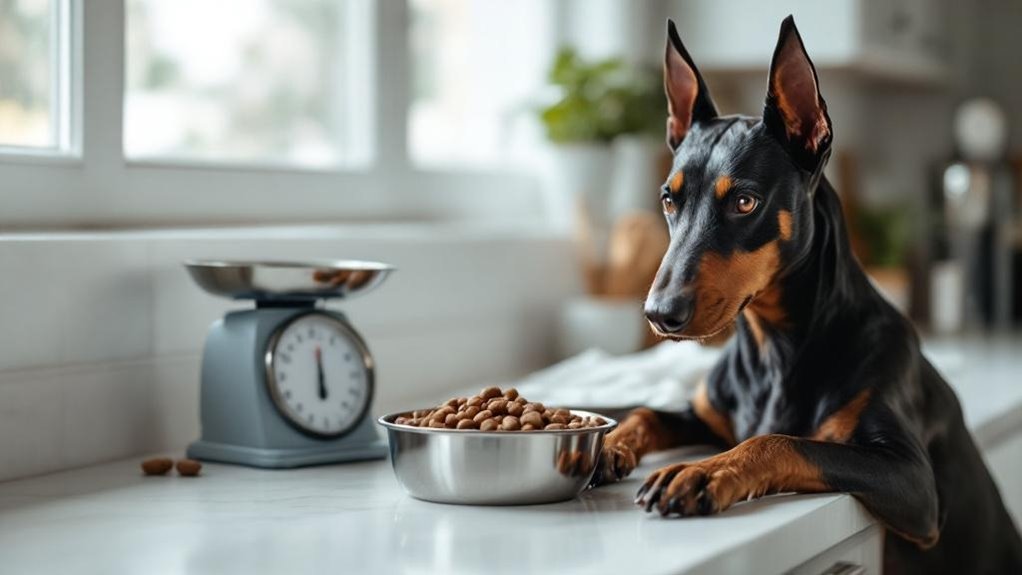
- Measuring Portions With Cups, Scales, and Tools
- Puppy Feeding: Birth to Six Months
- Transitioning From Three Meals to Two Daily
- Managing Bloat Risk: Timing, Speed, and Meal Strategy
- How Activity Level Changes Your Doberman’s Calorie Needs
- Is Your Doberman Overweight? Body Condition Scoring Guide
- Spotting Underfeeding: Signs Your Dog Needs More Food
- Common Overeating Mistakes and How to Correct Them
- Switching Foods Safely: Transition Plans Without Digestive Upset
- Adult Dobermans: Portion Sizes for Ages 1–6 Years
- Senior Doberman Portions: Adjusting for Aging Needs
- High-Quality Proteins: Building Doberman Muscle Without Bulk
- Preventing DCM: Taurine, Omega-3s, and Heart-Healthy Nutrition
- Recalibrate Portions After Spay or Neuter Surgery
- Is Raw Feeding Safe for Dobermans?
- Common Veterinary Questions About Portion Sizing
- Frequently Asked Questions
- Conclusion
Key Takeaways
- Adult Dobermans need 1,600 to 2,000 daily calories or 4 to 7 cups of high-quality dry food.
- Overfeeding signs include soft stools, excessive weight gain, and constant hunger; use standardized measuring tools.
- Body Condition Score of 4-5 is ideal; difficulty feeling ribs indicates overfeeding requiring portion reduction.
- Puppies at 6 months need 3-4 cups daily for males and 2.5-3.5 cups for females.
- Senior Dobermans require 20% fewer calories than adults; monitor weight monthly to prevent obesity.
How Much Should Your 6-Month Doberman Eat?
At six months old, your Doberman’s nutritional needs are substantial, though they’ll vary depending on whether you’re raising a male or female.
Male Doberman puppies typically require three to four cups per day, while females generally need two and a half to three and a half cups daily. Your Doberman puppy’s nutritional requirements demand consistent feeding across three to four meals each day to support their rapid growth and energy expenditure.
Since puppy food contains approximately four hundred seventeen calories per cup, you’ll want to monitor your individual dog’s weight and adjust portions accordingly. A feeding chart helps track appropriate amounts, but remember that activity level considerably influences how much your puppy actually needs, making regular assessment essential for proper development.
Calorie Requirements by Age: From Puppies to Seniors
Your Doberman’s calorie needs shift remarkably across life stages, and you’ll find that puppies demand considerably more calories per pound of body weight than adults because they’re fueling rapid growth, bone development, and boundless energy.
As your dog matures into adulthood, their metabolic rate stabilizes, allowing you to establish a consistent feeding routine that maintains lean muscle and supports their activity level without excess weight gain.
When your Doberman enters their senior years, their metabolism naturally slows, requiring you to reduce portions while prioritizing nutrient-dense foods that protect joint health and preserve muscle mass, all while monitoring their changing hunger cues and physical condition.
Puppy Energy Demands Growth
Because Doberman puppies grow rapidly during their first year, their caloric needs change drastically from one month to the next. You’ll find that what worked last month won’t sustain them adequately today. Their energy levels peak during specific growth stages, requiring adjustments that keep pace with their development.
Your puppy feeding strategy should follow these growth stages:
- 2-3 months: Puppies need 1 to 3 cups daily as they’re establishing their nutritional foundation.
- 4-5 months: Energy demands increase markedly, requiring 3 to 6 cups to fuel rapid development.
- 6-8 months: Males may need 4 to 6.5 cups while females require 3 to 6 cups, depending on activity.
Regular monitoring guarantees Doberman puppies receive adequate nutrition without overfeeding. This supports healthy skeletal and muscular development throughout these critical growth stages.
Adult Maintenance Caloric Needs
Once your Doberman reaches adulthood, their nutritional requirements shift from the rapid-growth demands of puppyhood to a more stable maintenance phase, though this doesn’t mean their needs become static.
Adult Dobermans typically need between 1,600 to 2,000 calories per day, depending on whether your dog weighs toward the lower or upper end of the 35-45 kg range. This translates to roughly 4 to 7 cups of high-quality dry food daily.
However, you’ll need to adjust portions based on your individual dog’s activity level, metabolism, and overall health. Regular weight monitoring helps you catch problems early, preventing obesity and related health complications that could affect your Doberman’s longevity and quality of life.
Senior Metabolism And Adjustments
As your Doberman enters their senior years, typically around age 7 and beyond, their metabolism naturally slows. This means they’ll need roughly 20% fewer calories than they did during their peak adult years. This metabolic shift requires thoughtful adjustments to maintain their health and prevent unwanted weight gain.
Consider these key adjustments for senior Dobermans:
- Reduce daily portions from 4–7 cups to approximately 3–5 cups, depending on weight and activity level.
- Prioritize nutrient-dense foods with 29% protein and 14% controlled fat to preserve lean muscle mass.
- Schedule regular veterinary consultations to personalize caloric intake based on individual health conditions.
Your senior Doberman’s changing caloric needs reflect their slower pace, not diminished importance. Through careful monitoring and veterinary guidance, you’ll guarantee they receive proper nutrition while maintaining suitable weight throughout their golden years.
Measuring Portions With Cups, Scales, and Tools
Accurate measurement is the foundation of proper Doberman nutrition, and you’ll find that standardized measuring cups and kitchen scales offer different advantages depending on your needs and preferences.
Measuring cups provide convenient, quick portions aligned with feeding guidelines, while kitchen scales deliver precise weight measurements essential for calculating calorie requirements based on your dog’s specific body weight.
You should regularly calibrate your measuring tools to maintain consistency, since outdated instruments produce inaccurate servings that compromise your Doberman’s health.
As you implement these tools, complement them with observational methods by evaluating your dog’s body condition and adjusting portions accordingly.
This balanced approach, combining precise measurement with visual evaluation, guarantees you’re meeting your Doberman’s nutritional needs while maintaining ideal weight throughout each life stage.
Puppy Feeding: Birth to Six Months
Feeding your Doberman puppy during these critical early months requires a structured approach that evolves as your dog grows, since their nutritional needs change dramatically week to week and their digestive system matures at a predictable pace.
You’ll want to understand the key milestones that prevent common feeding mistakes:
- Feed your Doberman four meals daily from six weeks until twelve weeks, then shift to three meals through six months.
- Increase dog food per day gradually from one to three cups at two to three months, reaching three to six and a half cups by six to eight months.
- Monitor your puppy’s growth closely, adjusting portions when soft stools appear, which signals overfeeding.
High-quality puppy food provides approximately four hundred seventeen calories per cup, making careful measurement essential for healthy development without excess weight gain.
Transitioning From Three Meals to Two Daily
Around six months of age, your Doberman puppy’s digestive system matures enough to handle a shift from three meals to two daily meals, which aligns with their changing growth patterns and sets the foundation for adult feeding routines.
During this adjustment period, you’ll reduce your puppy’s total intake from 3 to 4 cups daily, splitting it evenly between two meals.
Extend the time between feedings gradually, allowing your puppy’s body to adapt without digestive upset. Consistency matters greatly; stick to the same feeding times each day to stabilize energy levels and establish healthy habits.
Monitor your puppy’s appetite closely, adjusting portions based on weight and growth. This measured approach guarantees your Doberman develops proper eating patterns while maintaining ideal nutrition.
Managing Bloat Risk: Timing, Speed, and Meal Strategy
As your Doberman reaches adulthood on its two-meal schedule, you’ll want to focus on a concern that’s particularly relevant to this breed: bloat, a serious condition that requires careful attention to feeding practices, exercise timing, and meal pacing.
To establish an effective meal strategy for managing bloat risk, consider these key practices:
- Space meals at least one hour away from exercise, both before and after feeding
- Use slow feeding bowls to reduce how quickly your dog consumes food
- Maintain a consistent feeding schedule to minimize anxiety-related digestive stress
Your meal strategy should emphasize smaller meals rather than larger portions, as this approach aids digestion considerably.
A structured feeding schedule provides your Doberman with predictability, which reduces anxiety while supporting digestive health.
These practical adjustments work together to protect your dog’s wellbeing.
How Activity Level Changes Your Doberman’s Calorie Needs
Your Doberman’s calorie requirements aren’t fixed; they shift considerably based on how active your dog truly is throughout the day. An active adult Doberman needs between 1,600 to 2,000 calories daily, which translates to approximately 3.5 to 4.5 cups of food portions.
However, a sedentary dog requires fewer calories, while a highly active companion could demand remarkably more. Regular exercise and play greatly increase your Doberman’s caloric needs, making adjustments vital for maintaining healthy weight and sustained energy.
You’ll need to observe your dog carefully, watching for hunger cues and body condition changes as activity level fluctuates seasonally or throughout life stages. This attentive approach guarantees your Doberman receives precisely what he or she needs.
Is Your Doberman Overweight? Body Condition Scoring Guide
You can assess your Doberman’s weight by using a body condition scoring system that ranges from 1 to 9, where a score of 4-5 represents the ideal healthy range for your dog, while anything above 5 indicates potential weight concerns.
Signs that your Doberman may be carrying excess weight include difficulty feeling their ribs when you gently press their sides, visible fat deposits around the waist, and noticeably reduced energy during walks or play sessions.
Once you’ve identified whether your dog needs adjustment, you’ll want to work with your veterinarian to modify portion sizes and dietary content based on your Doberman’s specific activity level and overall health status, since the right adjustments now can prevent serious conditions like joint problems and heart disease down the road.
Assessing Your Doberman’s Weight
Determining whether your Doberman carries excess weight requires more than a glance at the scale, since ideal weight varies considerably based on age, activity level, and individual build.
Evaluating your Doberman’s weight accurately involves using the Body Condition Score (BCS) system, which ranges from 1 to 9, with 4 to 5 indicating optimal health.
To gauge your dog’s condition:
- Feel their ribs gently without pressing hard—you should detect them beneath a thin fat layer, not prominent or hidden.
- Observe from above for a visible waist, a slight narrowing behind the ribcage that confirms healthy weight.
- Monitor weight changes regularly, recognizing that even a 10% increase signals potential obesity risks.
Your veterinarian can establish personalized healthy weight targets, accounting for your Doberman’s unique circumstances.
Regular evaluation helps you catch weight changes early, preventing serious health complications.
Adjusting Portions For Health
Once you’ve identified your Doberman’s current body condition using the scoring system, the next step involves translating that assessment into concrete feeding adjustments that’ll support their path toward a healthier weight.
If your dog scores above the ideal range of 4 to 5, you’ll need to adjust portions downward while monitoring their response carefully. Rather than making drastic cuts, reduce food gradually and increase exercise simultaneously, which creates sustainable progress.
Active dogs typically need 4 to 7 cups of high-quality food daily, though individual requirements vary based on metabolism and activity level.
Consult your vet to develop a personalized plan, since they can recommend specific portion sizes tailored to your Doberman’s unique needs and help you achieve healthy weight management effectively.
Spotting Underfeeding: Signs Your Dog Needs More Food
How can you tell if your Doberman isn’t eating enough? Underfeeding creates observable signs that warrant adjusting your dog’s portions to meet their caloric demands. Watch for these indicators:
- Physical appearance changes—visible ribs, minimal muscle development, and a pronounced waistline signal insufficient calories.
- Behavioral shifts—lethargy, poor energy levels, and reduced enthusiasm for play suggest your puppy lacks adequate nutrition.
- Digestive concerns—consistently runny stools may indicate inadequate food intake or compromised nutritional quality.
Your growing Doberman requires approximately 3 to 4 cups daily by 6 months old.
If your dog appears overly lean or demonstrates excessively strong appetite after meals, you’re likely underfed them.
Monitor these signs closely, as proper nutrition during growth stages directly supports healthy development and long-term wellness.
Common Overeating Mistakes and How to Correct Them
Many owners unintentionally overfeed their Dobermans by relying on generic feeding guidelines rather than measuring portions with actual tools like cups or scales. This allows them to adjust amounts based on their dog’s specific weight and activity level.
To correct this mistake, you’ll want to establish a baseline portion size from your veterinarian. Then use consistent measurement tools at each feeding to avoid the gradual increases that lead to obesity and its associated joint and heart problems.
Recognizing overfeeding warning signs—particularly soft stools, excessive weight gain, or a dog that seems constantly hungry—helps you catch the problem early and make the necessary adjustments before serious health issues develop.
Portion Control Measurement Tools
One of the most effective ways to prevent overfeeding is to use a standardized measuring cup rather than eyeballing portions, since what looks reasonable to you might actually exceed your Doberman’s caloric needs based on their weight and activity level.
You’ll find that proper measurement tools create consistency in your feeding routine, which directly supports your dog’s digestive health and weight management.
Consider these essential measurement strategies:
- Use a designated measuring cup marked in both cups and ounces to feed precise daily amounts
- Keep a feeding log to monitor portions and track your Doberman’s response to quantity adjustments
- Weigh your dog monthly to measure progress and recalibrate portions accordingly
These practical tools help you maintain accountability while ensuring your Doberman receives appropriate nutrition tailored to their individual needs.
Recognizing Overfeeding Warning Signs
Your Doberman’s body will tell you when something’s off with their feeding routine, and recognizing these signals early makes all the difference in preventing serious weight-related health problems.
Excessive weight gain, soft stools, and declining energy levels indicate you’re likely overfeeding your dog, signaling that adjustments are necessary. When you monitor these warning signs closely, you’ll catch problems before they develop into serious complications like joint stress and obesity.
To correct overfeeding, start by measuring portion sizes precisely with a standard cup rather than eyeballing amounts, since free feeding frequently leads to consuming too much.
If your Doberman shows these signs, reduce food quantity gradually or evaluate food quality.
Maintaining a healthy weight requires consistent observation and willingness to adjust portions based on your dog’s individual needs and body condition.
Switching Foods Safely: Transition Plans Without Digestive Upset
Because abrupt dietary changes can trigger digestive problems in Dobermans, altering gradually over 7-10 days gives your dog’s digestive system time to adapt to new food without upset.
Your modification plans should follow this structured approach:
- Days 1-2: Replace 25% of the old food with the new food, maintaining the familiar majority of their diet.
- Days 3-4: Increase to 50% new food and 50% old food, allowing further adjustment.
- Days 5-7: Move to 75% new food with 25% old food before completing the modification.
Monitor your Doberman’s stool consistency throughout this gradual alteration, adjusting proportions if you notice digestive upset.
Maintain fresh water availability, as hydration supports proper digestion. If your dog has known food sensitivities or health concerns, consult your vet for personalized modification guidance.
Adult Dobermans: Portion Sizes for Ages 1–6 Years
Once your Doberman’s digestive system has settled into their new food through a gradual shift, you’ll want to establish consistent daily portions that support their adult health and energy needs.
Adult Dobermans aged 1 to 6 years typically require between 4 to 7 cups of high-quality dry dog food daily, though males generally need the higher end while females typically require 3 to 6.5 cups. Your individual dog’s portion size depends on their weight, activity level, and metabolism, since an active Doberman needs more fuel than a less active one.
Adult Dobermans aged 1-6 years need 4-7 cups daily, with portions adjusted for weight, activity level, and metabolism.
Monitor your dog’s body condition regularly, adjusting portions to maintain ideal weight and prevent obesity, which poses serious health issues including Dilated Cardiomyopathy.
Consistent meal times and portion control protect against bloat and digestive problems.
Senior Doberman Portions: Adjusting for Aging Needs
As your senior Doberman ages, you’ll notice that their metabolism slows considerably, which means they’ll require fewer calories than they did during their active adult years.
Yet you’ll need to monitor their weight carefully to prevent the obesity that often accompanies this metabolic shift. Your dog’s changing nutritional needs also extend to joint support, so you should seek out senior formulas that include glucosamine and omega-3 fatty acids alongside higher protein levels (around 29%) to help maintain mobility and reduce the discomfort associated with arthritis.
Working with your veterinarian to adjust portion sizes and select appropriate foods becomes especially important now, as these personalized adjustments address both your dog’s slower metabolism and any emerging health conditions that might affect their dietary requirements.
Metabolic Changes In Seniors
Your senior Doberman’s body doesn’t burn calories quite the way it did during her younger years, which means you’ll need to rethink her portion sizes to keep her at a healthy weight.
As your dog ages, her metabolism slows considerably, reducing her calorie needs and increasing her risk for obesity.
Understanding these changes helps you support her health:
- Reduced caloric intake: Senior Dobermans typically need 10-20% fewer calories than adults, roughly 1,200-1,600 kcal daily for a 25-35 kg dog.
- Joint health considerations: Extra weight strains aging joints, making dietary adjustments essential for mobility.
- Regular monitoring: Weigh your dog monthly and assess her body condition to maintain an ideal weight.
Consult your veterinarian to develop a tailored dietary plan addressing your senior Doberman’s specific calorie needs and health requirements.
Joint Health And Nutrition
Beyond managing calorie intake, the specific nutrients you choose for your senior Doberman become increasingly important because they directly support joint function and muscle preservation during her later years.
High-quality senior formulas containing elevated protein levels around 29% help maintain lean muscle mass, while healthy fats and omega-3 fatty acids reduce joint inflammation and support mobility.
You’ll also want to prioritize foods enriched with glucosamine and chondroitin, which strengthen cartilage and ease age-related stiffness.
These targeted nutrition choices work together to address the joint health challenges your aging Doberman faces, making movement more comfortable and slowing degenerative processes.
Consulting your veterinarian guarantees you’re selecting foods that match your dog’s specific joint needs and overall health status.
High-Quality Proteins: Building Doberman Muscle Without Bulk
Protein forms the foundation of your Doberman’s diet, serving as the primary building block for lean muscle development that defines their athletic breed standard, yet this doesn’t mean you should maximize protein intake without careful consideration.
High-quality dog food with balanced nutrition supports your Doberman’s muscular physique while protecting joint health and preventing weight-related complications.
- Select real animal sources like chicken, beef, or fish as primary ingredients, ensuring bioavailable protein that your dog’s body efficiently uses.
- Maintain 26% protein for adult Dobermans, increasing to 29% for seniors, as protein helps preserve muscle mass without excess bulk.
- Combine quality proteins with omega-3 and omega-6 fatty acids to reduce inflammation and enhance coat health.
Doberman nutrition succeeds through measured portions rather than maximized protein, supporting their athletic build sustainably throughout their lives.
Preventing DCM: Taurine, Omega-3s, and Heart-Healthy Nutrition
You’ll want to prioritize taurine and omega-3 fatty acids in your Doberman’s diet, since these nutrients work together to support cardiac function and help prevent the heart complications that can develop in the breed.
Taurine, an amino acid essential for maintaining proper heart muscle contractions, should be present in adequate amounts through quality protein sources or supplementation, while omega-3s from fish oil reduce inflammation and promote overall cardiovascular health.
Regular veterinary check-ups will help you confirm that your dog’s nutrition is effectively supporting heart function, allowing your vet to recommend adjustments if needed based on your individual Doberman’s health profile.
Taurine’s Role In Heart Health
When it comes to protecting your Doberman’s heart, taurine—an amino acid essential for proper cardiac function—deserves your careful attention, particularly because this breed carries a higher genetic risk for Dilated Cardiomyopathy (DCM), a serious condition where the heart becomes enlarged and weakens over time.
Understanding taurine’s importance in your Doberman’s diet means recognizing these key factors:
- Taurine supports the heart muscle’s ability to contract effectively, preventing the weakening associated with DCM.
- High-quality animal proteins naturally contain adequate taurine levels that your diet should prioritize.
- Consistent dietary intake directly reduces your breed’s vulnerability to heart-related complications.
Your Doberman’s heart health depends on maintaining proper taurine levels through balanced nutrition, making informed food choices an essential part of responsible ownership and preventative care.
Omega-3s For Cardiac Support
Beyond taurine alone, omega-3 fatty acids—particularly EPA and DHA found in fish oil—work alongside other nutrients to reduce inflammation and support the cardiovascular system your Doberman depends on, especially given this breed’s genetic vulnerability to Dilated Cardiomyopathy.
When you incorporate omega-3s into your dog’s proper nutrition plan, you’re actively protecting cell membrane integrity and promoting sustained heart health. Fish oil supplements, combined with L-carnitine and antioxidants, create a thorough approach to DCM prevention.
High-quality animal proteins paired with omega-3 sources help maintain the lean muscle mass essential for cardiovascular function. You’ll find that consistent omega-3 consumption supports your Doberman’s overall well-being across all life stages, making this nutrient investment both practical and foundational to long-term heart protection.
Recalibrate Portions After Spay or Neuter Surgery
After your Doberman recovers from spay or neuter surgery, their body will require fewer calories because the procedure reduces their metabolic rate and, in most cases, their activity level during healing.
This means you’ll need to recalibrate their daily food portions to prevent unwanted weight gain.
Your caloric needs will decrease by approximately 20-30%, so you’ll want to:
- Reduce portions gradually over one to two weeks to prevent hunger or digestive upset
- Monitor your Doberman’s weight closely, adjusting intake based on current weight and activity level
- Assess body condition score regularly to determine if further reductions are necessary
Consult your veterinarian for tailored feeding guidelines specific to your dog’s recovery progress, ensuring food portions align with their individual needs during this critical post-operative period.
Is Raw Feeding Safe for Dobermans?
Should you consider raw feeding for your Doberman, you’ll want to understand that it can be a safe and nutritionally sound option, but only when you approach it with careful planning and a clear understanding of what your dog actually needs.
A balanced diet requires variety, including multiple protein sources like beef, chicken, and fish, alongside organ meats and bones. You’ll need to consult your vet or a canine nutritionist to create a plan suited to your dog’s specific requirements and health conditions, ensuring healthy development throughout their life stages.
Be aware that bacterial contamination from raw meat poses risks to both your dog and household. Introduce the raw diet gradually to monitor tolerance and prevent digestive problems, watching your Doberman’s response carefully.
Common Veterinary Questions About Portion Sizing
How much food your Doberman actually needs depends on several interconnected factors—weight, age, activity level, and metabolic rate—rather than a one-size-fits-all answer that many owners assume will work for every dog.
Doberman owners frequently ask veterinarians these three questions:
- How much to feed an adult Doberman weighing 25–45 kg (typically 2.5 to 4.5 cups daily based on caloric needs)
- Whether portion sizes should change during life changes or dietary shifts
- How to identify if current portions match their dog’s nutritional needs
Always consult your vet when you’re uncertain about portion amounts, particularly during growth stages or when adjusting diets.
Your veterinarian can assess your individual dog’s requirements, monitor weight trends, and recommend adjustments based on stool consistency and body condition, ensuring your Doberman receives appropriate nourishment without excess.
Frequently Asked Questions
How Much Food Should a Doberman Eat per Day?
You should feed your adult Doberman 4 to 7 cups of dry dog food daily, adjusting portions based on your dog’s size, age, activity level, and health. Consult your veterinarian for personalized recommendations.
Can You Overfeed a Doberman?
Yes, you can overfeed your Doberman. Excessive feeding causes obesity, joint problems, and heart disease risks. You’ll notice weight gain, lethargy, and movement difficulty. Monitor your dog’s body condition and adjust portions accordingly.
What Is the Main Cause of Death of Dobermans?
You’ll find that Dilated Cardiomyopathy (DCM) is the primary cause of death in Dobermans. This serious heart condition impairs the heart’s ability to pump blood effectively. You can manage risk through regular veterinary check-ups and proper nutrition.
Is 2 Cups of Food a Day Enough for a Dog?
Like Goldilocks seeking perfection, you’ll find two cups rarely hits the mark for most dogs. You’d likely need to increase portions to 3-4 cups daily, adjusting based on your dog’s weight and activity level.
Conclusion
You’re now equipped to feed your doberman appropriately at every life stage, adjusting portions as your dog grows, undergoes surgery, or ages. Research shows that nearly 56% of dobermans are overweight, a condition that strains their hearts and joints; by carefully monitoring portions and choosing nutrient-rich foods containing adequate taurine and omega-3s, you’ll protect your dog’s long-term health and well-being.