Affiliate Disclosure: This post may contain affiliate links. If you purchase through these links, we may earn a small commission at no additional cost to you. We only recommend products and tools we genuinely believe may be useful for you and your Doberman.
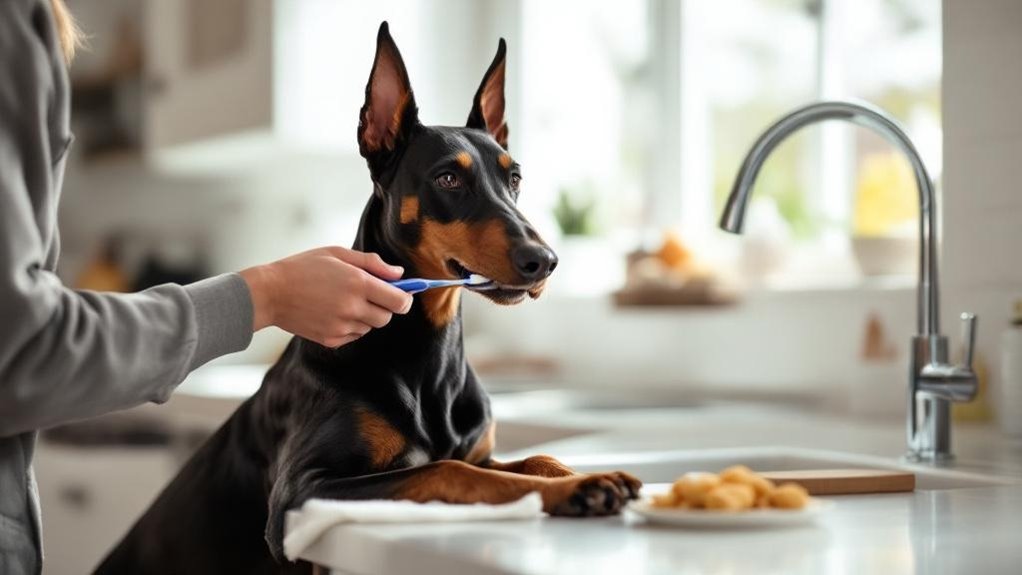
Start with brushing 2–3 times weekly using dog-specific toothpaste, anchoring it to your existing routine like post-walk time. Watch for bad breath, red gums, and loose teeth—early warning signs that catch disease before it becomes expensive. Annual professional cleanings, dental treats with VOHC approval, and water additives support your efforts without requiring perfection. You’re not aiming for flawless compliance; you’re building sustainable habits that protect your Doberman’s heart and kidneys while keeping costs manageable. Understanding the specific warning signs and practical tools available makes this responsibility feel less overwhelming.
- Key Takeaways
- Why Dobermans Are Prone to Dental Disease and Heart Problems
- The Real Cost of Ignoring Your Doberman’s Teeth
- Bad Breath: Your First Warning Sign of Trouble
- Red or Swollen Gums: What You’re Really Seeing
- Loose Teeth and When to Call Your Vet
- How Periodontal Disease Develops (and How to Stop It Early)
- Brushing Your Doberman’s Teeth: The Single Most Effective Prevention
- Help Your Doberman Accept Mouth Handling
- Introduce the Toothbrush Without Resistance
- Pick a Toothpaste Your Doberman Actually Enjoys
- Build Brushing Into Your Weekly Routine
- Add Dental Powder to Every Meal
- Water Additives That Support Doberman Oral Health
- Dental Treats and Chews That Reduce Plaque
- When to Switch to a Prescription Dental Diet
- How Often Your Doberman Needs Professional Cleanings
- What Happens During a Veterinary Dental Cleaning?
- Annual Wellness Exams and Oral Health Screening
- Create Your Doberman’s Realistic Dental Care Schedule
- Reward Compliance: Make Brushing a Habit Your Doberman Accepts
- Keep Doberman Dental Care Affordable
- Emergency Dental Warning Signs
- The Link Between Oral Health and Doberman Longevity
- Frequently Asked Questions
- Conclusion
Key Takeaways
- Anchor brushing to existing habits like post-walk routines to make dental care a natural part of daily life.
- Start with dog-specific toothpaste in appealing flavors, allowing gradual mouth handling before attempting full brushing sessions.
- Keep brushing sessions brief and reward immediately afterward to build positive associations and strengthen cooperation over time.
- Use dental powder or water additives as supplementary tools when daily brushing isn’t consistently feasible for your schedule.
- Monitor early warning signs like bad breath and red gums to catch periodontal disease before costly interventions become necessary.
Why Dobermans Are Prone to Dental Disease and Heart Problems
Because Dobermans carry genetic predispositions to certain health vulnerabilities, understanding the connection between their dental health and overall well-being becomes essential to responsible ownership.
Your Doberman’s teeth aren’t just about maintaining a bright smile; they’re directly connected to their heart health. Plaque and tartar buildup progresses into periodontal disease, which allows oral bacteria to enter the bloodstream and potentially compromise heart function—a particularly serious concern given Dobermans’ predisposition to congenital heart issues.
By age three, nearly eighty percent of dogs show signs of dental disease, often beginning with bad breath. When you neglect dental care, you’re risking not just tooth loss and oral pain, but also systemic infections that can damage your dog’s heart and kidneys.
Regular brushing and professional cleanings greatly reduce these interconnected risks.
The Real Cost of Ignoring Your Doberman’s Teeth
When you neglect your Doberman’s dental health, bacteria from infected gums can enter the bloodstream and trigger serious systemic complications, including heart and kidney disease that demand expensive veterinary interventions beyond simple dental treatment.
These secondary health issues often require ongoing medication, specialized diagnostics, and extended care protocols, which can cost considerably more than preventive dental measures would’ve cost upfront.
You’re fundamentally choosing between investing in regular dental maintenance now or facing thousands in emergency veterinary bills later, along with the burden of managing your dog’s chronic pain and compromised quality of life.
Systemic Health Complications Develop
Your Doberman’s dental health isn’t isolated to the mouth—it’s deeply connected to the function of essential organs throughout the body, which means that ignoring gum disease today can create serious health problems tomorrow.
When periodontal disease progresses, bacteria from your dog’s gums can enter the bloodstream, triggering a condition called bacteremia that potentially damages the heart, kidneys, and other crucial organs. This systemic infection, known as endocarditis when it affects the heart lining, develops silently and creates complications far beyond dental care.
You’ll likely notice lethargy, reduced appetite, and general decline in your Doberman’s vitality before recognizing the underlying cause. Addressing dental care early prevents these cascading health failures, protecting your dog’s long-term wellbeing and sparing them from unnecessary suffering.
Expensive Veterinary Interventions Required
The financial reality of untreated dental disease often catches owners by surprise, since preventive care costs pale in comparison to the expenses that emerge when problems go unaddressed. A professional dental cleaning typically ranges from $300 to $1,500, depending on severity, yet tooth extractions can cost $100 to $500 per tooth.
These procedures become necessary when you don’t prevent plaque buildup through routine brushing and professional intervention. Beyond extraction expenses, systemic infections from advanced periodontal disease demand emergency veterinary care that costs thousands of dollars. Bacteria from your Doberman’s mouth can enter the bloodstream, causing heart and kidney complications requiring long-term management.
Bad Breath: Your First Warning Sign of Trouble
Bad breath in your Doberman often signals something more than just dietary remnants or oral odor, since it’s frequently one of the earliest warnings that periodontal disease is beginning to develop—a condition many dogs start experiencing by age three.
You’ll notice the odor intensifies as plaque and tartar buildup accumulates beneath the gum line, creating an environment where bacteria thrive.
What you should monitor:
- Sudden changes in your dog’s breath intensity or quality
- Persistent odor that doesn’t improve after meals or water
- Accompanying signs like swollen or red gums
- Reluctance to eat hard foods or chew toys
- Visible yellow or brown discoloration on teeth
Early detection prevents serious complications, including tooth abscesses and infections affecting your dog’s kidneys and liver.
Schedule a veterinary consultation whenever you notice concerning breath changes, since prompt intervention stops disease progression effectively.
Red or Swollen Gums: What You’re Really Seeing
When you notice your Doberman’s gums appearing red or puffy, you’re observing the early stages of gingivitis, which develops when plaque and tartar accumulate along the gum line and trigger an inflammatory response.
This condition isn’t merely cosmetic; it signals that bacterial buildup is actively damaging your dog’s oral tissues. You might also notice bleeding during eating, excessive drooling, or sensitivity when your Doberman’s mouth is touched.
Without intervention, gingivitis progresses to periodontitis, a more severe disease that causes tooth mobility and eventual tooth loss.
The encouraging news is that early detection makes a significant difference. Regular brushing, professional cleanings, and veterinary attention can halt progression and preserve your Doberman’s teeth, while also preventing the systemic health complications linked to advanced periodontal disease.
Loose Teeth and When to Call Your Vet
If you’ve noticed your Doberman’s gums are red and inflamed, the next sign to watch for—and one that demands prompt veterinary attention—is looseness in the teeth themselves.
Loose teeth indicate periodontal disease, which develops when plaque and tartar accumulate beneath the gumline, compromising your dog’s dental health.
Watch for these warning signs:
- Visible tooth movement when your Doberman chews or plays
- Facial swelling around the jaw or muzzle area
- Reluctance to eat hard food or dropping kibble
- Bad breath that’s noticeably worse than typical dog odor
- Drooling more than usual, sometimes with blood-tinged saliva
Don’t delay contacting your vet when you notice loose teeth, since bacteria from advanced dental disease can enter the bloodstream, causing serious systemic infections.
Professional intervention prevents complications that extend far beyond your dog’s mouth.
How Periodontal Disease Develops (and How to Stop It Early)
Understanding the timeline of dental disease helps you intervene before your Doberman’s teeth are at risk, since plaque begins hardening into tartar within just 24 hours of forming on the tooth surface.
When plaque buildup isn’t removed, it triggers gum inflammation called gingivitis, which progresses into periodontal disease if left unaddressed.
The concerning part is that most dogs show signs of periodontal disease by age three, which means you’re working against a tight timeline.
Beyond your dog’s mouth, bacteria from periodontal disease can enter the bloodstream through irritated gums, potentially causing serious systemic health issues including heart disease.
You can stop this progression through consistent dental care, establishing a routine early with regular brushing, dental chews, and veterinary cleanings, considerably reducing your Doberman’s risk of developing periodontal disease and promoting long-term oral health.
Brushing Your Doberman’s Teeth: The Single Most Effective Prevention
You’ll find that establishing a consistent brushing routine transforms the experience from a challenge into a manageable part of your Doberman’s daily life, especially when you pair the practice with positive reinforcement like praise or a favorite treat afterward.
Starting small—perhaps brushing just a few teeth the first week, then gradually expanding to a full routine—helps your dog acclimate to the sensation and taste of dog toothpaste without becoming overwhelmed.
Once your Doberman recognizes that brushing time brings calm attention and rewards, rather than anxiety, you’ll notice they cooperate more readily, making the process genuinely easier for both of you.
Building Your Doberman’s Routine
Because plaque and tartar accumulate rapidly on dogs’ teeth—often progressing to serious dental disease within months—brushing stands as the single most effective way to protect your Doberman’s oral health.
Regular dental care becomes manageable when you build brushing into your daily routine, transforming what could feel overwhelming into a natural habit.
Start by establishing consistency:
- Begin with short sessions, just 30 seconds, gradually increasing duration as your dog adapts
- Choose the same time each day, linking brushing their teeth to an existing habit like morning feeding
- Use dog-specific toothpaste in appealing flavors that make the experience enjoyable
- Familiarize your Doberman with mouth touching before introducing the toothbrush
- Reward immediately after each session to reinforce cooperation
This structured approach transforms dental care into something your Doberman anticipates rather than resists.
Making Brushing Enjoyable
The routine you’ve established creates the foundation, but what truly determines whether your Doberman cooperates—or resists—is how much you’ve made the experience rewarding for them.
Dog-specific toothpaste in flavors like chicken or peanut butter transforms brushing from a chore into something your dog anticipates, encouraging genuine cooperation rather than mere tolerance.
Before you brush your dog’s teeth, let them explore and smell the toothbrush, removing the threat of unfamiliarity. Keep sessions brief, ending before anxiety builds, which preserves their relaxed attitude toward oral hygiene.
Immediately after brushing, reward them with treats or playtime, creating positive associations that strengthen over time.
Combining these approaches—appealing flavors, gradual introduction, short sessions, and consistent rewards—makes dental care a sustainable part of your Doberman’s health routine.
Help Your Doberman Accept Mouth Handling
How do you help a dog become comfortable with something that feels intrusive and strange? You build acceptance gradually, through patience and positive association. Your Doberman’s willingness to accept mouth handling depends on how you introduce the experience.
Start with these foundational steps:
- Begin during calm moments, gently touching your dog’s mouth and teeth with your finger.
- Introduce flavored dog toothpaste on your finger to create positive taste associations.
- Allow your Doberman to sniff the toothbrush before any contact with teeth.
- Establish a consistent daily routine so mouth handling becomes predictable and normal.
- Use treats and praise after each session to reinforce cooperation.
Introduce the Toothbrush Without Resistance
Many pet owners skip the toothbrush introduction phase and jump straight to brushing, which typically triggers resistance, but you’ll have far better success if you let your Doberman become familiar with the tool before it ever enters their mouth. Start by allowing your dog to sniff and explore the toothbrush freely, reducing anxiety about this unfamiliar object. Next, gently rub the brush against their teeth without toothpaste, helping them adjust to the bristle sensation. Once they’ve accepted this step, introduce dog-specific toothpaste in flavors like chicken or peanut butter, making the experience more appealing.
| Stage | Action | Duration | Goal | Outcome |
|---|---|---|---|---|
| One | Exploration | 2-3 days | Familiarity | Curiosity instead of fear |
| Two | Gentle rubbing | 3-5 days | Sensation adjustment | Comfort with bristles |
| Three | Toothpaste introduction | 1 week | Flavor acceptance | Positive association |
| Four | Routine brushing | Ongoing | Consistency | Teeth brushed regularly |
| Five | Dog Dental health | Maintained | Prevention | Long-term wellness |
Pick a Toothpaste Your Doberman Actually Enjoys
You’ll want to choose a dog-specific toothpaste in flavors like chicken, beef, or peanut butter, since these appeal to your Doberman’s natural preferences and make cooperation easier during brushing sessions.
The toothpaste must be fluoride-free and formulated specifically for dogs, as human toothpaste can cause serious health problems if your dog swallows it.
Before starting regular brushing, let your Doberman taste a small amount on your finger to build familiarity, and consult your veterinarian about which formulation best suits your dog’s dental needs and any potential allergies.
Flavor Options Matter Most
Getting your Doberman to accept tooth brushing becomes considerably easier when you choose a toothpaste flavor that actually appeals to him, since dogs—like people—have distinct taste preferences that can make the difference between cooperation and resistance.
Dog-specific toothpaste comes in varieties designed to match canine preferences, making dental care sessions more cooperative:
- Chicken flavor appeals to many Dobermans’ natural instincts and creates positive associations with brushing
- Beef options provide a robust taste that keeps attention focused on the toothpaste rather than the brush itself
- Peanut butter varieties offer a familiar, rewarding flavor that encourages consistent participation
- Flavored dog toothpaste establishes routine compliance when used regularly, building better long-term habits
- Veterinary consultation guarantees your choice aligns with any food allergies or sensitivities your Doberman may have
This approach transforms brushing from a struggle into manageable routine.
Dog-Safe Ingredients Essential
While selecting a flavor your Doberman enjoys certainly helps with cooperation during brushing, what’s inside that toothpaste matters far more for his safety and health.
You’ll want to choose dog-safe formulations specifically, as human toothpaste contains xylitol and other ingredients that can harm your dog. Instead, look for enzymatic toothpaste designed to break down plaque and freshen breath, offering benefits beyond surface cleaning.
Avoid products containing fluoride or foaming agents, which can cause gastrointestinal issues if swallowed.
When you brush your Doberman’s teeth daily with safe, quality toothpaste, you’re protecting his long-term oral health while establishing positive associations with dental care.
This thoughtful approach transforms routine brushing into an effective health practice rather than a stressful task.
Making Brushing Enjoyable
The right toothpaste can transform dental care from something your Doberman tolerates into something he actually anticipates. This shift happens largely through flavor selection combined with how you introduce the product.
Flavored toothpastes designed for dogs make teeth cleaning more appealing:
- Choose chicken, beef, or peanut butter flavors that naturally attract your Doberman
- Avoid human toothpaste, which contains toxic xylitol and other harmful substances
- Select fluoride-free formulas created specifically for canine oral hygiene
- Look for probiotics that maintain healthy oral bacteria and freshen breath
- Gradually introduce the paste by letting your dog lick it from your finger
Incorporate brushing into a positive routine with praise and rewards, helping your Doberman view the experience as enjoyable rather than stressful.
This approach builds consistent oral hygiene habits that benefit his long-term dental health.
Build Brushing Into Your Weekly Routine
Establishing a consistent brushing schedule is one of the most effective ways you can protect your Doberman’s teeth, and the key is making it a regular part of your weekly routine rather than an occasional task.
You’ll find success by anchoring brushing to an existing habit, such as after your dog’s daily walk or playtime, when they’re already accustomed to a structured moment together. This approach transforms dental care from a chore into a natural rhythm that fits your life seamlessly.
Add Dental Powder to Every Meal
You’ll want to select a powder specifically formulated for canine oral health, like one containing probiotics, then experiment with mixing methods—stirring it directly into wet food, sprinkling it on kibble, or moistening it slightly—until you find what your Doberman accepts without resistance.
As you incorporate this supplement into every meal, you can track improvements over several weeks by noting changes in breath odor, plaque buildup on the teeth, and your dog’s overall oral comfort. This will help you gauge whether the powder is delivering meaningful results for your dog’s specific needs.
Choosing The Right Powder
Adding a dental powder to your Doberman’s meals is a straightforward way to support oral health, since these products work alongside brushing rather than replacing it.
When you’re selecting a dental powder, you’ll want to prioritize formulations designed specifically for dogs, as they’re developed with your pet’s safety and needs in mind.
Consider these key factors:
- Probiotic content that supports oral bacteria balance
- Proven effectiveness in reducing plaque and tartar buildup
- Dog-specific formulation ensuring appropriate ingredients and dosages
- Easy mixing into regular food without causing resistance
- Established brand reputation with veterinary backing
Consistency matters most, so you’ll build a stronger preventive routine by incorporating dental powder into every meal rather than using it sporadically.
This daily commitment creates meaningful protection against dental disease over time.
Mixing Methods For Acceptance
Once you’ve selected a dental powder that suits your Doberman’s needs, the real challenge becomes incorporating it consistently into their daily meals, since even the most effective product loses its benefits if your dog refuses to eat it.
Mix the powder thoroughly with wet food or broth, which masks the taste and texture more effectively than dry kibble alone. You can also combine it with a small amount of plain yogurt or pumpkin puree, creating a more appealing base that your dog won’t reject.
The key to success lies in consistency, adding the powder to every meal without exception, which allows the probiotics to build a healthy mouth environment and combat plaque formation gradually over time.
Tracking Results Over Time
Because dental powder works gradually by establishing beneficial oral bacteria rather than providing immediate results, consistent daily use becomes essential for observing meaningful improvements in your Doberman’s oral health.
You’ll track progress by monitoring specific changes over several weeks, noticing improvements that confirm the powder’s effectiveness alongside regular dental care practices.
Track these observable changes:
- Fresher breath that becomes noticeably less offensive during close interaction
- Reduced visible plaque accumulation on tooth surfaces, particularly along the gum line
- Improved gum appearance, showing less redness or inflammation
- Your dog’s increased willingness to allow mouth handling during inspections
- Veterinary confirmation during routine visits that tartar buildup has slowed
Document these observations in writing, noting dates and specific improvements you observe.
This systematic approach helps you reduce plaque and tartar while maintaining your dog’s dental health through proven, consistent application of dental powder.
Water Additives That Support Doberman Oral Health
Your Doberman’s water bowl can become a tool for oral health when you incorporate veterinary-recommended water additives into their daily routine. These tasteless solutions actively fight plaque-causing bacteria and freshen breath without disrupting your dog’s drinking habits, making them an effortless addition to existing dental care efforts.
Water additives contain natural ingredients and enzymes that support oral health independently, complementing brushing when you manage it, or providing meaningful protection when you don’t. Regular use reduces periodontal disease risk by preventing plaque buildup over time, which addresses a common gap in at-home dental routines.
Rather than viewing additives as a complete replacement for other care methods, consider them a practical layer in your extensive approach. They work consistently, require no special technique, and deliver measurable benefits to your Doberman’s long-term dental health.
Dental Treats and Chews That Reduce Plaque
You’ll find that dental chews and treats work through mechanical action—the chewing motion scrubs your Doberman’s teeth and reduces plaque buildup—while many formulations include active ingredients designed to break down tartar and freshen breath, making them a practical complement to your regular brushing routine.
When you’re selecting treats for your dog, you’ll want to prioritize products with the Veterinary Oral Health Council (VOHC) seal of approval, which confirms their effectiveness, and you should match the chew’s hardness to your Doberman’s chewing strength to avoid tooth fractures.
Regular use of appropriate dental chews can greatly lower your dog’s risk of periodontal disease, with studies showing reductions in dental problems by up to 50%, though these treats work best as part of a thorough oral care plan rather than as a replacement for professional care.
Types Of Dental Chews
Dental chews work through a straightforward mechanism: as your Doberman chews, the friction against tooth surfaces helps scrape away plaque and tartar buildup, making them a practical addition to your dog’s oral care routine.
You’ll find several types worth considering:
- Enzyme-based chews contain natural ingredients that break down harmful bacteria and freshen breath
- VOHC-approved products have undergone scientific testing to verify plaque and tartar reduction
- Soft chews suit older Dobermans or those with existing dental issues
- Firm chews provide more mechanical scraping action for dogs with healthy teeth
- Texture-varied chews combine different surfaces to clean multiple tooth areas effectively
Selecting the right size and hardness for your individual dog guarantees both safety and effectiveness, while regular incorporation supplements your brushing efforts and helps prevent periodontal disease.
Plaque Reduction Benefits
When you incorporate dental treats and chews into your Doberman’s routine, you’re taking advantage of a proven method for slowing plaque accumulation, since the mechanical action of chewing creates friction that naturally scrapes away buildup on tooth surfaces.
Regular use of quality dental treats can reduce periodontal disease risk by up to 70%, making them a valuable preventive tool alongside brushing. Many formulations contain ingredients like sodium hexametaphosphate, which actively dissolves existing plaque and prevents tartar formation.
When selecting products, look for the Veterinary Oral Health Council seal, confirming that clinical testing has verified effectiveness.
Combining dental treats with proper brushing establishes a thorough approach to your Doberman’s oral health, supporting long-term wellness and potentially avoiding costly dental procedures down the line.
Selecting Right Treats
Choosing the right dental treats means understanding what actually works, since not all products marketed for oral health deliver the same results. You’ll want to prioritize effectiveness while protecting your Doberman’s teeth and overall health.
When selecting dog chews and products designed to reduce plaque and tartar, consider these key factors:
- Look for the Veterinary Oral Health Council (VOHC) Seal of Acceptance, which verifies proven effectiveness.
- Choose treats with a textured surface that promotes mechanical cleaning through chewing.
- Avoid treats that are excessively hard, as they can fracture your Doberman’s teeth.
- Select softer options that still clean effectively without causing damage.
- Monitor portions carefully, keeping treats under 10% of daily caloric intake.
Incorporating these treats regularly into your Doberman’s routine supports long-term oral health when combined with professional care.
When to Switch to a Prescription Dental Diet
If your Doberman’s breath has become noticeably unpleasant, or you’ve spotted swollen and reddened gums, or your dog seems to struggle while eating, these signs often point to periodontal disease—a condition that calls for a shift in your approach to dental care. A prescription dental diet becomes necessary when standard brushing and treats haven’t prevented dental problems, particularly for Dobermans predisposed to these issues.
| Brand | Type | Purpose |
|---|---|---|
| Purina ProPlan | Prescription | Mechanical cleaning action |
| Hill’s Prescription Diet | Prescription | Plaque reduction |
| Royal Canin | Prescription | Tartar control |
Consult your veterinarian before switching, as they’ll evaluate your dog’s specific needs and confirm that a dental diet addresses the underlying periodontal disease effectively. Your vet guarantees the prescription diet complements your Doberman’s overall health requirements.
How Often Your Doberman Needs Professional Cleanings
How often your Doberman needs professional dental cleanings depends on their individual oral health status and age, though most dogs in this breed benefit from at least one annual cleaning performed by your veterinarian.
Your vet will assess your dog’s teeth during wellness exams, identifying whether they need more frequent care. Consider these factors:
- Age matters: Older Dobermans often require biannual cleanings due to accumulated plaque and tartar.
- Diet influences health: High-quality nutrition supports better teeth, potentially reducing cleaning frequency.
- Existing conditions: Dogs with periodontal disease need more aggressive intervention.
- X-ray detection: Professional cleanings under anesthesia reveal hidden problems that at-home care can’t address.
- Prevention prevents complications: Regular cleanings avoid costly, invasive treatments later.
Neglecting professional cleanings allows dental disease to advance, compromising your Doberman’s overall health and requiring more intensive procedures.
What Happens During a Veterinary Dental Cleaning?
Understanding what occurs during your Doberman’s professional dental cleaning can ease concerns and help you appreciate why your veterinarian recommends anesthesia for this procedure.
Your dog’s dental cleaning begins with general anesthesia, which allows your veterinarian to thoroughly examine and clean your dog’s entire mouth without causing discomfort. Using ultrasonic and hand scaling tools, your veterinarian removes plaque and tartar from all surfaces, including areas beneath the gum line where problems often hide.
| Cleaning Stage | Purpose | Tools Used |
|---|---|---|
| Surface scaling | Remove visible plaque and tartar | Ultrasonic scaler |
| Subgingival cleaning | Address hidden buildup | Hand instruments |
| X-ray assessment | Identify bone loss | Dental imaging |
| Extraction evaluation | Determine tooth viability | Visual inspection |
| Post-care planning | Prevent future issues | Professional guidance |
X-rays reveal hidden dental issues your veterinarian can’t see externally. Loose or damaged teeth may require extraction to prevent complications, and your veterinarian will provide at-home care recommendations afterward.
Annual Wellness Exams and Oral Health Screening
While professional dental cleanings address existing problems, your Doberman’s annual wellness exam serves as the first line of defense in preventing serious oral disease from developing in the first place.
During these exams, your veterinarian performs a thorough oral health screening that catches issues you might miss at home.
Your vet will assess for:
- Tartar buildup and gingivitis signs
- Early periodontal disease indicators
- Tooth mobility or discoloration
- Gum inflammation or recession
- Potential abscesses or infections
Since most dogs show periodontal disease signs by age three, consistent annual wellness exams become essential preventive care.
Your veterinarian identifies problems early, preventing complications that threaten both oral and systemic health.
This routine notably reduces risks of heart and kidney diseases linked to poor oral hygiene, contributing meaningfully to your Doberman’s overall longevity and quality of life.
Create Your Doberman’s Realistic Dental Care Schedule
You’ll achieve the best results by brushing your Doberman’s teeth daily, though you can maintain adequate oral health with consistent brushing three to four times weekly if daily brushing isn’t feasible for your schedule.
Professional dental cleanings from your veterinarian should occur at least annually, with your vet potentially recommending more frequent cleanings based on your dog’s individual plaque buildup, age, and overall dental health.
Daily Brushing Best Practices
Because daily brushing isn’t always realistic for busy owners, establishing a consistent schedule that you can actually maintain—ideally brushing your Doberman’s teeth at least two to three times weekly—creates a foundation for genuine dental health rather than an abandoned routine born from unrealistic intentions.
To keep your dog’s teeth clean and prevent oral health issues, focus on these practical strategies:
- Use dog-specific toothpaste in flavors like chicken or peanut butter, avoiding human formulas that can be toxic.
- Schedule brushing after meals or at the same time daily to build familiarity.
- Begin with brief, gentle sessions to help your Doberman acclimate comfortably.
- Gradually increase duration as your dog becomes cooperative.
- Follow every session with treats or playtime, reinforcing positive associations with dental care.
Professional Cleaning Frequency Guidelines
Professional dental cleanings form the cornerstone of your Doberman’s oral health plan, operating as a complement to—not a replacement for—your home brushing efforts.
Most Dobermans need professional cleaning at least annually, though some require it every six months depending on their individual dental health and predisposition to periodontal disease. Your veterinarian can assess your dog’s specific needs based on age, existing conditions, and overall health status.
Since dogs typically show signs of periodontal disease by age three, establishing a professional cleaning schedule early proves essential.
Diet, home care practices, and your Doberman’s general wellness all influence how frequently professional intervention becomes necessary.
Track your dog’s dental health records carefully, noting any changes that might warrant more frequent cleanings or additional preventive measures.
Reward Compliance: Make Brushing a Habit Your Doberman Accepts
Making tooth brushing a regular part of your Doberman’s routine requires patience and a deliberate strategy built around positive associations, rather than forcing compliance through frustration.
You’ll find that consistency and rewards transform brushing from a struggle into an accepted habit that protects your dog’s teeth and gums.
Build your approach using these key strategies:
Build your approach using consistency, rewards, and patience to transform brushing into an accepted habit your Doberman will embrace.
- Start with dog-friendly flavored toothpaste to make the experience enjoyable
- Brush 2-3 times weekly, gradually working toward daily sessions
- Position yourself beside your Doberman calmly to reduce anxiety
- Reward immediately after brushing with treats or affection
- Stop when agitation appears and extend duration gradually
These methods help reduce resistance over time, allowing your Doberman to associate brushing with positive outcomes rather than stress.
Ultimately, creating a sustainable dental care habit.
Keep Doberman Dental Care Affordable
While dental care might seem like an expense you’d rather avoid, investing in preventive home care now will save you substantially on veterinary bills later. You can maintain your dog’s oral health affordably through strategic choices and consistent routines.
| Prevention Method | Cost Level | Frequency |
|---|---|---|
| Tooth brushing | Low | 2-3x weekly |
| Dental chews | Low | Daily |
| Water additives | Low | Daily |
| Professional cleaning | High | Annually |
Dog-specific dental products cost far less than professional treatments, offering effective alternatives that fit most budgets. A balanced, dental-friendly diet reduces disease development, minimizing extensive care needs later. Regular veterinary check-ups catch problems early, preventing expensive complications. By combining home care routines with preventive nutrition, you protect your Doberman’s teeth while keeping your finances stable and manageable.
Emergency Dental Warning Signs
How quickly can dental problems develop in your Doberman? They can progress rapidly, which is why recognizing warning signs matters. Your dog’s mouth communicates distress through several indicators that require prompt veterinary attention:
- Bad breath signals potential periodontal disease, often the first warning your Doberman needs care.
- Swollen or bleeding gums indicate active gum disease requiring immediate evaluation.
- Difficulty eating, such as dropping food or avoiding chew, suggests mouth pain or infection.
- Excessive drooling or blood in saliva points to serious dental complications.
- Loose teeth signify advanced periodontal disease demanding professional intervention.
Understanding these signs helps you catch problems early.
Don’t wait for symptoms to worsen; contact your veterinarian when you notice changes in your Doberman’s eating habits, breath quality, or gum appearance. Early intervention prevents costly treatments and keeps your dog comfortable.
The Link Between Oral Health and Doberman Longevity
Your Doberman’s dental health directly influences how long and how well your dog will live, since the bacteria that accumulate in an infected mouth don’t stay isolated to the teeth and gums. When periodontal disease develops—which affects up to 80% of dogs by age three—harmful bacteria can enter your dog’s bloodstream, potentially causing heart disease and other systemic complications.
By maintaining good oral health through regular brushing and professional cleanings, you’re not simply preserving your Doberman’s smile; you’re actively protecting essential organs and reducing the risk of serious illness.
The importance of oral care becomes clear when you consider the financial and health benefits: preventing severe dental issues costs considerably less than treating their complications, while simultaneously extending your dog’s lifespan and quality of life considerably.
Frequently Asked Questions
What Is the 3-3-3 Rule for Teeth?
You should brush your dog’s teeth three times weekly, use dental aids or treats three times weekly, and schedule professional cleanings three times yearly. This routine prevents plaque buildup and reduces periodontal disease risk.
What Is the 2 2 2 Rule for Teeth?
Like a well-oiled machine, you’ll brush your dog’s teeth twice weekly, schedule professional cleanings every two years, and visit your vet biannually for dental check-ups to prevent periodontal disease.
What Cleans Tartar off Dog’s Teeth Naturally?
You can naturally clean tartar off your dog’s teeth through regular dental chews, raw vegetables like carrots, coconut oil applications, probiotics, and diluted apple cider vinegar rinses used moderately.
Do Dental Powders for Dogs Really Work?
Yes, dental powders work well for you. They’re convenient to sprinkle on food, contain probiotics that help prevent plaque and tartar buildup, and freshen your dog’s breath. You’ll get best results combining them with brushing and regular cleanings.
Conclusion
You’re not going to brush your Doberman’s teeth a million times a month, but you can establish a sustainable routine that protects their health. Start small with weekly brushing, watch for warning signs like bad breath and red gums, and schedule annual checkups. These manageable steps prevent costly emergencies and keep your dog healthier, longer. Consistency matters more than perfection.