Affiliate Disclosure: This post may contain affiliate links. If you purchase through these links, we may earn a small commission at no additional cost to you. We only recommend products and tools we genuinely believe may be useful for you and your Doberman.
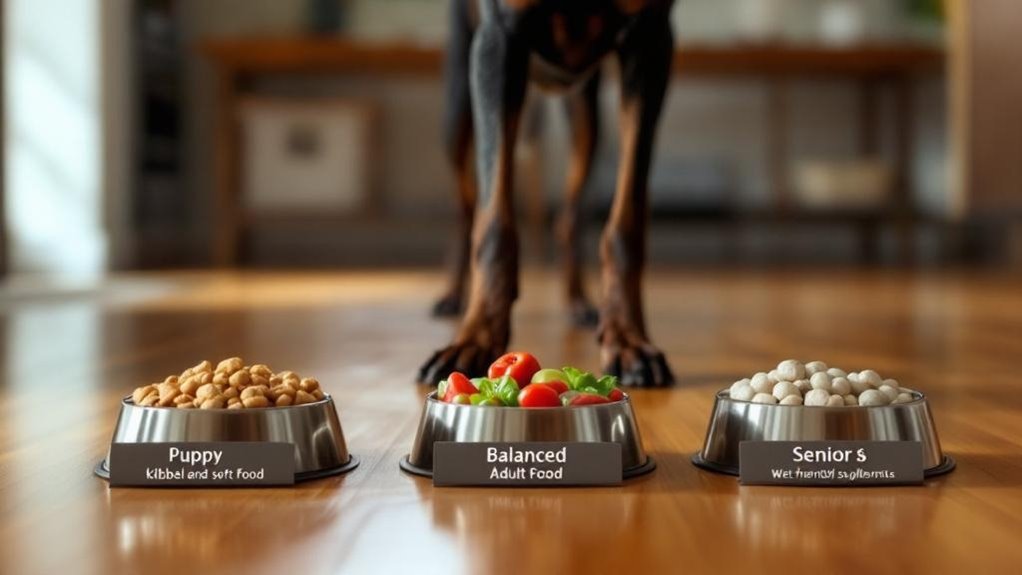
Your Doberman’s nutritional needs evolve considerably across life stages. Puppies require about 28% protein and 1-3 cups daily to support growth, while adults need 4-7 cups split into two meals, emphasizing heart-healthy real animal protein. Senior Dobermans benefit from higher protein (approximately 29%), glucosamine for joints, and smaller portions to prevent bloat. Each change requires gradual dietary adjustments over five to seven days, monitoring your dog’s response closely. Understanding these stage-specific requirements helps you maintain ideal health throughout your Doberman’s lifetime.
- Key Takeaways
- How Doberman Nutrition Changes Across Life Stages
- Essential Nutrients for Heart and Joint Health
- Kibble vs. Wet Food vs. Raw: What Works for Dobermans
- How to Transition Your Doberman to New Food
- Feeding Doberman Puppies: Growth and Development
- Feeding Active Adult Dobermans: Energy and Muscle Maintenance
- Feeding Senior Dobermans: Supporting Aging Joints and Heart
- Right Portion Sizes and Meal Frequency for Each Stage
- Feeding Dobermans With Heart, Joint, and Digestive Issues
- Signs Your Doberman’s Current Diet Needs Adjustment
- Common Feeding Mistakes That Increase Bloat and DCM Risk
- When to Switch Foods and How to Do It Right
- Frequently Asked Questions
- Conclusion
Key Takeaways
- Puppies need 28% protein and 1-3 cups daily at 2-3 months, increasing to 3-6 cups at 4-5 months across multiple meals.
- Adult Dobermans require 4-7 cups daily divided into 2 meals with real animal protein and heart-health focused balanced nutrition.
- Senior Dobermans benefit from approximately 29% protein, glucosamine, and 2 smaller daily meals to prevent bloat and support joint health.
- Transition new food gradually over five to seven days, starting with 25% replacement and monitoring stool, appetite, and behavior.
- Use slow feeder bowls, divide meals into 2 daily portions, and avoid exercise around mealtimes to reduce bloat risk.
How Doberman Nutrition Changes Across Life Stages
Because your Doberman’s nutritional needs shift considerably throughout their life, understanding these changes helps you support their health at every stage.
Puppy food, formulated with approximately 28% protein content, fuels rapid growth during those critical early months, while adult Dobermans thrive on balanced nutrition emphasizing heart health through taurine and omega-3s.
Senior Dobermans require specialized diets with higher protein levels and joint support ingredients like glucosamine, which address age-related concerns.
Senior Dobermans thrive on specialized diets featuring elevated protein and glucosamine for joint support, addressing age-related health challenges.
Rather than making abrupt dietary switches, you’ll want to implement gradual adjustments over five to seven days when altering between life stages, protecting your dog’s digestive system.
This careful approach to Doberman nutrition guarantees that specific health concerns at each phase receive appropriate attention, creating a foundation for sustained wellbeing.
Essential Nutrients for Heart and Joint Health
Your Doberman’s heart and joints represent two systems that benefit tremendously from targeted nutritional support, and the good news is that many essential nutrients address both concerns simultaneously.
Taurine and L-carnitine work directly to strengthen heart health, while omega-3 fatty acids reduce inflammation throughout your dog’s body, supporting both cardiac function and joint mobility.
Glucosamine and chondroitin specifically target joint health, promoting flexibility and preventing deteriorative conditions like hip dysplasia.
High-quality animal proteins fuel muscle repair and strength around the joints, while complex carbohydrates provide sustained energy for active movement.
Together, these nutrients create a thorough nutritional foundation that protects your Doberman’s cardiovascular system and maintains joint function throughout their life, reducing long-term health complications.
Kibble vs. Wet Food vs. Raw: What Works for Dobermans
When you’re choosing what to feed your Doberman, you’ll find three main options—kibble, wet food, and raw diets—each offering distinct advantages that suit different situations and preferences.
Kibble provides convenience and dental benefits with straightforward portion control, while wet food appeals to picky eaters through higher palatability and added hydration, though at greater expense.
Raw diets aim to mirror your dog’s natural eating patterns and may enhance digestion and coat quality, yet they require careful planning to guarantee nutritional balance.
Kibble: Convenience and Dental Benefits
Kibble offers several practical advantages that make it a sensible choice for feeding Dobermans, particularly because it combines convenience with genuine nutritional and health benefits. You’ll find that dry dog food streamlines your daily routine while supporting your dog’s long-term wellness.
- Convenience and storage: Kibble requires minimal preparation and stores easily, allowing you to maintain consistent feeding schedules without complicated steps.
- Dental health promotion: The texture of dry dog food naturally reduces plaque and tartar buildup, supporting better oral health compared to wet alternatives.
- Nutritional consistency: Quality kibble delivers balanced protein levels around 26% and appropriate fat content around 12%, maintaining muscle mass in active Dobermans.
- Portion control: You’ll manage calorie intake precisely, ranging from 1,200–2,000 kcal daily based on your dog’s weight and activity level, ensuring ideal weight management throughout life stages.
Wet Food: Palatability and Hydration
While kibble excels at maintaining dental health and simplifying your feeding routine, wet food offers distinct advantages that address different aspects of your Doberman’s nutrition and well-being.
The higher moisture content considerably improves palatability for picky eaters while boosting hydration levels, which benefits digestion and overall health, especially during hot weather or intense exercise. Wet food’s softer texture proves particularly valuable for older Dobermans or those with dental issues, making chewing and digestion easier.
However, you’ll need to monitor calorie intake carefully since wet food contains fewer calories per cup than kibble, requiring adjusted feeding quantities to prevent overfeeding.
Consider mixing wet and dry food for appealing texture and balanced nutrition.
When shifting between formats, do so gradually over a week to guarantee dietary comfort and prevent stomach upset.
Raw Diet: Natural Nutrition Approach
Raw diets represent another feeding philosophy that appeals to many Doberman owners seeking to align their dog’s nutrition with what canines ate before commercial pet food existed.
You’re fundamentally providing high-quality proteins, healthy fats, and minimal carbohydrates that support improved digestion and nutrient absorption in your active Doberman.
Consider these key advantages:
- Fresher ingredients with fewer preservatives than kibble
- Enhanced energy levels suited for athletic Dobermans
- Better nutrient bioavailability compared to processed options
- Support for digestive health and coat quality
However, changing requires gradual adjustment over five to seven days to prevent digestive upset.
You’ll want to monitor your dog carefully during this alteration, ensuring the diet meets your Doberman’s specific needs based on age, health status, and activity level before committing fully.
How to Transition Your Doberman to New Food
When you’re ready to switch your Doberman to a new food, the key to success isn’t making an abrupt change but rather introducing it gradually over five to seven days. This gradual approach gives your dog’s digestive system time to adjust and considerably reduces the risk of upset stomach.
Begin by replacing 25% of the old food with the new food for the first couple of days. Then increase to 50% for the next few days, followed by 75% before fully switching. Throughout this gradual adjustment, monitor your dog’s stool, appetite, and overall behavior carefully for any adverse reactions.
If you notice digestive upset like loose stools or vomiting, slow down the process. Consult your veterinarian if concerns persist, as they can provide tailored diet recommendations specific to your Doberman’s needs.
Feeding Doberman Puppies: Growth and Development
Because Doberman puppies grow at such a rapid rate during their first year, their nutritional needs differ considerably from adult dogs, and you’ll need to adjust both portion sizes and meal frequency as they develop.
Proper feeding during this critical stage establishes strong bones, muscles, and cognitive function.
- Feed puppies aged 2-3 months between 1 to 3 cups daily, divided into four meals.
- Increase daily intake to 3 to 6 cups between 4-5 months as growth accelerates.
- Select high-quality puppy food containing 28% protein, 13-14% fat, and 4.75% fiber.
- Prioritize real animal protein as the first ingredient, along with DHA for brain development.
This structured approach to feeding Doberman puppies supports their growth and development while preventing digestive upset and meeting their substantial nutrition needs.
Feeding Active Adult Dobermans: Energy and Muscle Maintenance
Once your Doberman reaches adulthood, their nutritional focus shifts from rapid growth to sustaining the muscle mass and energy they’ll need for an active lifestyle. This means you’ll want to carefully calibrate both the quality and quantity of their food.
Active dogs require between 1,600 to 2,000 kcal daily, translating to approximately 3.5 to 4.5 cups of high-quality dry dog food depending on individual energy levels. Prioritize real animal protein as your first ingredient to support muscle maintenance and provide essential amino acids.
Active Dobermans thrive on 1,600-2,000 daily calories with real animal protein as the foundation for muscle maintenance and essential amino acids.
Include omega-3 and omega-6 fatty acids for coat health and sustained energy, while complex carbohydrates from brown rice or sweet potatoes offer stable fuel and digestive support.
Monitor your dog’s body condition regularly, adjusting portion sizes to prevent obesity and joint strain.
Feeding Senior Dobermans: Supporting Aging Joints and Heart
As your Doberman enters their senior years, you’ll notice their nutritional needs shift once again, requiring a thoughtful approach that addresses the particular challenges of aging rather than simply reducing portions.
Your senior Doberman requires specific nutritional support that maintains muscle mass while protecting vulnerable systems.
- Choose foods containing approximately 29% protein and 14% healthy fats to preserve muscle and energy levels.
- Select diets enriched with glucosamine and chondroitin to support joint health and mobility.
- Prioritize omega-3 fatty acids, which reduce inflammation and support heart health.
- Feed smaller, well-portioned meals to prevent bloat, a condition Dobermans face as they age.
When adapting to senior-specific food, do so gradually over 5–7 days to avoid digestive upset while ensuring nutritional adequacy.
Controlled mineral levels in senior formulas protect kidney and heart function, particularly through lower sodium content designed for aging dogs.
Right Portion Sizes and Meal Frequency for Each Stage
Proper portion sizes and meal frequency form the foundation of your Doberman’s nutritional success, shifting considerably as your dog matures from puppyhood through their senior years. You’ll notice that growing puppies require more frequent meals to support rapid development, while adult Dobermans thrive on consistent, established routines that minimize digestive upset.
| Life Stage | Daily Food Intake | Meal Frequency |
|---|---|---|
| Puppies (2-3 months) | 1-3 cups | 4 times daily |
| Puppies (4-5 months) | 3-6 cups | 3 times daily |
| Young Dobermans (6-8 months) | 3-6.5 cups | 3 times daily |
| Adult Dobermans (1+ years) | 4-7 cups | 2 times daily |
| Senior Dobermans | Reduced intake | 2 times daily |
Adjusting your Doberman’s portion sizes and meal schedules according to their life stage guarantees they receive appropriate nutrition, supporting optimal well-being throughout every phase of their development.
Feeding Dobermans With Heart, Joint, and Digestive Issues
Because Dobermans are genetically predisposed to certain health conditions, you’ll find that targeted nutritional adjustments can make a meaningful difference in managing heart disease, joint problems, and digestive sensitivities throughout your dog’s life.
Dobermans’ genetic predispositions to health conditions make targeted nutrition essential for managing heart disease, joint problems, and digestive issues.
Strategic dietary choices address specific concerns:
- For heart function, prioritize foods rich in taurine, L-carnitine, and omega-3 fatty acids to support cardiovascular health, particularly if your Doberman has Dilated Cardiomyopathy (DCM).
- Joint health improves with glucosamine and chondroitin combined with omega-3 fatty acids, reducing mobility challenges in aging dogs.
- Address food sensitivities by selecting easily digestible formulas featuring chicken or salmon as primary proteins, while avoiding corn and soy.
- Prevent bloat through smaller, frequent meals while monitoring weight and adjusting portion sizes to prevent obesity-related complications.
Signs Your Doberman’s Current Diet Needs Adjustment
You can identify when your Doberman’s diet needs adjustment by observing three key areas: their coat and skin condition, their weight and body composition, and their digestive health.
A dull coat, excessive shedding, or flaky skin often signal insufficient omega fatty acids.
Meanwhile, unexplained weight fluctuations or changes in body condition suggest your current feeding plan doesn’t match their caloric and nutritional needs.
Digestive problems like frequent gas, diarrhea, vomiting, or inconsistent stools reveal either food sensitivities or issues with fiber content and ingredient digestibility that warrant reassessment of what you’re feeding.
Poor Coat and Skin Quality
A dull coat, excessive shedding, or flaky, irritated skin in your Doberman often signals that their current diet isn’t meeting their nutritional needs, and recognizing these signs early can help you make adjustments before more serious health issues develop.
Poor coat quality typically reflects deficiencies in essential fatty acids, particularly omega-3 and omega-6, which your dog’s body can’t produce independently.
Address skin issues by evaluating your dog’s current food:
- Switch to high-quality proteins and fewer fillers to reduce inflammation and irritation
- Eliminate potential allergens like corn or wheat if food sensitivities appear
- Incorporate omega-rich sources to restore coat shine and skin health
- Add fresh fruits and vegetables containing antioxidants to support a balanced diet
Monitor stool quality and energy levels closely, as these indicators reflect whether your nutritional adjustments are effectively meeting your Doberman’s needs.
Weight and Body Condition Changes
While a shiny coat and healthy skin reflect your Doberman’s nutritional progress, their overall weight and body condition tell an equally important story about whether their diet is truly working for them.
You’ll want to regularly assess your dog’s body weight using a body condition score of 1 to 9, targeting 4 to 5 for ideal weight. Check whether you can easily feel their ribs and spot a defined waistline; if not, you’re likely overfeeding. A sudden weight gain or loss exceeding 10% signals that a dietary reevaluation is necessary, potentially indicating underlying health concerns.
For inactive, senior, or recovering Dobermans, you’ll need to adjust feeding times and portions to prevent obesity and protect joint health.
Monitor energy levels consistently, since diminished activity or lethargy suggests your dog’s nutritional needs aren’t being met by their current feeding guide.
Digestive Issues and Stool Problems
Just as your Doberman’s weight and coat condition reveal nutritional success, their digestive health—reflected in stool quality and consistency—serves as a direct window into whether their current diet is truly working for them.
When you notice inconsistent stools, soft textures, or excessive gas, your dog’s digestive system is signaling that something needs adjustment.
- Monitor stool quality regularly, as firm, well-formed brown stools indicate proper digestion and adequate nutritional needs.
- Identify potential food sensitivities by observing whether stomach upset occurs after specific meals.
- Implement slow feeder bowls to prevent rapid eating, which causes bloating and digestive discomfort.
- Shift gradually to high-quality animal protein sources over five to seven days, restoring gut health.
This measured approach, combined with digestible ingredients, resolves most digestive issues without overwhelming your Doberman’s system.
Common Feeding Mistakes That Increase Bloat and DCM Risk
Because Dobermans have a deep chest and lean build that makes them naturally susceptible to bloat, the way you feed them matters just as much as what you feed them. You’ll want to follow a feeding guide that emphasizes portions based on their life stage, dividing daily intake into smaller, more frequent meals rather than one large feeding. Slow feeder bowls help reduce rapid eating, which causes excessive air intake and bloat, while a diet featuring high-quality animal proteins balanced with minimal carbohydrates supports gastrointestinal health. Maintaining a healthy weight through proper portions reduces strain on the heart, lowering DCM risk. Importantly, exercise avoidance immediately before and after meals prevents bloat development during vulnerable digestion periods.
| Mistake | Effect |
|---|---|
| Large single meals | Increased bloat risk |
| Fast eating | Excessive air intake |
| High carbohydrates | Gastrointestinal issues |
When to Switch Foods and How to Do It Right
Adjusting your Doberman to a new food requires patience and a gradual approach, since their digestive systems need time to adapt to dietary changes without becoming upset. Changing over five to seven days minimizes digestive distress and supports smoother adjustment for your dog.
- Mix 25% new food with 75% current food for two to three days.
- Gradually increase the new food proportion while decreasing the old food.
- Monitor your Doberman closely for diarrhea, vomiting, or other digestive issues.
- Establish a regular feeding schedule twice daily for adult Dobermans.
If your dog shows prolonged sensitivity to a new food, consult with your veterinarian, as this may indicate a food allergy or diet intolerance requiring dietary adjustment.
Patience during the change protects your Doberman’s digestive health.
Frequently Asked Questions
What Is the Best Diet for a Doberman?
You’ll want to feed your Doberman high-quality animal protein as the first ingredient, balanced fats for joint health, and appropriate portions—1,200 to 2,000 kcal daily depending on weight and life stage.
What Is the Main Cause of Death of Dobermans?
You’ll find that dilated cardiomyopathy (DCM) is the leading cause of death in Dobermans. This hereditary heart condition affects the heart’s pumping ability, with 40-60% of Dobermans developing it during their lifetime.
What Are Dobermans Favorite Foods?
Your Doberman’s taste buds are a treasure map leading to high-quality proteins like beef, chicken, and fish. You’ll also find they’re drawn to omega-3 rich foods, sweet potatoes, and crunchy carrots for ideal health.
How Much Should a Doberman Eat Daily?
You should feed your adult Doberman 4 to 7 cups of dry dog food daily, adjusting based on age, size, and activity level. Monitor your dog’s body condition and split meals to prevent bloat.
Conclusion
You’re now equipped to nourish your Doberman through every life stage, from puppyhood through their senior years. Like a foundation that supports a growing house, proper nutrition builds the strength your dog needs to thrive, protecting their heart and joints from preventable diseases. You’ll adjust their diet thoughtfully, monitor their response carefully, and catch problems early, giving your Doberman the best chance at a long, healthy life.